
Perplexity AI is blowing up in India. The app has consistently dropped new features and has become increasingly visible owing to its aggressive marketing campaigns. Most recently, it teamed up with comedian Tanmay Bhat, who gave it a shout-out in his latest reaction video.
The impact of its marketing drive has been noticeable. Within a day of Airtel offering a free Perplexity Pro subscription worth ₹17,000, the app saw a surge in iOS downloads. The AI search engine quickly climbed to the top spot on the App Store charts in India, overtaking OpenAI’s ChatGPT.
“India is the second largest market for ChatGPT and the fastest growing, as per Sam Altman. Airtel has 38.5 crore subscribers in India, like me, who might now seriously explore Perplexity Pro,” Rahul Mathur, pre-seed investor at DeVC, said.
Perplexity saw a 640% year-over-year jump in monthly active users (MAUs) in India during Q2, outpacing ChatGPT’s 350% growth in the same period, according to data shared by Sensor Tower.
Despite this rapid growth, ChatGPT continued to lead in total users, with 19.8 million MAUs compared to Perplexity’s 3.7 million. India also emerged as Perplexity’s top market by MAUs last quarter.
A LocalCircles survey involving 15,377 participants found that in India, around 28% use ChatGPT, 9% use Perplexity, 6% access Co-Pilot either directly or through Bing, and 3% each reported using Gemini through Google and Llama. Another 6% said they use an AI tool not mentioned in the survey.
Inside Perplexity’s Playbook
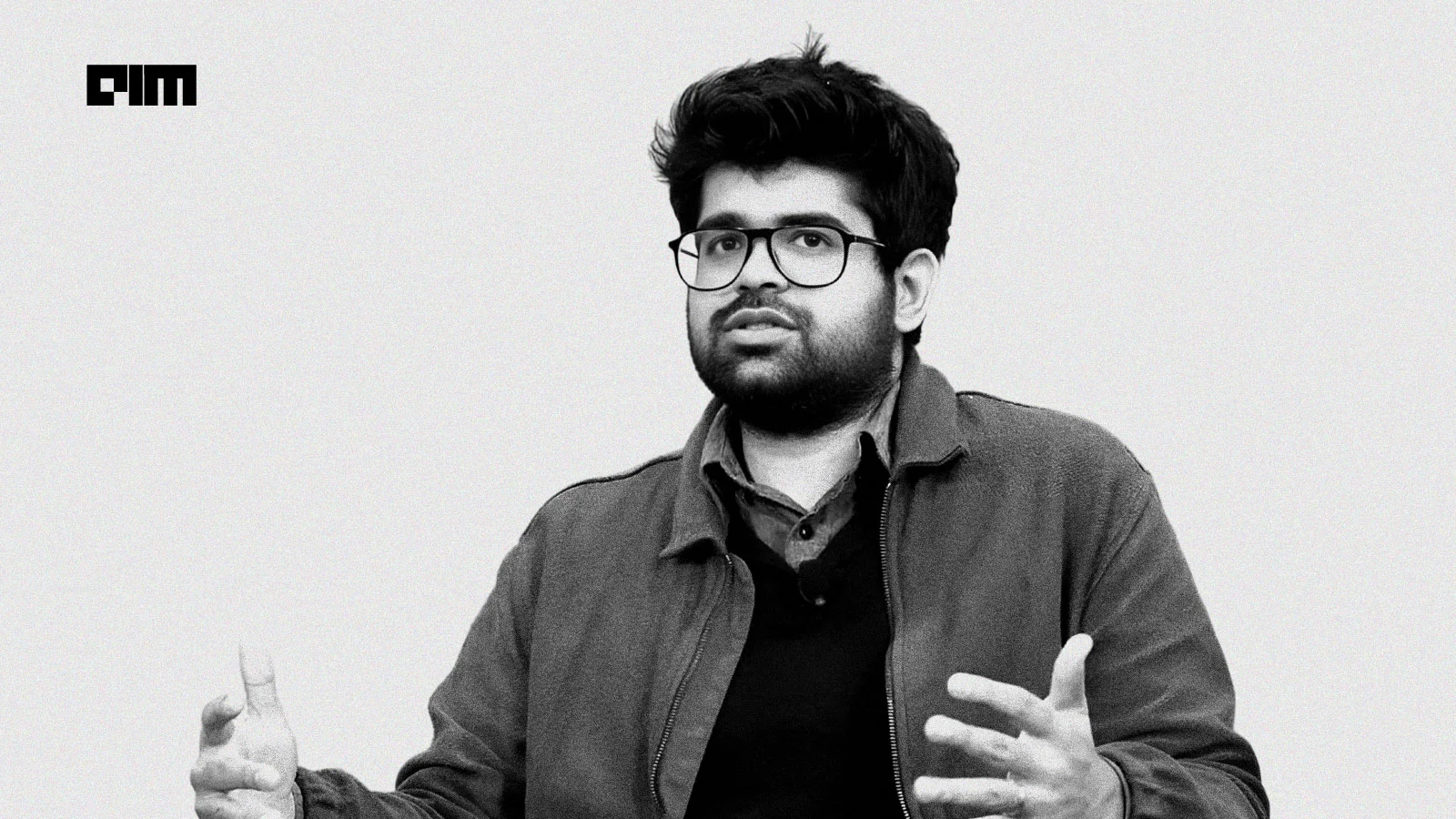
In a recent interview with Matthew Berman, Perplexity AI CEO Aravind Srinivas said that both ChatGPT and Gemini have more users than Perplexity. However, he added that Perplexity’s mobile retention through the app is better. “It ranks consistently pretty high after ChatGPT. So we kind of earned our right to go build the next big thing,” he said.
He added that with OpenAI already having won the chatbot race with ChatGPT, there’s no point in competing with them. Instead, Srinivas believes the next big opportunity lies in agentic workflows, which he is pursuing through Comet, an AI-powered web browser.
“The browser is a product that you use more than chat,” he said, adding that it is extremely sticky with users. Last week, Perplexity acquired the domain os.ai from HubSpot CTO Dharmesh Shah. “It makes complete sense for an OS for AI to exist,” Shah said, calling it the next inevitable platform shift after PCs, browsers and mobile and hinting at Perplexity’s broader ambition beyond search.
Till now, Perplexity AI has driven growth through partnerships rather than enterprise contracts, setting it apart from its competitors.
It also takes a different technical approach by aggregating multiple AI engines, combining its own Sonar models with GPT-4, Claude, Grok, Gemini and others, and automatically switching between them based on each query.
In a recent interview with Business Insider, Srinivas addressed speculation about a potential acquisition by tech giants like Meta and Google. “We plan to remain independent,” he said.
“The world needs little tech to win, right? If it's all about Big Tech winning, then there's no interest. I think [with] AI…[for] the first time there’s an opportunity for a new player to come and disrupt the existing market and big tech can still keep winning,” he quipped in another interview.
Burning Cash to Build the Future
The company recently raised $100 million in new funding, which has pushed its valuation to $18 billion. This builds on an earlier round just a few months ago, which had pegged the startup’s value at $14 billion.
Despite this impressive valuation, Perplexity generated $34 million in revenue last year but burned through around $65 million in cash, largely due to heavy spending on cloud infrastructure and AI models from Anthropic and OpenAI, which power much of its search engine’s responses.
As of early 2025, the company surpassed $100 million in annualised recurring revenue.
On the other hand, its main competitor, ChatGPT, also offers a free tier but earns most of its revenue from subscriptions, including ChatGPT Plus at $20 per month, as well as Team and Enterprise plans.
OpenAI’s annual revenue is set to touch $10 billion this year. In 2024, an estimated 70-85% of OpenAI’s $3.7 billion revenue came from ChatGPT subscriptions, amounting to roughly $2.7 billion to $2.9 billion.
OpenAI’s GTM strategy relies on its vast user base and strong partnerships, notably Microsoft’s $13 billion investment and Azure integration, as well as direct enterprise sales.
Meanwhile, Anthropic, founded by former OpenAI researchers, targets enterprise or API customers. It reached about $4 billion in annualised revenue by mid-2025. Crucially, over two-thirds of its income comes from AI-as-a-service deals via Amazon’s AWS Bedrock and other cloud licenses, rather than consumer subscriptions.
India is Central to Perplexity’s Strategy
India isn’t just a market for Perplexity AI; it’s a core part of the company’s long-term strategy. Earlier this year, Srinivas announced plans to hire local talent and expand the company’s presence in the country. He also met Prime Minister Narendra Modi to discuss AI adoption and its potential impact on India.
In a recent move, Paytm announced a partnership with Perplexity AI to bring AI-powered search to its app. The integration is meant to help users make informed financial decisions, ask everyday questions, explore topics in local languages and get real-time financial assistance.
Srinivas has also committed ₹1 million of his own money and five hours a week to support the development of India’s own foundation models. In January, Perplexity offered free access to its pro version to all students, faculty and staff at IIT Madras.
India is quickly becoming a battleground for global AI players. With the government pushing for indigenous AI models and companies like Google, Microsoft and Amazon investing heavily in local startups, Perplexity’s momentum comes at a time when the country’s AI ecosystem is at a tipping point.

Your reaction
Discussion
What's your take on this story?
No comments yet — be the first to share your view.