
Key takeaways
- Google Lens serves as a personal recommendation engine, utilising machine learning for image recognition.
- The application enhances brand visibility and has the potential to increase revenue for organisations.
- It simplifies the process of describing moments and objects through images, reducing the need for extensive text.

 The above image can be represented to an algorithm without tagging it with a text.
Applications like Google Lens exploit and identify the significant features of the image to understand it by content without any text tags.
Thus, the image is visible to the system in the form of it's significant features as shown below:
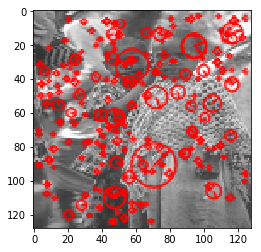 Features, can be based on attributes like colour, texture, shape etc. of an image which is extracted with popular techniques of image processing like binarizations , image transforms, etc. or by deep learning based techniques.
Both handcrafted and deep learning based feature extraction techniques follow this feature extraction step with their corresponding algorithms before performing the final step of image recognition.
Google Lens is an application which is using this technology to help you search what you see. So, how it relates to our daily lives? Is there any relevance of it apart from explaining it with technical jargons? The answer is yes. Let's have a look at it's impact on branding and digital marketing.
 The yellow dot on Sony has not only identified the brand, but also it has recognized the product. The output is amazing as we find it here. It has not only identified the brand but also provided suggestions for places to buy the gadget online. We are obsessed with the term digital marketing these days. The biggest challenge in recent times is to predict consumer behaviour which is altering with every passing minute. Applications like Google Lens are acting as true companion to online business world by leveraging the power of machine learning and content based image classification. Innovation has no boundaries. It is always interdisciplinary in nature and fascinating in genre, just like aligning digital marketing to machine learning.
This is what the end result looks like:

Spotted an error? Tell our editors. Read our editorial standards and corrections.