Key takeaways
- Highlight the significant achievements of Indian women in AI research and applications.
- Recognize India as a leading nation in AI education, surpassing China in graduate student numbers.
- Acknowledge that 8% of top AI researchers globally are of Indian origin.
- Emphasize the high AI skill penetration rates among Indian women as of 2022.
- Spotlight Niki Parmar's contributions to AI, including her role in developing transformer technology.
Indians have been at the forefront of AI research and application. According to an article in The Economist, last year, India surpassed China to have the highest number of graduate students studying in America.
Out of approximately 2.5 million immigrant STEM (Science, Technology, Engineering, Mathematics) workers in the US, 29% come from India. In the field of artificial intelligence (AI), 8% of the world's leading researchers are Indian.
Women are not lagging behind either. As of 2022, Indians have had the highest AI skill penetration rates and this includes our women too.
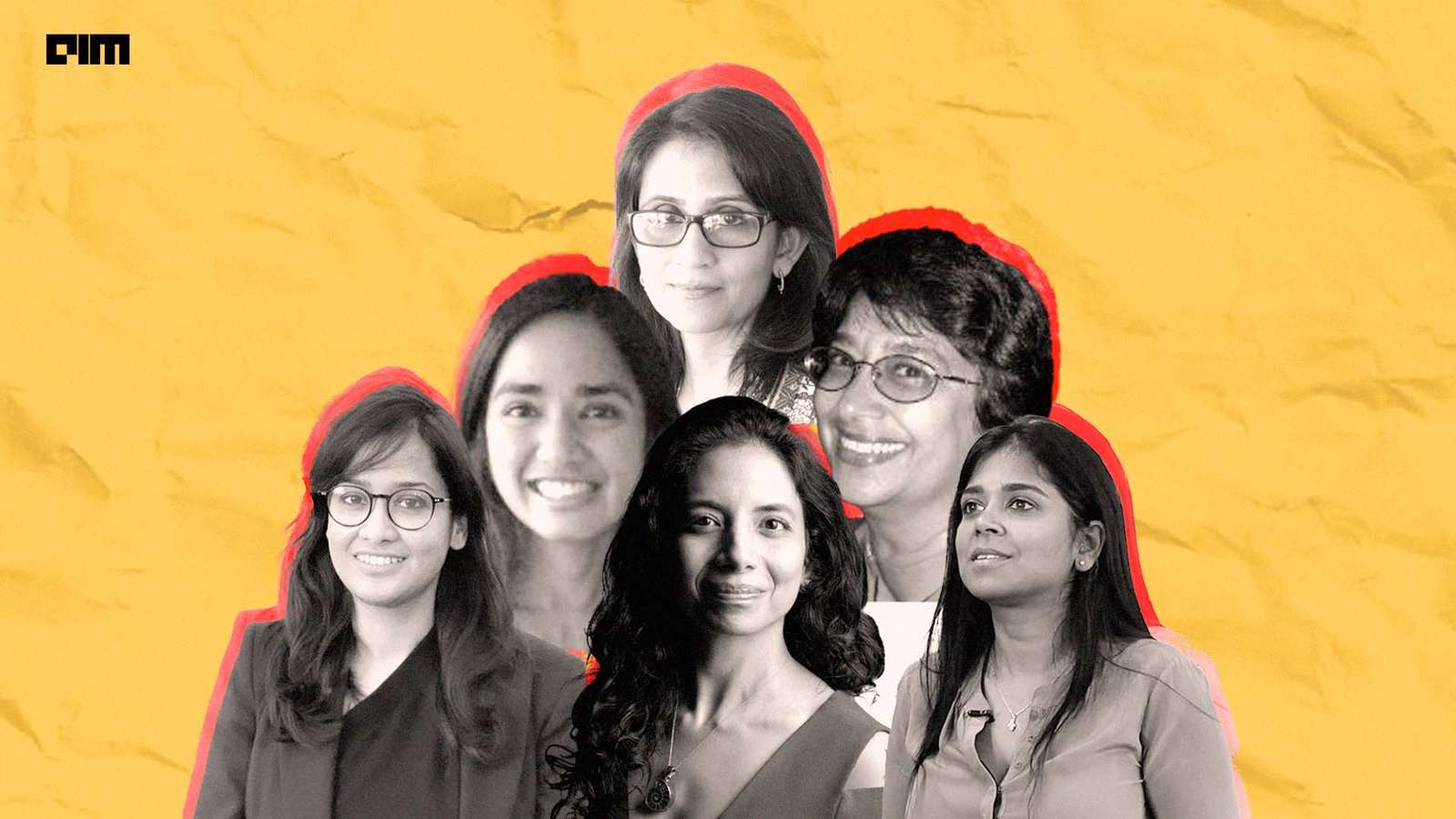
Here is the list of the women, who have achieved the highest standards in AI.
1. Niki Parmar
Niki Parmar co-authored the revolutionary research paper Attention Is All You Need, which led to the birth of transformers. After receiving her Masters degree from the University of Southern California, she began her career as a research assistant at the Computational Social Science Lab, USC. She said, “My first interest in machine learning developed during my undergrad as I took the first MOOCs by Andrew Ng and Peter Norvig on ML and AI.”
She later worked at Google Research and Google Brain. “Here, I got the opportunity to learn and work on end-to-end deep learning systems that were trying to create alternative ways of solving NLP problems.”
She has published 28 papers and said, “My journey in research has involved understanding how self-attention and other inductive biases can be used to improve our models across various tasks like machine translation, language modelling, and more recently perception.”
She co-founded Adept AI in 2021 and since 2023, she is actively employed as the co-founder of Essential AI along with Ashish Vaswani, another author of the Attention Is All You Need paper. The startup has raised $56.5 million in funding, including funds from tech heavyweights AMD, Google, and Nvidia.
2. Aakanksha Chowdhery
Aakanksha Chowdhery received her bachelor’s degree from IIT Delhi and went ahead for a PhD in electrical engineering from Stanford University. “I always felt great about mentoring and teaching students but after considering academic options, I chose industry research lab for my career path,” she said.
She was a postdoctoral researcher at Microsoft Research and then an associate research scholar at Princeton University till 2017. Talking about her experience, she said, “I got to build real things as part of my Microsoft research experience.”
Currently, she is a staff research scientist at Google DeepMind. Her research contributions span across multiple areas of signal processing, machine learning, edge computing, and mobile networked systems with 51 papers published. Her work has contributed to industry standards and consortia, such DSL standards and OpenFog Consortium.
She was the lead author of the PaLM: Scaling Language Modeling with Pathways and led several follow on research projects building on top of this work such as PaLM-E, MedPaLM etc. This paper demonstrates the potential of a huge AI model with 540 billion parameters, designed to understand and create language.
3. Anima Anandkumar
Anima Anandkumar from Mysore, earned her master's degree from the IIT Madras and a PhD in computer science from Cornell University. She currently holds the Bren Professorship at the California Institute of Technology, focusing on machine learning.
Previously, Anandkumar held the position of director of machine learning research at NVIDIA, where she worked on tensor-algebraic methods, deep learning, and non-convex optimisation problems. She has an impressive record of research, indicated by her h-index of 74.
Her work has been recognized with several awards, including the IEEE Fellow award and the ACM Grace Hopper Award. Her research contributions cover a range of areas including tensor methods, non-convex optimization, and addressing uncertainty and dependencies in machine learning etc.
4. Suchi Saria
Suchi Saria has a master's in computer science and a PhD in electrical engineering with a focus on statistics from Stanford University.
Now, Saria directs the Machine Learning and Healthcare Lab and is the founding research director of the Malone Center for Engineering in Healthcare and the CEO of Bayesian Health. This role involves working across departments like computer science, statistics, medicine, and health policy at Johns Hopkins. Her company aims to use machine learning to improve healthcare technology.
Her work has earned her several recognitions, including being named a World Economic Forum Young Global Leader. She appeared on the MIT Technology Review's '35 Innovators Under 35' list and also received the Sloan Research Fellowship.
She has an impressive 109 publications on Google Scholar on healthcare, machine learning and the intersection of the two. She has developed algorithms for predicting conditions like sepsis and cardiac arrest, models for personalised care, and tools for clinical decision-making. Her work also covers causal inference and managing uncertainty in medical data, especially for chronic diseases such as scleroderma.
5. Parvati Dev
Parvati Dev is currently the CEO of SimTabs, a company specialising in immersive simulations for healthcare education. However she began her education at IIT Kharagpur, then moved to California and completed her Masters and PhD at Stanford University in technology and education.
Parvati has published 94 papers and has been instrumental in the development of surgical simulation, haptics, virtual patient simulations, and 3D anatomy models. Her efforts at Stanford University, particularly in digitalising the medical curriculum, marked her as a leader in medical education technology.
6. Monisha Ghosh
Monisha Ghosh is currently a professor at the University of Notre Dame and an Adjunct Research Professor at the University of Chicago. She studied her bachelor’s at IIT Kharagpur in 1986 followed by a PhD in electrical engineering from the University of Southern California in 1991. Apart from her academic contributions, she was also involved in the national telecommunications policy and research.
Ghosh recently completed her tenure as the CTO at the FCC in June 2021. Her work focused on national strategy and technology specifications for broadband wireless communications, including the development of rules for the 6 GHz unlicensed bands, standardisation of broadband signal measurements, and advancements in open RAN technology.
Before her role at the FCC, she was a rotating program director at the NSF from 2017 to 2019, managing wireless networking research and pioneering applications of machine learning in wireless networks.
In addition to her policy work, Ghosh has made significant research contributions, particularly during her time as a research professor at the University of Chicago. Her research spanned wireless technologies for the IoT, 5G cellular systems, next-generation Wi-Fi, and spectrum sharing.
Before her academic appointments, Ghosh's industrial research and development work included positions at Interdigital, Philips Research, and Bell Laboratories.
Spotted an error? Tell our editors. Read our editorial standards and corrections.