

5 min
 It all began with the 2011 Hollywood film Moneyball detailing to how the Oakland Athletics General Manager Billy Beane used Big Data analytics to assess the performance of players when selecting baseball teams to improve the future of his Oakland Athletics in Major League Baseball. Billy Beane used predictive modelling and a statistical approach -to overcome salary cap constraints and predict the future performance trends in baseball. Despite the fact that the film did not have a happy ending as the Oakland A’s were eliminated before the finals to the World Series, Moneyball highlights the big role played by Big Data in Sports analytics.
Can an analytics algorithm help in building a strong baseball team?
Can an analytics algorithm help basketball teams play better defense?
Can an analytics algorithm tell a player if the next game pitch will be a slider or a curveball?
The answer to all the above questions is a big YES with various sport associations already leveraging big data analytics to have an edge over the competing teams. “Sports are watched by millions and millions of people - yet, pretty much all of the strategic decisions are made by humans in a split second. These decisions could definitely be enhanced by learning from past data, but humans can’t keep large databases in their heads. Thus, predictive analytics tools will help teams make these decisions. If we know, for instance, that in certain circumstances, a particular coach on the opposition team tends to make a particular decision, then we can be ready for it. We can place sensors all over a car while it is in training for a race, and use the sensor data to help a driver learn how to race better.”- said Cynthia Rudin, associate professor of statistics at MIT. High-powered big data analytics algorithms and high-definition CCTV cameras are replacing human scouts and statisticians helping coaches to have a competitive edge in predicting about the performance of a player and the outcomes of the game. The analytics algorithms analyse and predict the outcome of a player or game by reviewing the historical data, reviewing the video and images of a player’s activity and various other data points. Image Credit:arsenal.com
English Premier Leagues’ Arsenal is spending big on big data analytics. Arsenal installed a set of 8 video cameras in their stadium for tracking ten data points every second per player totalling up to 1.4 million data points per game. The big data generated is then analysed with the help of automated tools and analytics algorithms to discover playing patterns that players or coaches might miss on. Arsenal can now identify “off the ball” events. Arsenal is improving its team by fine-tuning the player’s movement and positioning on the field.
Intersection of Big Data Technology and Sports
“In many ways, sports is the perfect testing ground for “big data” and predictive analytics technologies. It’s a closed system; sports have well-defined rules, and we know the outcomes we are looking for. So if we can provide enough data points, then fundamentally, we can reduce sport to a classic computer science problem of analysing data for trends.”- said Tony Baer, data analyst with industry watcher Ovum. The novel domain of sports analytics is developed on various technological advancements– the network-attached commodity storage devices and multicore processors that have made it possible to predict data-intensive sports outcome. The development of Apache Hadoop distributed computing framework, MapReduce framework and high-performance NoSQL databases are responsible for attempting big data efforts in sports. “Tennis and Formula One racing represent the first generation of what might be possible with real-time data analysis. In those sports, the power of the analytics is concentrated on individual entities -- cars or players. The problem becomes exponentially more difficult when you look at team sports, such as football, where there are 11 players on each side, each of whom can have an impact on the outcome.”- said Jeremy Shaw, business analyst consultant at IBM. Formula One racing team McLaren’s cars send a deluge of big data to the pit teams where the data is analysed in real time with the use SAP’s HANA in-memory technology. SAP HANA uses a data compression technology that allow McLaren to store the data inside RAM. Thus, the team can act upon the incoming data in real time to make any necessary race changing adjustments.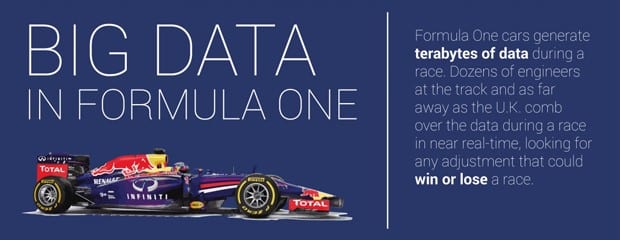 Image Credit: rufblog.com
How big data and analytics are revolutionizing sports industry?
-
Leveraging Big Data Analytics to improve Sports Outcomes
-
Leveraging Big Data Analytics into Fan Preferences
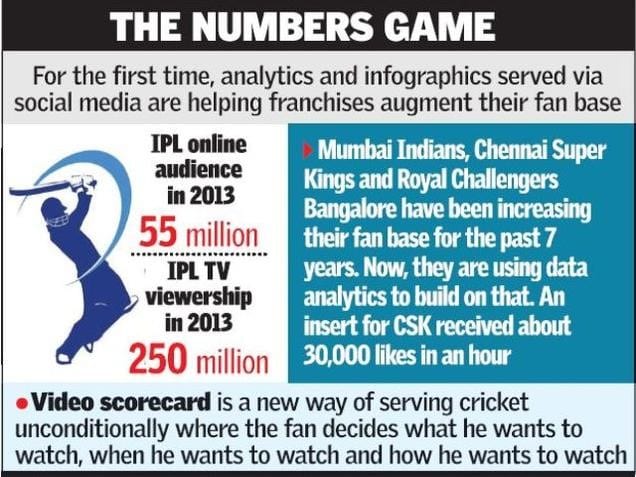 Image Credit: thehindu.com
-
Leveraging Big Data Analytics with Data collected from Wearables
-
Leveraging Big Data Analytics to prevent Sports Injuries
- ‘Nobody Wants a Proprietary Platform,’ Says Coforge’s Anup Nair
- Why Buying Specialist Engineering Firms Won't Fix Indian IT’s Growth Problem
- The Anthropic-Indian IT Partnership Is a Two-Way Bet
- Coforge Is Outgrowing Its Larger Rivals. Is AI the Reason?
- Are Boutique AI Firms India’s Next Big Thing?
- Indian IT’s New Workforces Come with a Margin Challenge