
5 min
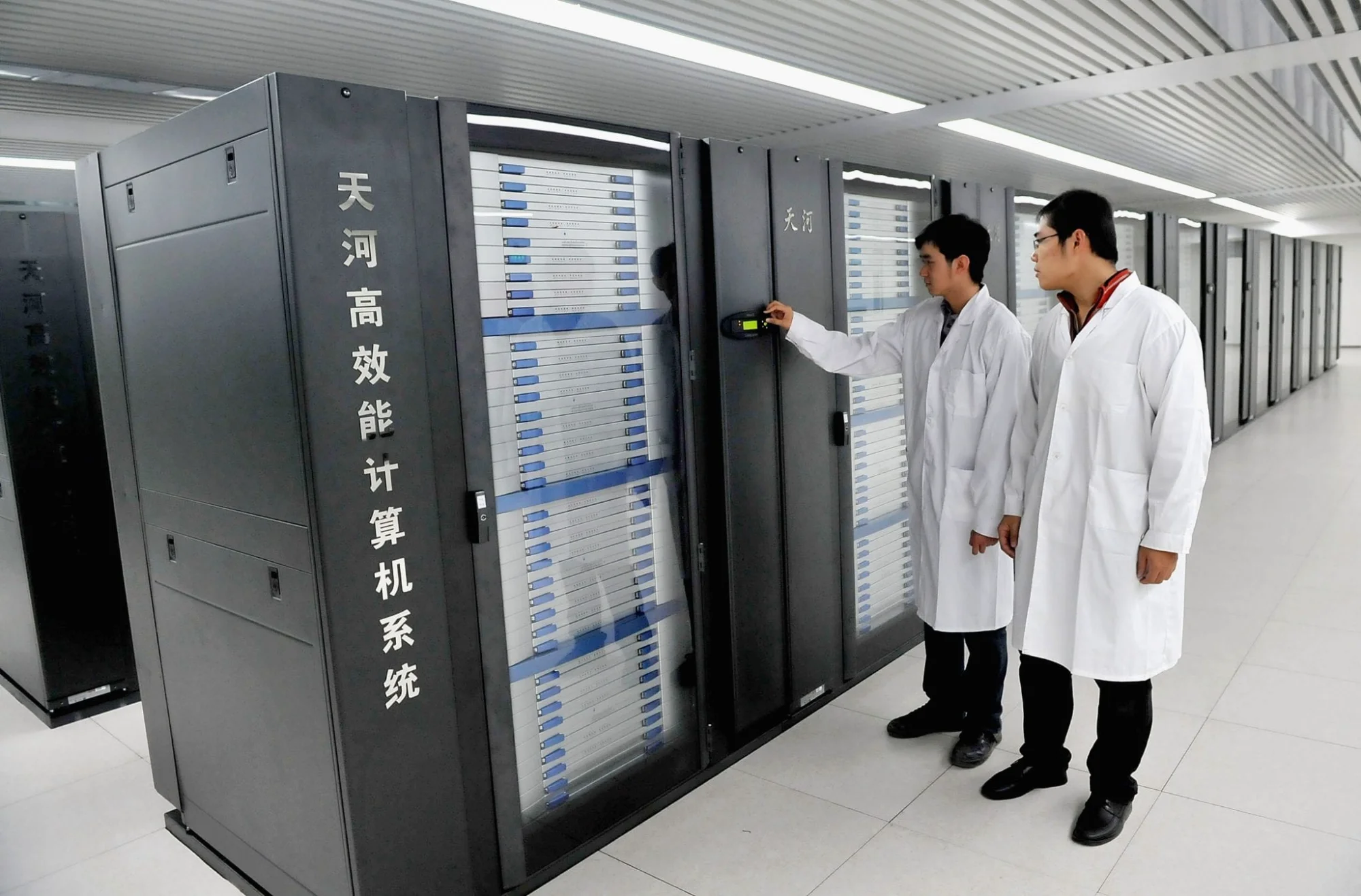
 Back in 2013, China was in the news for significantly ramping up its supercomputing efforts with supercomputer Tianhe-2, built to blunt US’s dominance in supercomputing. Circa 2017 and China has taken a significant lead over the US with an estimated 202 of the 500 supercomputers with the fastest calculation speeds in the world, followed by the US with 143. The TOP 500 list updated twice a year shows a one-upmanship game being played between the two supercomputing giants. Check this out -- barely six months ago, the US led with 169 systems, with China inching a close second at 160.
Today, the Asian superpower claims 35.4 percent of the TOP500, with the US finishing at second place with 29.6 percent. So, what’s underpinning the development of supercomputers. Is it driven by China’s bullish approach to become an unchallenged AI superpower by 2030? A look at China’s national blueprint confirms the above statement – the “national AI development plan” released in July reveals the country is committed to spend $22.15 billion on AI research by 2020 and $59.07 billion (£45 billion) by 2025.
According to the policy briefing, the major goal is divvied up into three stages:
a) Catch up with the advanced global levels in AI technology and application by 2020 b) Make major breakthroughs in basic theories by 2025 c) Become a global innovation center in this field by 2030Why Is China Betting Big On Supercomputers?
 High performance computing forms the foundation of modern science, enabling researchers to simulate and predict what’s going to happen in the real world — case in point, AI research in drug discovery or finding a new drug treatment. According to GPU giant NVIDIA, the combination of high performance computing and AI can help researchers gain insights from data to speed up scientific discovery.
- From basic science experiments to AI research and applications, high power computing results in more robust simulations and predictions
- Supercomputers are tailored for AI, deep learning applications and will speed up the deployment of artificial intelligence into real businesses soon
- The turbo-charged super computing power will help researchers tackle more challenging problems, perform more accurate simulations and make more accurate predictions.
- The added computing capability enables scientists to perform simulations with higher fidelity and run three-dimensional simulations that are out of reach of today’s high-performance computers, said an expert from American federal research facility, LLNL
- Lastly, they help meet the unending need for higher computing resources required by scientists and researchers across the world
Are Supercomputers The Holy Grail of AI?
 Will exascale supercomputers bring China closer to its goal-- becoming AI superpower by 2030? According to IEEE Spectrum, the current and future supercomputers are mainly being built and targeted to advanced deep learning and artificial intelligence. According to Steve Conway Research Vice President HPC, Hyperion Research, the industry trend in high-performance computing is gearing towards laying the groundwork for pervasive AI and big data applications like autonomous cars and machine learning. “And unlike more specialized supercomputer applications from the past years, the workloads of tomorrow’s supercomputers are going to be mainstream and even consumer-facing applications,” emphasized Conway, a leading veteran of HPC & IT industries.
This new force of acceleration will bring about massive improvements in deep learning and reinforcement learning. Here’s another train of thought – the overall demand from the organizations for AI-capable infrastructure is growing by leaps and bounds. Today, the requirement ranges from tackling a broad range of deep learning and machine learning workloads at scale and China’s BAT (Baidu, Alibaba & Tencent) trinity are making a huge push in this area.

Your reaction
Discussion
What's your take on this story?
No comments yet — be the first to share your view.