
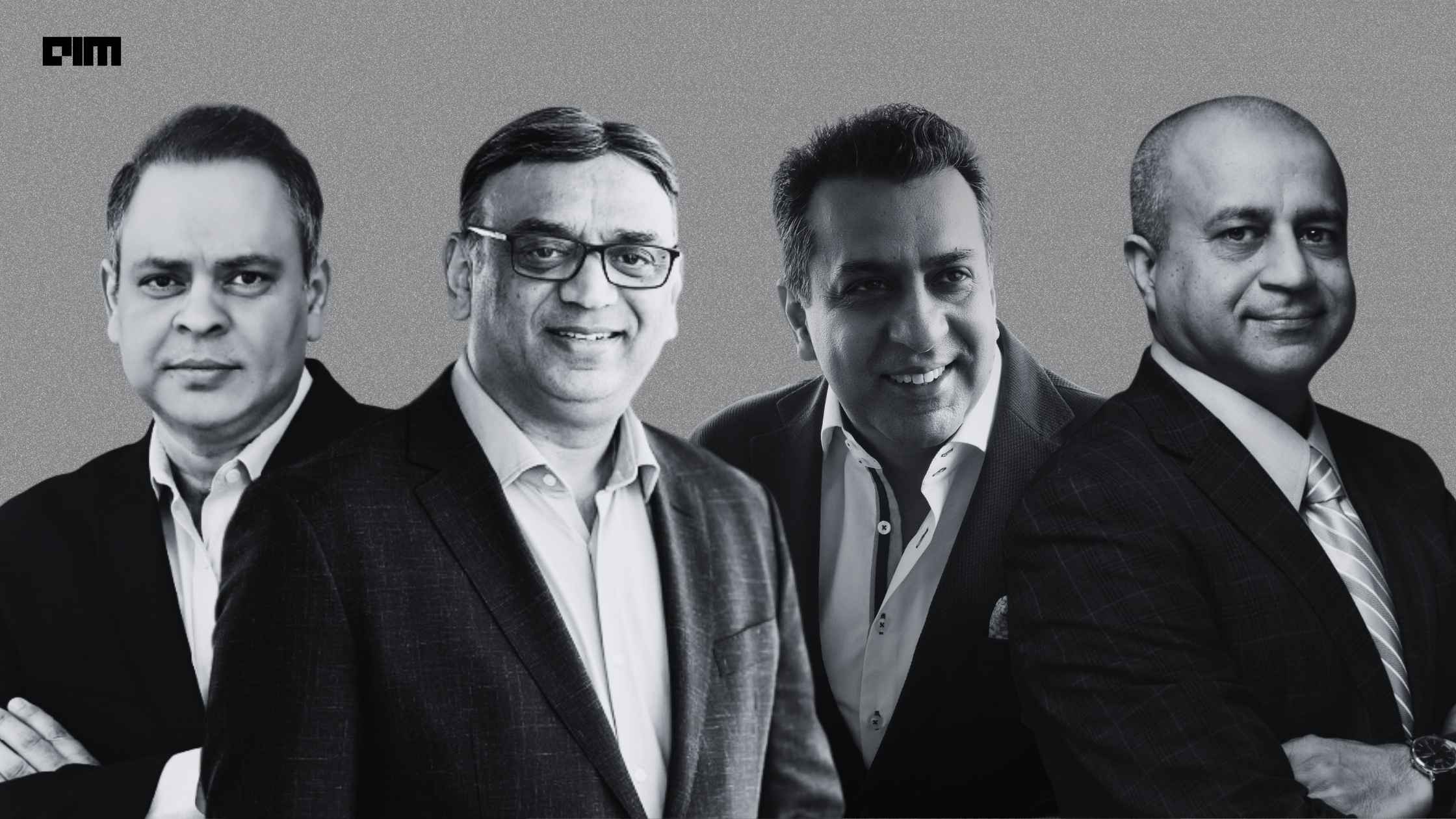
For large Indian IT firms, the December quarter remained cautious. Demand stayed weak. Pricing remained tight. And every earnings call leaned on the same phrase: AI first.
Mid-sized firms tell a different story. Persistent Systems, Coforge, Mphasis and LTIMindtree grew faster. They closed better deals. They executed well in a market still unsure about recovery.
They all faced similar pressures. Labour laws squeezed margins. Clients demanded higher productivity. AI reduced revenue even while winning contracts. Yet when results settled, the mid-caps appeared healthier than the giants they usually trail.
Impact Over Optics
Among the mid-caps, Coforge makes the clearest statement. “Almost 100% of the wins and new contracts being awarded to us are AI-infused,” said Sudhir Singh, chief executive, on the earnings call. “The age of AI experimentation is over.”
The figures supported the optimistic tone. Revenue increased by 4.4% sequentially in constant currency, totalling ₹4,188 crore. Order intake climbed to $593 million during a typically slow quarter.
The executable order book for the next 12 months rose to $1.72 billion, exceeding last year's figures by more than 30%.
A Better Narrated AI Story
Despite this, Coforge does not disclose a separate AI revenue line. Unlike larger peers, Singh avoids talking about pilots or platforms. He talks about outcomes.
Singh said Coforge’s model is narrow and deep, serving about 600 clients with 95% of revenue from repeat business. The top five clients grew 51% year-to-date, and the top ten grew 47%.
The contrast with large firms is sharp. TCS reported $1.8 billion in annualised AI revenue. HCLTech reported $146 million in advanced AI revenue. Coforge reported none. It offered silence on revenue and clarity on execution.
Meanwhile, Mphasis showed another side of the AI story. Revenue rose 2.6% sequentially and 12.4% year on year to a little over ₹4,000 crore. Growth was steady. The tension lay in pricing.
Chief executive Nitin Rakesh warned that the race to the bottom is highly risky. He noted that discussions about reducing prices are often subtle and emphasised the importance of fundamentally reevaluating how services are delivered.
AI forces that reset. Clients no longer want cheaper engineers; they seek fewer personnel. “There is only so much you can cut costs on when you are focusing on optimising expenses,” Rakesh said. “Without saying, can I eliminate these 30 to 40% of the people required to do this?”
Mphasis still relies on traditional models. Time-and-material (T&M) contracts account for 46.8% of revenue. Fixed price contributes 44.8%. Transaction-based work remains at 8.4%. Clients still pay by the hour, but productivity is now measured through tools and code metrics. Outcomes now matter more than effort.
Rakesh countered concerns about declining demand, emphasising that legacy systems still represent a significant opportunity.
“I have not seen any enterprise telling me I am going to reduce the number of engineers,” he said. “What they are telling us is I have a backlog that goes out two years.”
The Persistence and LTIMindtree
If Coforge signals confidence and Mphasis shows caution, Persistent Systems and LTIMindtree deliver the growth surprise.
Persistent reports $422.5 million in revenue, up 4.01% sequentially and 17.3% year on year. LTIMindtree reaches $1.2 billion, growing 2.4% sequentially and 6.1% annually.
Both run ahead of larger peers. Sequentially, TCS’s annual revenue increased by 0.6%, Infosys by 0.5%, Wipro by 1.2%, and Tech Mahindra by 1.5%. However, HCLTech grew more rapidly at 4.3%.
For once, mid-caps carry the growth narrative. “This confidence is supported by our execution discipline, improved deal momentum, and the traction we are seeing across our AI-led offerings,” said Venu Lambu, chief executive of LTIMindtree.
Persistent points to banking and healthcare, where data modernisation and application revamps finally turn into contracts. “We are also applying Agentic AI within our own operations, as a customer zero, to improve productivity and speed adoption at scale,” chief executive Sandeep Kalra said.
The cost of this growth arrives through regulation.
Persistent’s operating margin falls 190 basis points to 14.4% after a one-time ₹89 crore labour code charge. LTIMindtree absorbs a much larger hit. Labour codes wipe out ₹590 crore. Margins drop to 10.6%. Without the charge, margins rise to 16.1%.
Across the top 10 IT firms, the labour code impact crosses $575 million this quarter.
Net profit exhibited a consistent trend. LTIMindtree remained steady at $150 million. Persistent decreased by 6.8% to $48.3 million despite experiencing accelerated growth.
AI remained mostly invisible in reported numbers. Neither firm disclosed AI revenue. Both stated that AI is helping secure deals. Both acknowledged something more uncomfortable.
AI is causing a decrease in revenue from the largest clients. Lambu explained that "every customer undergoes a productivity journey,” noting that the top five clients represent the company's biggest accounts, which account for the recent short-term decline.
The translation is simple. AI lets clients do more with less. Until those journeys stabilise, large accounts will shrink.
Why did mid-caps look stronger this quarter? Speed matters. Smaller portfolios convert AI demand faster. Coforge sells transformation. Mphasis defends pricing. Persistent chases modernisation. And LTIMindtree pushes execution.
Expectations matter most. Big firms talk about protecting margins and pipelines, while mid-caps talk about delivery and share gains.
In large firms, AI preserves the existing narrative. In mid-sized companies, AI transforms their business models, and the risks are more evident. AI can secure deals but also reduce revenue, while regulations squeeze profit margins. The level of protection is also lower.

Your reaction
Discussion
What's your take on this story?
No comments yet — be the first to share your view.