Key takeaways
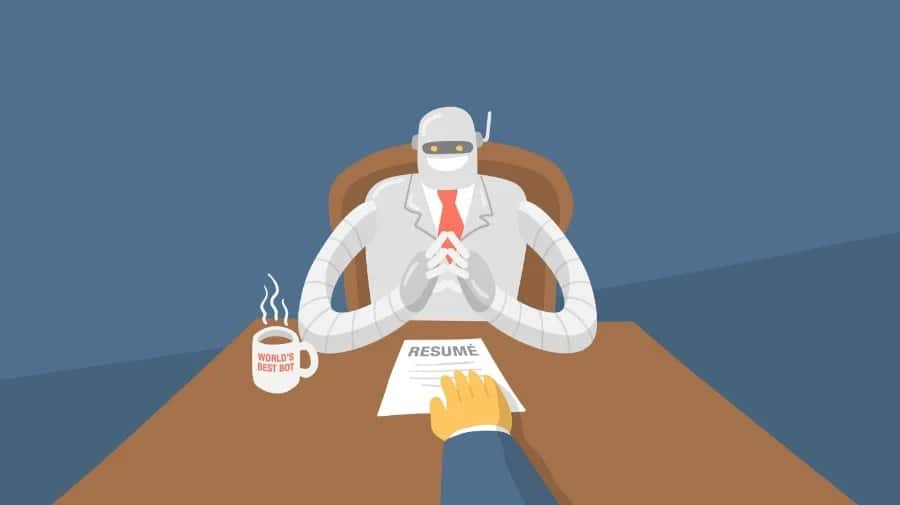
- AI is revolutionising the recruitment process, changing how candidates are assessed and hired.
- Organisations are under pressure to fully transform their HR functions within five years due to AI advancements.
- Major companies are adopting predictive analytics to enhance hiring quality and reduce biases in recruitment.
- Firms like Amazon and JP Morgan & Chase are leading the way in implementing AI-driven HR solutions.
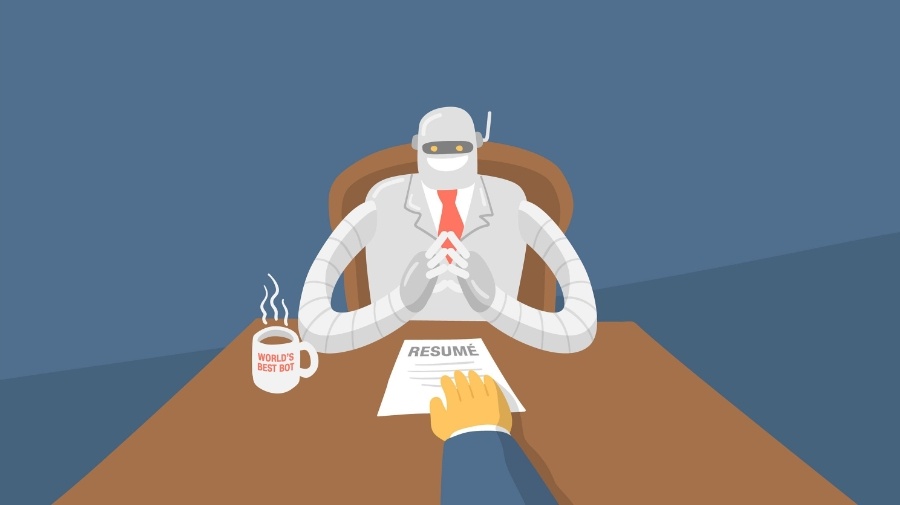 AI’s onward march has threatened jobs across industries, but the impact doesn’t stop there. Artificial Intelligence (AI) has impacted almost all sectors, and that includes hiring and recruitment space as well. Predictive analytics is going to change the way millions of people are hired and assessed. According to a whitepaper, The Robots Are Here- How AI Has Reshaped Recruiting, AI is viewed as a tool for the future and organizations are chasing a five-year deadline to transform HR from top to bottom.
Leading global consultancy firm Deloitte predicted that 38 percent of companies(10,400 respondents from 140 countries) believe that robotics and automation will be “fully implemented in their business within five years.” Companies like Amazon and JP Morgan & Chase have braced themselves for drastic changes in HR function. Case in point – JPMC implemented an AI product that reduced their hiring need of legal professions for loan interpretations. Meanwhile, organizations like Citigroup, Airbnb and Reebok are using Koru a predictive hiring software that identifies the best drivers of performance in the company, increases high quality hires, and reduces bias.
Understanding AI’s Role in Recruitment
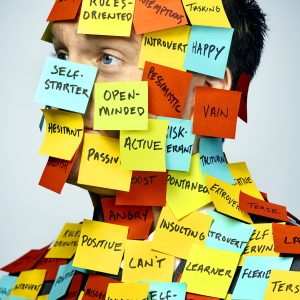 Interestingly, more than half of recruiters have griped about mining profiles of potential candidates being the hardest part of their work. With millions of candidates profiles and resumes across the internet, no top-notch recruiter, or even a Boolean black belt, can cope with those quantities, notes the paper. However, AI surpasses Boolean search in its ability to find matches that don’t contain specific keywords. It does this based on correlations and through constant learning as it determines what skills and other attributes are similar and appear in combination.
Let’s Have a Look at Intelligent AI Screening Tools and they are upending early assessment
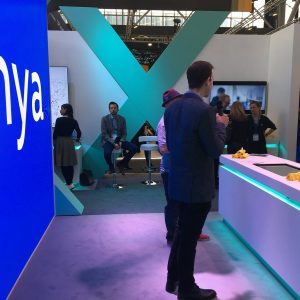 4) Use of Chatbots in initial screening: Today, recruitment firms are leveraging chatbots that perform the twin role of managing candidate relationships in early stages and even performing an initial screening. The use of chatbots is widespread in cases that involve high-volume of recruiting. Case in point – Mya chatbot automates the process from resume screening and decides whether the applicant’s resume should be forwarded or rejected. Now, even before the advent of chatbots, there were intelligent tracking systems that asked certain pre-screening questions but Mya performs a more dynamic candidate interview with contextual questions generated in real-time. Her knowledge base grows as she has different experiences with candidates, notes the website.
Key advantages of AI in first-stage hiring
- Roots out human bias and human fatigue element
- Provides improved speed and accuracy and lowers operational costs
- AI also has the potential to reduce discrimination from sourcing and screening process
- If the bias isn’t inadvertently built into the system, AI can help match right candidate with the right job
- A 2015 paper from Harvard Business School pointed out that algorithms do a better job of hiring qualified employees
- However, the decision shouldn’t be left completely on algorithms and a human element should be involved in making the final decision
- Gradually, AI & machine learning techniques will phase out the tasks of initial screening, ad-buying and placement of ads that took up the bulk of time of recruiters
- For high-volume, low-skilled positions, AI can be deployed to automate this cycle of job advertising, sourcing, screening and final hiring of candidates