Key takeaways
- China's AI landscape has recently experienced a slowdown, despite previous rapid advancements.
- The introduction of Wu Dao 2.0 showcased China's significant capabilities in AI technology.
- Regulatory pressures, including a crackdown on big tech, have contributed to the deceleration.
- Accusations of unoriginal research have raised concerns about the integrity of AI innovations in China.
- China has maintained a strong global ranking in AI innovation prior to this recent stagnation.
In June 2021, the China government-backed Beijing Academy of Artificial Intelligence (BAAI) introduced Wu Dao 2.0, a language model with 1.75 trillion parameters. With this huge magnitude, it easily surpassed its western cousins like GPT-3 (175 billion parameters). The scientists then claimed Wu Dao 2.0 enables the machines to think like humans and achieve cognitive abilities beyond the Turing test.
Like Wu Dao 2.0, over the years, China has introduced many AI models and approaches, which has tilted the globe to the east, especially when it comes to technological prowess, besting ‘super power’ countries like the USA. Unsurprisingly, China found itself ranked highly in the top countries for AI innovation and research for at least the last few years.
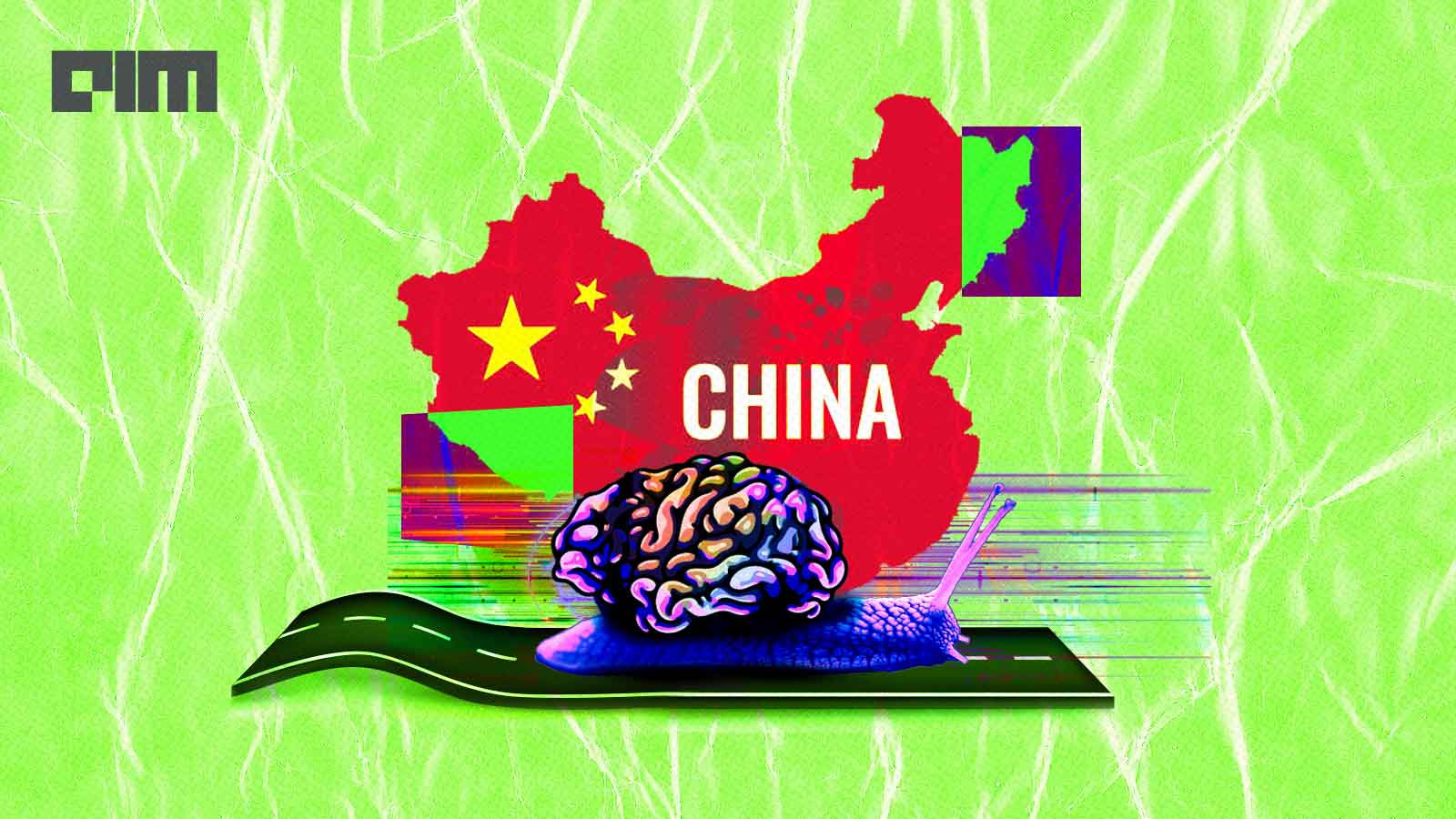
That said, the last few months have seen a slow down in the otherwise bustling AI landscape in the country. There are many reasons for it – the Chinese government’s crackdown on big techs, algorithmic regulation, and even accusations of unoriginal/plagiarised research work.
Crackdown on big techs
Chinese billionaire and the founder of one of the world’s most popular companies Alibaba, Jack Ma, made a bitter remark about the country’s financial system. This was in response to the state pulling the plug on the initial public offering of Ma-owned Ant Group. Had the IPO gone through, it would have brought in more cash than the state-run oil giant Saudi Aramco, which went public the previous year. This was reportedly a step to make private companies like the Ant Group to show them ‘their place’.
After the public comment, Jack Ma kept largely out of the public for almost a year before reappearing in October 2021.
Popular ride-hailing app Didi Chixung came on the line of fire after its $4.4 billion initial public offering in New York. Chinese regulators adopted a heavy-handed approach toward the ride-hailing industry, with regulators even threatening to get the apps blocked or suspended from operation.
Chinese government's crackdown had a major impact on top tech companies, including Tencent, Meituan, Didi, and Alibaba. Despite its effect on innovation and economic growth, regulators continue to be hell-bent on the enforcement actions even in 2022, furthering President Xi Jinping's bid for 'common prosperity.'
This crackdown is detrimental because these tech giants have often served as the AI innovation cradle. For example, Tencent has often been driven by 'AI for All'. Tencent's YouTu Lab is a leader in machine learning, credited with several innovations in image, face, and audio analysis.
Algorithmic regulation
China is carrying out what many call the ‘world’s most ambitious’ AI regulation effort. Under the new rules, companies will now be disallowed from using personal information to offer different prices for a product or service. Under the purview of these rules come search results, video recommendations, and content filtering. These rules will be imposed on sectors like ride-hailing, eCommerce, social media, and streaming companies. Commenting on the same, President Jinping said in a speech, “Some unhealthy and disorderly signals and trends have occurred in the rapid development of our country’s digital economy.”
The regulations are called the Internet Information Service Algorithmic Recommendation Management Provisions, which were drafted by the Cyberspace Administration of China, a body that enforces cybersecurity, e-commerce rules, and internet censorship. As per the regulators, these regulations would prohibit fake accounts, protect gig workers, and the control promotion of addictive content. Violating these rules could attract fines, companies being barred from enrolling new users or having their licenses revoked.
The rules seemed to have an effect on the tech companies. ByteDance, the company behind the popular short video app Douyin, since October, began showing five-second videos that urge users to log off after they spend a long time on the app. The move was designed to curb addiction to the algorithmically curated feed.
Plagiarised research
China’s AI research has come under the scanner for being plagiarised. One of the most recent and shocking examples is a 200 page academic paper by BAAI that was found to be plagiarised from a dozen published research papers. This was brought to the attention by Google Brain researcher Nicholas Carlini after his co-author found that some text in the paper titled ‘A Roadmap for Big Model’ seemed familiar. Further investigation corroborated his findings.
BAAI had to issue a formal apology finally and initiate an independent review of third part investigations.