
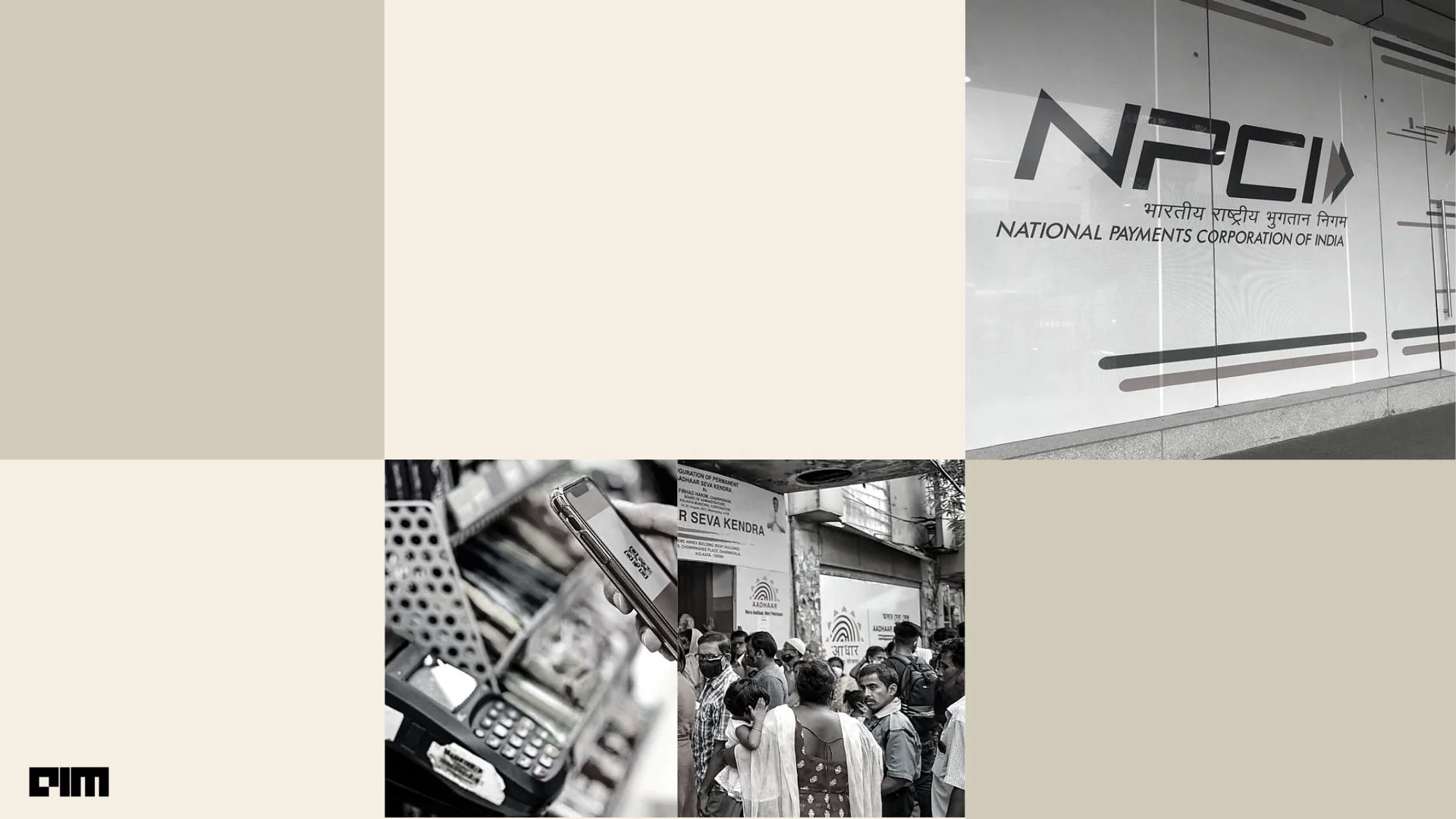
In November 2021, the National Payment Corporation of India (NPCI) discussed the future of digital identities in an article. Awarded ‘article of the month’, the story had Shivani Bisht, graduate engineer trainee, CDO office, brushing through the future of identity on the blockchain.
As per the author, while robust and cryptographically safe blockchain programming is a necessity, before widespread use, user-friendly and simple interfaces, regulatory monitoring, and consensus standards must be established.
The article ended with a quote from Aravind Srimoolanathan, senior research analyst, ICT at Frost & Sullivan, “By 2030, advancements in blockchain technology will lead to its integration with biometrics, resulting in the establishment of a single-token digital identity for individuals.”
This sheds light on NPCI lofty intentions for blockchain technology, even if the central government may be hesitant. The intent is also reflected in NPCI's continual recruiting of blockchain developers. The organisation has been aggressively seeking blockchain developers across several platforms for a few weeks.

Previous experiments with Blockchain: Vajra platform
In 2020, NPCI announced the Vajra platform, built on distributed ledger technology (DLT). It planned to utilise a permission model to ensure that only authorised parties access the network. Payment companies could apply to join the network. Once accepted, the idea of implementing the platform via an application programming interface (API) given by NPCI was discussed.

The implementation of DLT and the ensuing audit trail would help make tracking and resolving payment disputes quicker, which often takes three days. Furthermore, the possibility of the Vajra platform being utilised for Aadhaar authentication by the Unique Identification Authority of India was also envisioned.
However, barely a month later, the whitepaper was deleted from the NPCI website, and not much is known about the developments around it now. But it must be mentioned that before the announcement of Vajra, an article titled ‘The rising significance of blockchain in the banking sector’ was published on the NPCI website that ironically discussed the DLT-backed banking system.
Thus, can the aforementioned NPCI article about the future of digital identity and the recent hiring spree of NPCI for blockchain developers be linked together?
Future ahead: Single-token digital identity?
While integrating blockchain and biometrics to create a single-token digital identity might seem like a great idea at the moment, it’s still not ready for implementation in a large state like India. One of the implementation limitations will be its processing capabilities. Ethereum, for example, can only handle about a dozen transactions per second, which may not be adequate for nationwide use.
Furthermore, there is a minimum confirmation time before the transaction is considered correctly put to the blockchain. This duration can vary among blockchains, ranging from tens of seconds to minutes, limiting its applicability to biometric systems.
Another constraint might be scalability. This has been one of the fundamental disadvantages of the technology from its inception, as all nodes of the blockchain network must potentially hold all blocks of the blockchain network. The size of the public blockchains (Bitcoin and Ethereum) is now over 200GB, and it is rapidly expanding. This can be an issue in some application contexts, such as the Internet of Things (IoT).
While the issue of minimum confirmation time might be resolved by the likes of Ethereum-based layer two scaling solution Polygon, which claims to have achieved 65000+ transactions per second, however, in doing this, the security of Polygon is sometimes questioned.
And this leads us to the infamous Blockchain Trilemma, which refers to the inability of decentralised networks to provide all three benefits at the same time: decentralisation, security and scalability. Instead, it is believed that it can deliver only two of the three benefits at the same time.
Overall, it is up to the NPCI and the government to decide where they want to take it. While the introduction of blockchain technology into the banking industry was a significant step forward, the swift removal of the white paper from the website reveals there is still a debate over the direction of its use.
Blockchain: Where does the government use it?
On the surface, it might seem like the government is not doing much in this direction. However, some significant steps are indeed being taken. For instance, the Ministry of Electronics and Information technology (MeitY) has set up a Centre of Exchange in blockchain technology (CoE). According to the website, the National Informatics Centre (NIC) and CoE team will work with professionals worldwide to develop and execute novel blockchain solutions from proof of concept to production.
So far, the department has four products under the hood, namely: Certificate Chain, Document Chain, Property Chain, and Logistic Chain. Certificate Chain is primarily intended to combat fake documents, time taking document verification, and service delivery delays. One of the first adopters of this tech, the Central Board of Secondary Education (CBSE), maintains its academic records on the blockchain. Read more here: https://cbse.certchain.nic.in/aboutcc
Similarly, Document Chain offers issuing authorities and consuming institutions a uniform mechanism for storing and retrieving any government document, such as caste and income certificates, ration cards, driving licences, birth and death certificates, and so on. Caste and income certificates issued by the revenue department of Karnataka, for example, are recorded using the same technology.
Likewise, a blockchain-powered property management system allows for the availability of a common property ledger, allowing a single source of truth. The Logistics Chain is the online Supply Chain Management System for any particular industry.

Your reaction
Discussion
What's your take on this story?
No comments yet — be the first to share your view.