
5 min
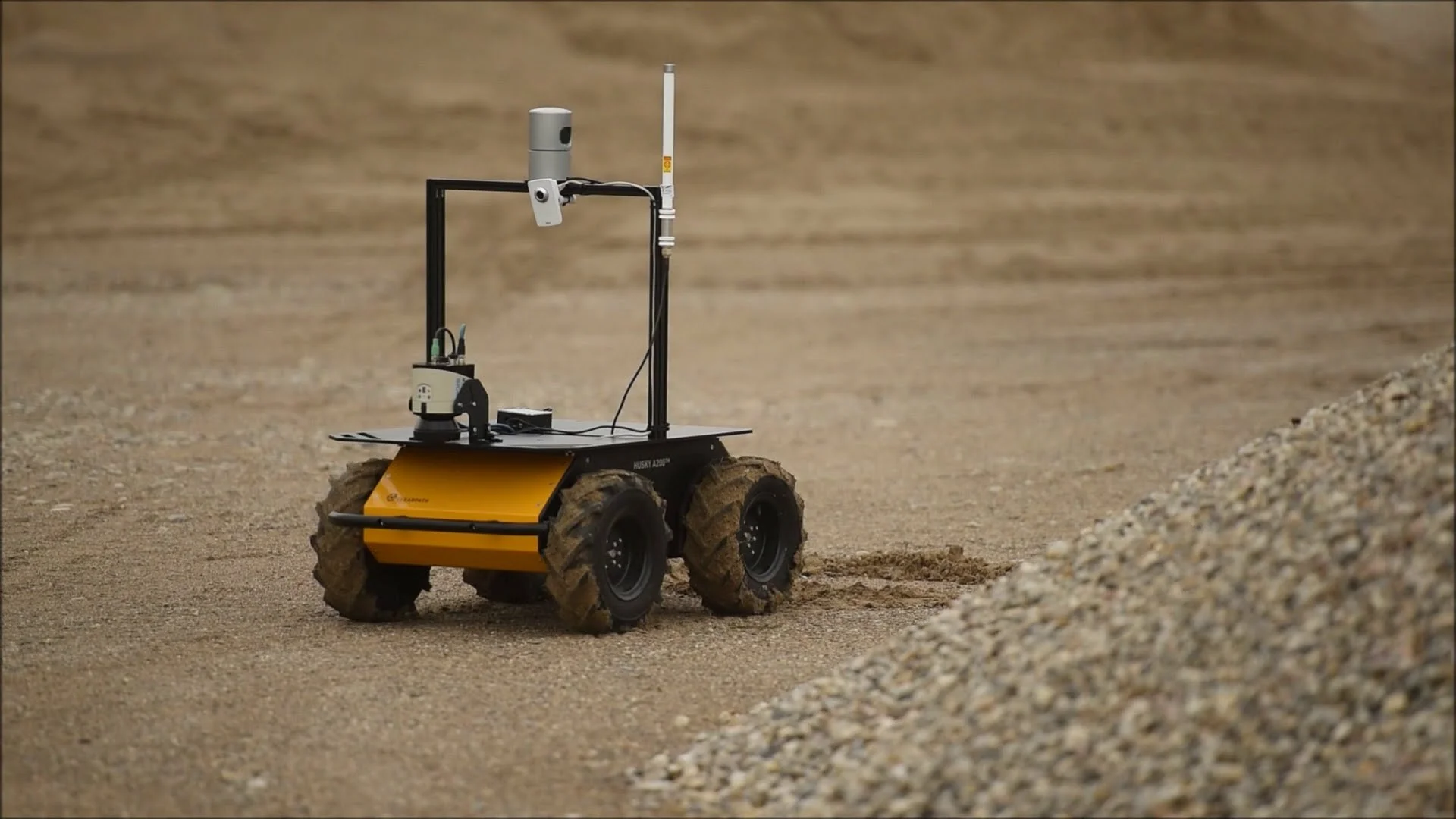
There is a new wave in robotics that is helping tech savvy manager leverage technology to optimize shifting operational constraints. Over a period of time, robotics technology has seen a significant improvement with AI and machine learning being baked into the systems, leading to increased mobility and intelligence. The result of these innovations is mobile robotics that has wended its way into industrial settings -- manufacturing, e-commerce, hospitals, mining and aerospace among other industries.
Robotics had long been a fixture in industrial systems and fulfillment centres but are now finding applications outside the industrial settings in a range of domains. Dubbed as a fast-evolving, solutions-oriented industry, mobile robotics comes at the intersection of hardware, software and advanced machine learning. Oxford Robotics Institute’s Markus Wulfmeier, has also talked in detail about the structure of mobile robots.
This new generation of autonomous mobile robots are key to driving the adoption of robotics in a range of new industries. What’s driving the uptake – improved localization and mapping capabilities, tracking and prediction features have added more value in terms of efficiency and productivity gains. Some of the key players in this space are Yaskawa, Swisslog, Clearpath Robotics, Mobile Industrial Robots, Locus Robotics among others.
The Rise of Mobile Robots
First up, advanced technologies like mobile robots need deep expertise in embedded software engineering, hardware and AI. The software components use artificial techniques that take in data through sensors and others take in data to continuously generate data — like driving instructions in an autonomous car, for example. Here, the hardware executes these driving instructions on the actual car. Given the success of these systems, a natural question we can ask is, “What else can I learn from data?” The autonomous systems are made up of volumes, including perception, localisation and mapping, tracking and prediction, planning, and control. Machine perception in today’s technology is largely ruled by the advancements in deep learning. Deep Learning has played a vital role in tasks such as as object recognition, image recognition and others are dominated by deep learning. Earlier approaches were made using handmade features. Replacing this hand engineering of features is a critical task and deep neural networks seem to be working solutions to this problem. In this article, we give you a peek into the workings of mobile robotics - from mapping & localization to tracking and prediction and delve into the ethical issues involving autonomous mobile robots.Tackling Localisation & Mapping In Mobile Robotics
Localisations answers the question, “Where is the robot now?”.- It is commonly determined by matching features in sensor measurements and based on changes in coordinates, researchers can calculate the change in pose via geometric rules.
- Another form of localisation is against a map, which is known as absolute localisation additionally involves a feature-matching process of current perception against a location.
- There are both geometric and learning ways for solving the SLAM (simultaneous localisation and mapping) problems.
- There has been active movement to combine both approaches to improve performances.
Understanding Tracking And Prediction In Mobile Robotics
Most object tracking pipelines can be put in two phases: prediction of all tracks, and accurate assignments between current measurements and existing tracks. In multi-object scenarios, one of the main challenges is the data association problem which relates to the current track and the current detection of the robot. There are simple distance-based associations between predicted position and current detections. There are learning-based approaches which learn a metric space where different instances of the same type reside closer together. To be successful at this task of associating tracks with new detection, a module that predicts future positions, such as the Kalman filter, is needed. But this method can’t be used for long-term predictions, especially in the cluttered environments. The interest is not only in the prediction of tracks for known and detected objects but also the full prediction of future states. There are methods that can bypass the data association problem but the use of learning generative models for the prediction of complex sensor measurements.Planning and Control
Planning and control make a critical component of mobile robotics pipeline since they form the connecting modules. Reinforcement learning is an attractive option to consider but it still needs to solve many real world problems. These are some of the ways we can put demonstration based learning :- Behavioural Cloning (BC) aims at copying expert behaviour to solve a task. This can be integrated into many other pipelines to build on more abstract representations. These kind of systems can also mimic other automated systems.
- Inverse Reinforcement Learning (IRL) is one of the another popular approach which blends supervised learning and reinforcement learning. The model tries to infer expert preferences by optimising a reward function.

Your reaction
Discussion
What's your take on this story?
No comments yet — be the first to share your view.