
Mobile Number or Hand-phone number has come to represent an element of person’s identity and hence there is an implicit inertia that is built into a person’s action while mobile numbers are to be changed. Thus, mobile companies were building up an embedded loyalty into customers’ behaviour, when mobile numbers portability was not in force – there was a reluctance to change the operator even when the customer was not satisfied with the services or charges or plans. With the advent of “Mobile Number Portability” (MNP) this very paradigm of “forced loyalty” was broken – as the customer could shift the operators without changing the mobile number. This resulted in companies becoming more customer friendly in terms of their plans, pricing, and service.
Customer Loyalty – Its impact on the Cost
A survey of telecom literature indicates that the cost of acquiring a new customer is at least 5 times the cost of retaining an existing customer. With mobile telephony penetration curve flattening, market players are eyeing the same market, which is fast shrinking. Mobile connectivity becoming the order of the day irrespective of the geographical reach – be it either urban or rural – customers are forcing network providers to dynamic plans which are pocket-friendly to the customer and at the same time to invest in the back-end infrastructure to reduce call-drops. All these market dynamism on the players’ part is expected to play a role in creating the “hygiene factor” for customer retention. However, the players are depended on the “invested” customers to increase their use of data services (2G / 3G) and value-added services (VAS) to increase their top-line. Thus, it becomes all the more imperative for the market players to retain their existing customers and induce them to build their relationship for a higher mobile spend on various services offered by them.Customer Retention Programs:
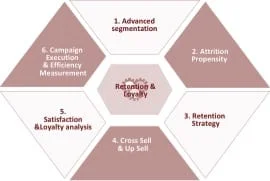
The new mobile market paradigm has forced CRM Managers to shift gears in designing their retention programs to become more dynamic and customer focused. The success of these programs will be measured on the ‘Δ’ it creates in most singular metric on which most telecom companies are measured – ARPU (average revenue per user). For even the best of the retention programs to be successful, it has to be able and amply supported by the back-end analytics infrastructure that maximizes the impact of the program by aiding the decision makers to zoom in on the right target segments for each customized retention program. However, Retention/CRM managers find that they get less than acceptable returns on their retention programs. This is mostly because these programs are not targeted sharply enough. A large proportion of customers targeted are often the ones who would not have churned in the 1st place.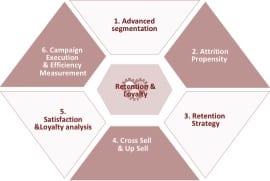

Your reaction
Discussion
What's your take on this story?
No comments yet — be the first to share your view.