
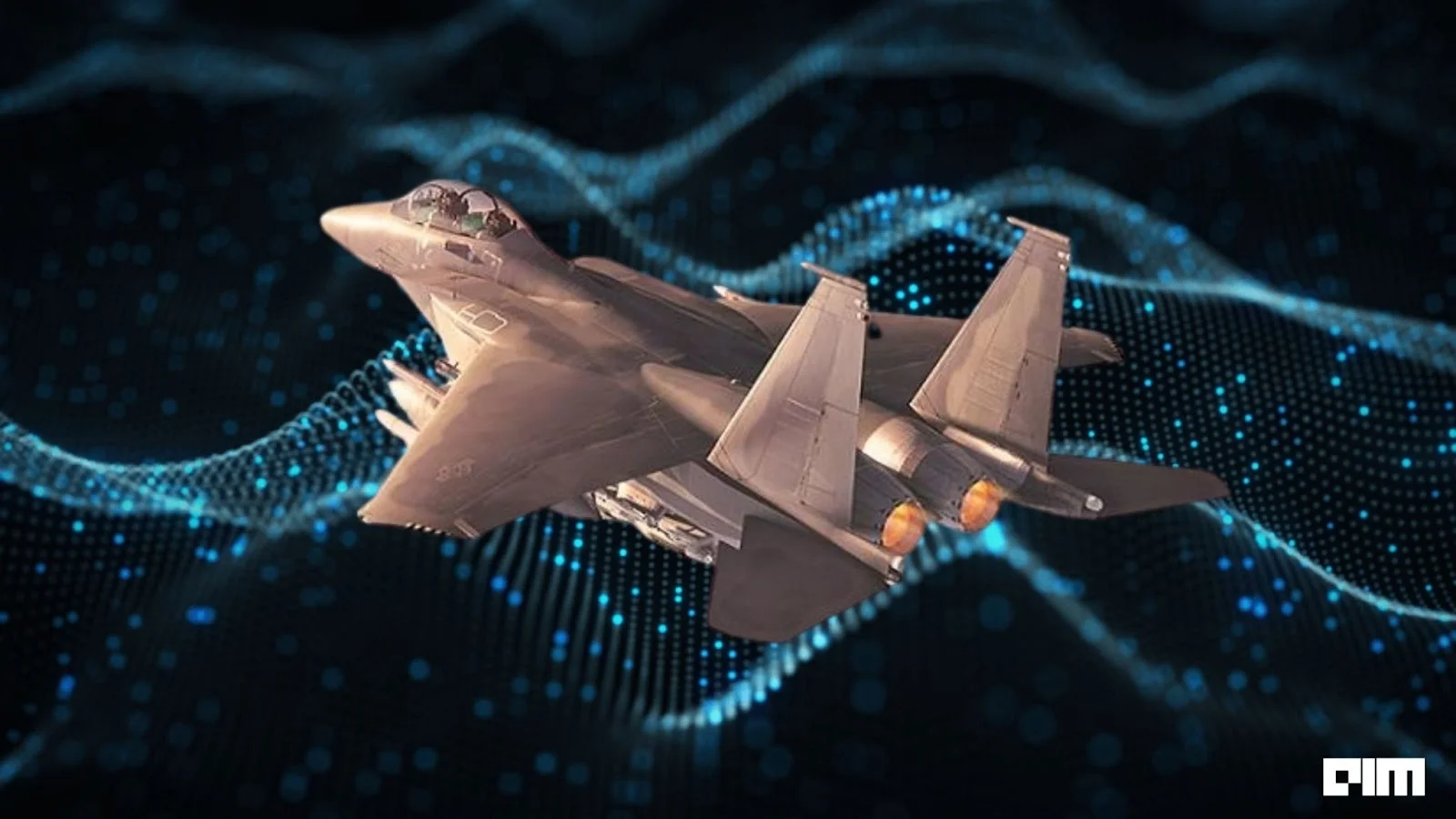
Defence Minister Rajnath Singh, while speaking at the first-ever symposium and exhibition on Artificial Intelligence in Defence (AIDef) held in New Delhi earlier this month, said that India is developing AI-based weapons or systems, keeping in mind the crucial role technology can play in future warfare.
Air Marshall N Tiwari, who was also present at the symposium, assured that the Force was well-pitched to accept AI solutions, “basically, because we have two things – technology and data. We also have the hardware required to segregate or analyse data to give you a decision support system. We are well placed when it comes to using AI and machine learning, and deep learning techniques,” he added.

IAF launches Centre of Excellence for AI
The Indian Air Force has set up an AI Centre of Excellence under the aegis of UDAAN (Unit for Digitisation, Automation, Artificial Intelligence and Application Networking).
A Big Data Analytics and Al Platform has been commissioned in the IAF’s Al Centre for handling all aspects of Analytics, Machine Learning, Natural Language Processing, Neural Networks and Deep Learning algorithms. The high-end compute requirements would be undertaken by the latest Graphical Processing Unit-powered servers, the IAF announced in a press release.
The Centre of Excellence has high-end compute and big data storage capabilities. Coupling them with full spectrum Al software suites would significantly enhance the operational capability of IAF.
“We also have the Software Development Institute in Bangalore, which caters to airborne applications which go into aircraft and airborne systems. These agencies have taken proactive steps to embed AI in technologies in all our wide warfighting processes,” Tiwari said.
Intelligence Surveillance and Reconnaissance
“By embedding AI, IAF has leveraged technological advances in the field of intelligence, surveillance and reconnaissance. Adoption of these technologies has drastically reduced timelines for intel gathering, asset identification and weapon-to-target mapping, thereby positively impacting war readiness and fighting capability of the force,” Tiwari said.
The IAF has also deployed an application that captures all electronic intelligence gathered by it, as well as from other intelligence agencies and integrates them into a common structure for creating a comprehensive electronic order of battle (EOB).
Further, the IAF has developed an imagery intelligence analysis tool which is used for the identification of assets, assessment of enemy targets and movements by employing AI on the reconnaissance data.
Besides this, the IAF uses another analysis tool, which is being used for intelligence processing and analysis to prepare a composite intelligence picture. This application is being developed in collaboration with the Ministry of Electronics and Information Technology (MeitY).
“It will provide an AI-based solution for extracting a summary of intelligence inputs from various sources in different formats using deep learning techniques. This application will greatly enhance the usability of that intelligence and provide our commanders in the field with useful, timely inputs,” Tiwari said.
Campaign Planning and Analysis System (CPAS)
The IAF has developed an AI-based campaign planning and analysis system (CPAS), which is being used to provide functionality for the planning of campaigns and debriefing solutions for all aircraft under the Indian Air Force. IAF’s fleet consists of a wide variety of aircraft, which come with their own standards and systems.
“Therefore, to put it all together on one common platform is a very challenging proposition. But I’m happy to announce that we have fully succeeded in this goal.
“This application can also simulate the entire war campaign for practice and skill enhancement of planners and decision-makers in the organisation, thus providing a very important training tool for warfighting at all levels,” Tiwari said.

Forecasting operational stamina
The IAF is also working on advanced AI and Big Data analytics projects for forecasting operational stamina. The AI-driven platform will provide a real-time operational stamina status and forecast a realistic operational potential based on a selected time horizon and the objectives of the campaign.

(Fig 1)
The project is designed to help commanders get the whole picture, in terms of operations, logistics, and resource availability in real-time. “It will provide suitable options to achieve the desired solution. All IAF operations are currently being planned, managed, and monitored through what we call the air-operation systems,” Tiwari said.
AI integration
Figure 2 (below) is a dashboard accessible by IAF commanders. It helps them monitor all activities in real-time. Now, the IAF wants to integrate AI into this and take it to the next level.

(fig 2)
“In addition to this, we also have what we call the e-MMS, which is the e-maintenance management system (E-MMS) – an ERP-based application for management and monitoring of servicing of all IAF assets.
“We are in the process of employing advanced tools to use maintenance data for predicting failure rates of critical equipment. Further, the IAF also operates the Integrated Materials Management Online System (IMMOLS), which is called an e-audit cleared ERP application with real-time supply chain management and monitoring facilities. The application is being upgraded with advanced AI and analytics tools for intelligence forecasting of referred resource requirements,” Tiwari said.
Collaborations
Safeguarding the Indian airspace is IAF's primary responsibility and it is capable of doing this with the help of a fully networked system of sensors. To this end, IAF is collaborating with BEL, IIIT Hyderabad, IIT Jabalpur and IIT Kharagpur for embedding AI systems into its integrated air command and control systems.
“The applications will provide interception guidance, voice identification, multi sensor fusion and aerial threat estimation. These functionalities would greatly enhance our decision-making capability in this time sensitive domain," Tiwari said.

Your reaction
Discussion
What's your take on this story?
No comments yet — be the first to share your view.