
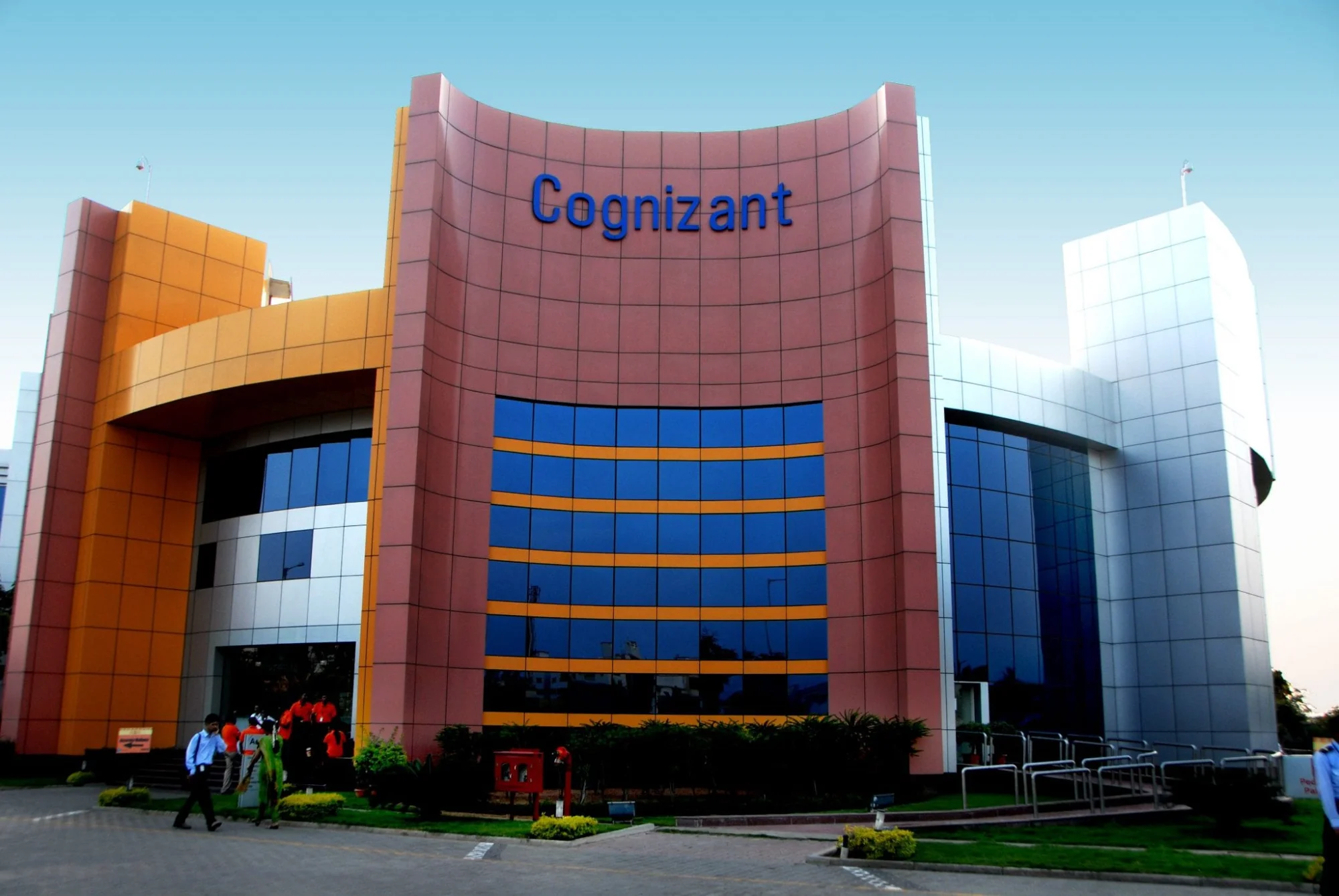
Cognizant Technology Solutions has warned that it may “fail to recoup its investments in AI” if it loses momentum amid growing competition. It cautioned that its financial performance and competitive position may be “adversely impacted” if it’s unable to bring AI-enabled solutions to market as effectively or quickly as competitors, or if clients reject new pricing models.
That statement appears in the company’s Annual Report on Form 10-K for the year ended December 31, 2025.
Cognizant states it has incurred and plans to continue to incur significant development and operational costs to build and support our AI capabilities, including compliance costs tied to “the complex and rapidly evolving legal landscape around AI and automation”.
The disclosure, part of the legally mandated Risk Factors section, explicitly outlines financial exposure linked to AI monetisation.
Pricing and Margin Risk
The filing directly connects AI execution and client pricing acceptance to potential adverse impacts on financial performance.
However, in its Q4 earnings, Cognizant positioned AI as central to its growth strategy, both as a productivity lever and a new revenue opportunity.
The company now boasts over 4,000 AI engagements across all three vectors—hyper-productivity, industrialising AI, and agentification. Moreover, the leadership notes that over 30% of its developer effort in software development cycles is now AI-assisted.
During the post-earnings call, CEO Ravi Kumar S noted that Cognizant was focused on bridging what he calls the ‘AI velocity gap’ between infrastructure spending and enterprise value realisation.
“Cognizant’s mission is to be the AI builder, bridging this gap to enterprise value by converting the technology to measurable returns on investments for our clients,” he had said.
Automation May Replace Legacy Work
Cognizant also acknowledges structural revenue displacement risk.
“Some services that we historically performed for our clients have been and will continue to be replaced by AI or other forms of automation, including our own AI-enabled client offerings,” the company states.
It further explains that such shifts “may lead to reduced demand for our services or harm our ability to obtain favourable pricing or other terms for our services”.
Regulatory and Governance Exposure
Cognizant also highlights increasing regulatory complexity, citing emerging US state AI laws and the EU AI Act, which entered into force in 2024 with provisions beginning to apply in 2025.
Compliance, it states, “may impose significant operational costs” and could “delay, limit or prevent” AI deployment.
Even with internal safeguards in place, the company concedes, “There can be no assurance that our responsible AI framework will adequately identify, assess and prevent all AI-related risks.”
Cybersecurity and Third-Party Dependence
The company points out that AI deployment could create “new or exacerbate existing cybersecurity vulnerabilities, including novel risk vectors that may not be immediately identifiable.”
It also discloses reliance on third parties for “datasets, models—including foundation models—and other AI system components. Licensing restrictions, pricing changes or competitive pressures could hinder its ability to develop, implement or maintain AI technologies.
Offshoring and Immigration Sensitivity
Beyond AI-specific risks, Cognizant reiterates exposure tied to global delivery models and immigration policy.
Restrictions on visas, in particular in the US, UK and EU, or increased wage requirements for visa holders could affect the company’s competitiveness and service delivery to clients.
It further flags risks related to anti-outsourcing legislation, if adopted, and negative perceptions associated with offshore outsourcing, both of which could impair our ability to serve clients.
Given that a majority of its workforce is located in India, the company notes that economic or political developments in India “may also significantly impact business and operation costs”.
Accenture Signals Similar Concerns
Accenture, reporting its first-quarter fiscal 2026 results, posted strong deal bookings and steady revenue growth but faced margin pressure from business optimisation costs.
New bookings rose 12% year-on-year to $20.9 billion, including $2.2 billion in advanced AI bookings, while quarterly revenue increased 6% to $18.7 billion, beating Wall Street's quarterly expectations.
However, the company adopted a cautious tone, announcing job cuts and acknowledging that the anticipated AI boom has yet to translate into meaningful terms.
Accenture’s chief executive, Julie Sweet, admitted as much in the post-earnings call. AI, she said, has captured executive attention faster than any recent technology development seen in the past few decades.
The returns, however, have been underwhelming so far. “As reported widely, value realisation (of AI) has been underwhelming for many and enterprise adoption at scale is slow other than with digital natives,” Sweet said.
Stocks Plunging
Indian IT stocks have been seeing heavy selling amid growing ‘SaaSpocalypse’ concerns, triggered by both technological and macroeconomic factors.
Anthropic rolled out upgrades and enterprise capabilities for its Claude models with routine enterprise tasks, unsettling IT services companies reliant on US technology spending.
Meanwhile, Palantir, in its earnings call, said AI is compressing enterprise resource planning (ERP) timelines from years to weeks—a domain traditionally seen as resistant to automation—while reshaping pay-per-seat software and third-party enterprise solutions.

Your reaction
Discussion
What's your take on this story?
No comments yet — be the first to share your view.