
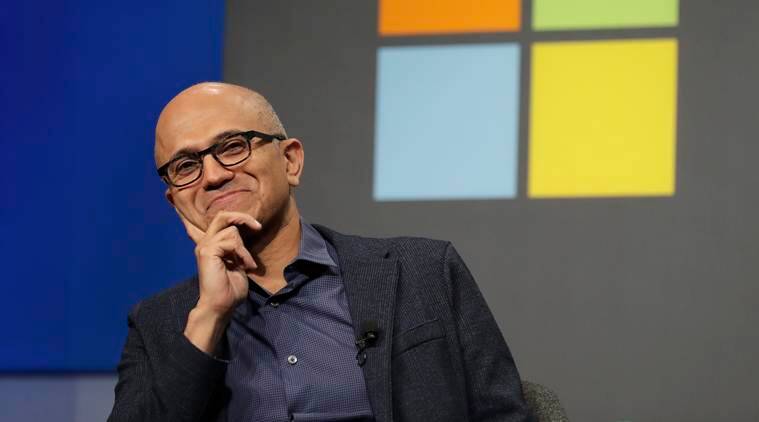
When Satya Nadella took to the stage at Microsoft Build 2026, he came armed with a striking analogy. The chief executive of one of the world's most powerful technology companies claimed that Microsoft's flagship Fairwater facility, a colossal 315-acre AI campus in Mount Pleasant, Wisconsin, would consume roughly as much water in a year as a single neighbourhood restaurant.
The statement was designed to reassure. Whether it succeeded is another matter entirely.
Nadella's claim hinges on a genuine engineering shift. Fairwater, which opened in September 2025 and went live ahead of schedule in April 2026, uses a closed-loop liquid cooling system that is filled once and sealed. Because the coolant recirculates continuously within sealed pipes rather than being evaporated into the atmosphere, the facility operates with what Microsoft describes as effectively zero ongoing water consumption.
The two-storey architectural design, which stacks GPU racks in three dimensions for maximum density, enables the enormous compute power of hundreds of thousands of Nvidia GB200 and GB300 chips without the water penalties of conventional approaches.
Community Backlash
The Fairwater campus in Mount Pleasant, Wisconsin, has been at the centre of this major community backlash and environmental protests over noise, light pollution, and stress on public utilities against Microsoft.
Attendees arriving at Microsoft Build 2026 were greeted by protesters outside the venue, who adapted the famous Vietnam War-era chant against President Johnson to challenge Nadella and Microsoft President Brad Smith, asking, "How many kids did you kill today?"
The unease extends well beyond Wisconsin. Since 2024, dozens of local community-led protest campaigns have emerged in opposition to AI data centres, driven by concerns over energy use, energy costs, noise pollution, water waste, and air pollution.
In 2025 alone, local opposition led to the delay or cancellation of data centre projects totalling US$156 billion. Communities have grown increasingly resistant to approving new facilities without greater transparency, with critics arguing that tech companies must move beyond keynote pledges and submit to verified, mandatory disclosure of their environmental impact
Nadella's claim
"Perhaps the most important design criteria for us is, how do we earn the permission from the communities in which we're making these data centres?" Nadella said, framing the company's environmental commitments as a prerequisite for innovation.
He added that Microsoft was working to ensure its facilities did not drive up electricity prices, that water use was being replenished, and that local communities were receiving jobs, training and tax revenues in return.
However, a recent report by Monitoring Analytics, the independent watchdog for the PJM power grid in the U.S., found that wholesale electricity prices in the region rose 75.5% year-on-year, partly driven by surging demand from data centres and delays in adding new power capacity.
According to the International Energy Agency, a typical 100-megawatt hyperscale data centre consumes around 530,000 gallons of water per day, roughly equivalent to the water use of 6,500 homes.
Research group Nature Forward puts the average enterprise data centre's daily consumption at between 300,000 and 500,000 gallons, while large hyperscale facilities can draw between one and five million gallons every single day. At the upper end, that is enough to supply a town of between 10,000 and 50,000 residents. In summer months, when air temperatures rise, demand can triple.
A neighbourhood restaurant, by contrast, uses an average of about 5,800 gallons per day, according to US Environmental Protection Agency estimates, which translates to roughly 2 million gallons a year. Nadella's claim, taken at face value, means a 315-acre AI superfactory of extraordinary computing density would consume less water annually than a sit-down dining room in a suburban high street.
The gap between the two figures, millions of gallons a day for a conventional hyperscale facility versus roughly two million a year for a restaurant, captures the magnitude of what Microsoft is claiming to have achieved.
Industry estimates suggest that roughly 75 to 90 per cent of data centres worldwide still rely on water-based cooling as their primary method, and the overwhelming majority of large-scale facilities continue to use open-loop evaporative cooling, in which water is deliberately evaporated to carry heat away — and must therefore be continuously replaced.
Closed-loop systems capable of achieving near-zero consumption remain the exception rather than the rule, largely confined to newly constructed facilities designed with AI workloads in mind.
Microsoft itself acknowledges that Fairwater represents the frontier, not the norm. The company has stated that all future data centres will adopt the closed-loop approach, but retrofitting thousands of existing facilities worldwide is a different proposition altogether. Its Azure network now spans more than 500 data centres across 80 regions — a footprint that expanded more in the last 18 months than in the entire first decade of the platform's existence.
Critics have been vocal. Online, responses to Nadella's keynote were heated, with many users arguing that evaporative cooling still occurs at various stages of even "closed-loop" systems, particularly in the secondary cooling stages that reject heat to the outside air.
A piece in the Lake Powell Chronicle noted that while the internal loop may be sealed, the broader system is not always water-neutral — reliance on evaporative towers or energy-intensive chillers for the secondary heat rejection stage can offset the internal water savings, particularly in hot climates.
"The water-free alternative," the publication observed, "is a large outdoor radiator that dissipates
heat by blowing ambient air across the pipes, but its efficiency drops sharply in high ambient temperatures." That is precisely the challenge in the American Southwest, where many of the largest data centre campuses are located.
Transparency, meanwhile, remains a serious concern. In California, data centre operators are not required to disclose how much water their facilities use. Legislation mandating such disclosure was vetoed by Governor Gavin Newsom last year amid industry pressure, though new bills are now moving through the state legislature.
Assembly Member Diane Papan has proposed measures to prevent local governments from approving new or expanded data centres unless developers first disclose their water-use plans.
The impetus for such legislation reflects a broader sense that tech companies' reassurances, however sincere, are not a substitute for verifiable accountability.
Fairwater's closed-loop design is, by any measure, a genuine advance. The engineering is real, and the water savings compared to conventional approaches are substantial. But a single showcase facility, however impressive, does not transform an industry.
The question communities are increasingly asking is not whether Microsoft can build a cleaner data centre, but whether the thousands of facilities that will power the AI age will follow suit — and how soon.
Until that answer arrives with verified data rather than keynote analogies, the scrutiny will continue.

Your reaction