
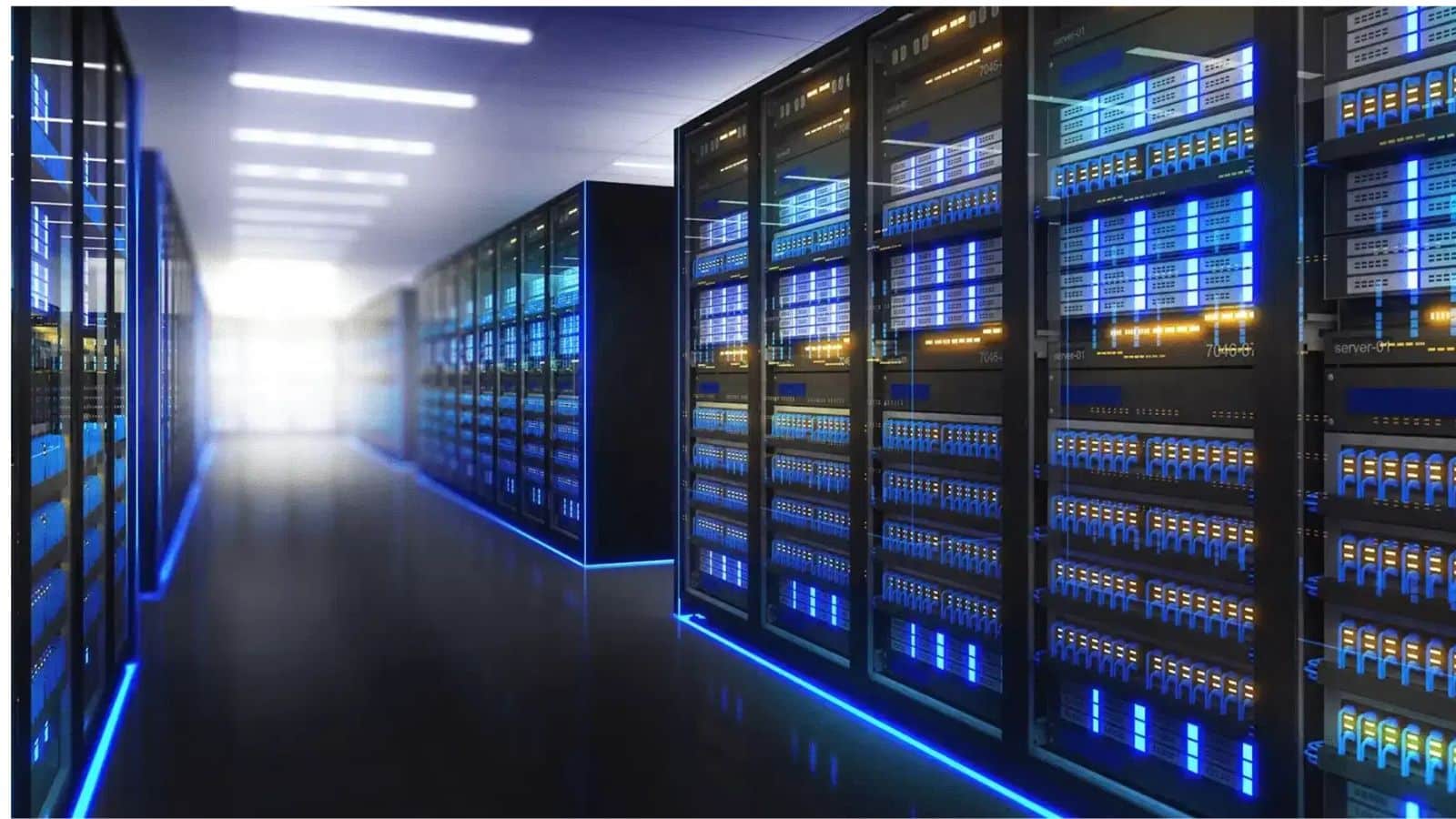
The United States' ambitions to dominate the global artificial intelligence race are running headlong into a brutal physical reality. Nearly half of all data centres scheduled to come online in 2026 will either be delayed or cancelled outright, according to a report by Sightline Climate's 2026 Data Centre Outlook.
At least 16 gigawatts of data centre capacity were slated to come online across 140 projects this year. Yet only 5 GW is currently under active construction. There’s no movement with the remaining announced projects, which are set to be delayed given that typical build times run between 12 and 18 months.
The trajectory beyond 2026 looks no better. For 2027, only 6.3 GW of computing infrastructure is under construction against 21.5 GW announced.
The US has more than 4,200 data centres, according to Data Center Watch, with the market projected to grow to over $300 billion by 2030. However, the American data centre boom is hitting "a formidable wall of logistical friction," if you believe Canaccord Genuity analyst George Gianarikas.
The blame is distributed. A mix of on-ground resistance, political hurdles, supply chain problems, and a rusting energy grid has contributed to the inertia, giving promising markets like India new leverage.
The Power Problem
The root cause of this gridlock is energy. The United States' electrical grid, much of which was constructed in the 1950s and 1970s, was simply never designed for the scale of demand that modern AI infrastructure requires.
Clift Pompee, VP of Power and Emissions at Compass Datacenters, tells AIM that the current system is inadequate to handle AI data centres. “The year 2026 is a pivotal year for the future of the US power grid, since roughly 70% of the grid is approaching the end of its life cycle and the unprecedented load growth is exposing the ageing nature of our grid," he notes.
According to Pew Research, US data centres consumed more than 4% of the total electricity consumption in 2024 at roughly 183 TWh—equivalent to the annual electricity demand of Pakistan. This is expected to triple to about 12% of all electricity use by 2028, according to the US Congress.
The power ecosystem is also grappling with limitations on reliable power sources, the sustainability of power, upstream infrastructure for power access, power equipment within data centres, and electrical trade workers to build out facilities and infrastructure.
This has prompted some US states to take corrective action. New York, Michigan, Virginia, Maine, and Oklahoma have enacted or proposed moratoriums on new data centres.
Transformers, Tariffs, and a Chinese Catch-22
The power crisis is compounded by a crippling shortage of the hardware required to build the grid connections that data centres depend on. High-power transformers, switchgear, and batteries—critical components for drawing electricity from the national grid to feed servers—are in desperately short supply.
Before 2020, high-power transformers arrived 24 to 30 months after an order was placed. Today, delivery times have stretched to as long as five years as the power sector grapples with an unprecedented boom for both new modes of power generation and power demand.
“AI companies typically want delivery in less than 18 months — a timeline the market simply cannot accommodate,” notes Philippe Piron, Chief Executive of GE Vernova’s electrification division.
The United States now finds itself in an uncomfortable bind: imports of high-power transformers from China surged from fewer than 1,500 units in 2022 to more than 8,000 units through October 2025, with China accounting for over 40% of US battery imports and around 30% of certain transformer and switchgear categories, according to Bloomberg.
Ironically, the US has to depend on the very country it aims to outcompete in AI. FERC Commissioner Mark Christie recently stated that "the fundamental problem is that load growth driven by data centres is far exceeding any realistic possibility of new generation.”
Hyperscalers Cannot Spend Their Way Out
The four largest American technology companies—Alphabet, Amazon, Meta, and Microsoft—are expected to collectively spend over $650 billion on AI infrastructure in 2026 alone. Yet analysts at JPMorgan estimate the full AI infrastructure cycle will require no less than $5 trillion to complete, with the US government potentially on the hook for over $1 trillion to close the funding gap.
Even OpenAI's Stargate ambitions have not been immune. The company recently paused its UK Stargate project, a partnership with NVIDIA and Nscale to deploy up to 31,000 GPUs, citing prohibitive energy costs and regulatory hurdles. An OpenAI spokesperson noted the company would "move forward when the right conditions, such as regulation and the cost of energy, enable long-term infrastructure investment."
"There is simply not enough compute and every player is acutely compute constrained—bottlenecks from fabs to permitting for data centres to power to memory to labour are real and are here to stay," Shreeti Kapa, Executive Director, Global Banking and Markets at Goldman Sachs, told AIM following a recent investor dinner in Silicon Valley.
Societal Pushback Adds to the Pressure
Beyond the technical constraints lies a mounting political and social backlash.
A recent Quinnipiac University poll found that public confidence in AI is declining sharply, with growing wariness around its integration into healthcare, education, and daily life. Communities near major data centre clusters in Virginia, Texas, and Georgia are already reporting residential electricity rate increases of 8–15%.
"Big Tech and data centre companies are an easy target for politicians, utilities, and local groups to blame for rising energy prices," even where direct causality is disputed, says Rachel Conrad of Foley & Lardner LLP.
As Canaccord's Gianarikas concluded: "Not only are the energy constraints mounting, but so are the sociopolitical ones. Something's got to give."
For a country that has staked its technological future on winning the AI race, the gap between ambition and infrastructure is widening—and the clock is running out. But with the data centre pipeline in the US drying up, the spillover is bound to fall on countries like India, which is aggressively pursuing Big Tech to set up its data shops on its shores.

Your reaction
Discussion
What's your take on this story?
No comments yet — be the first to share your view.