
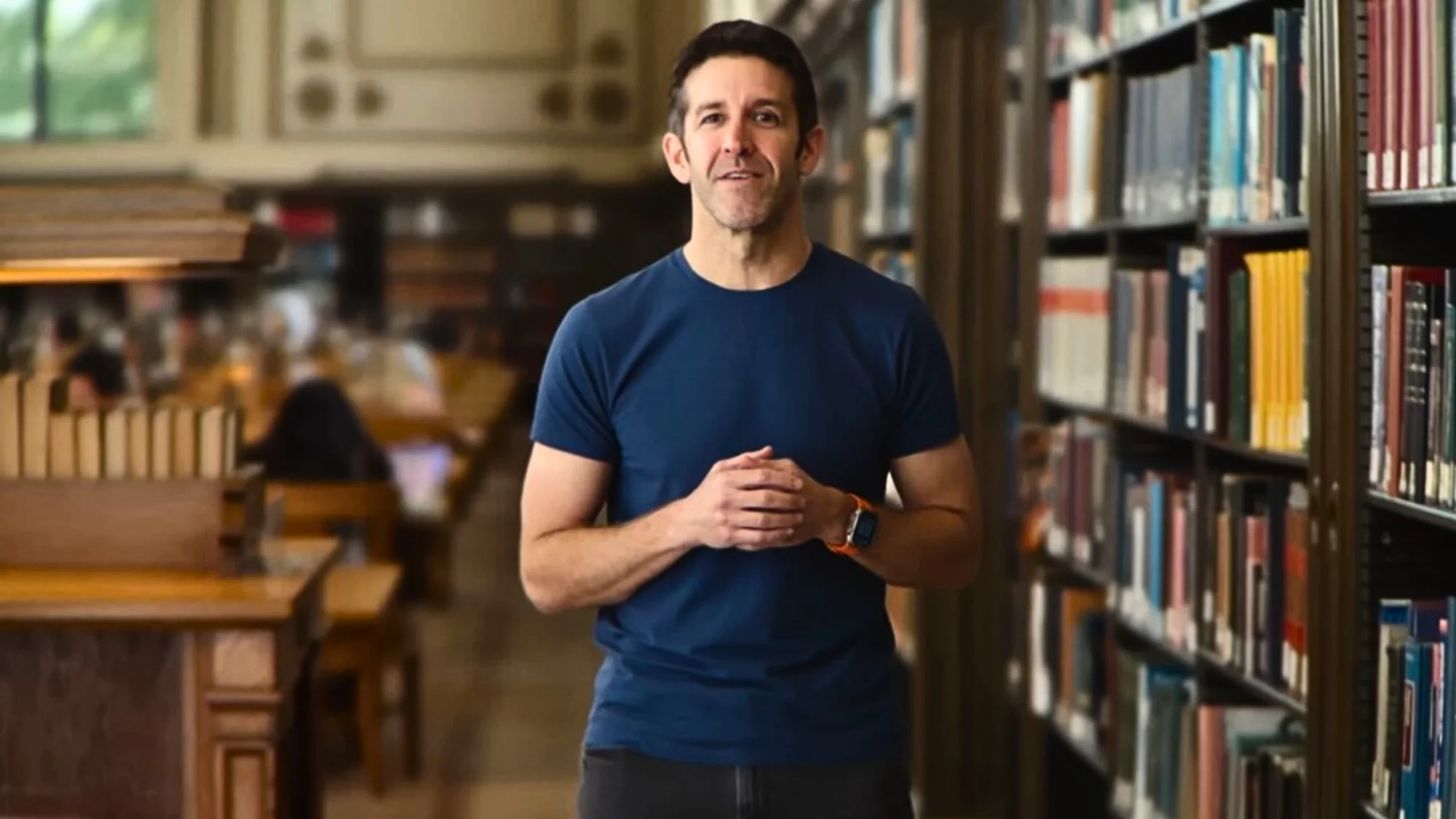
Apple’s decision to hand over the CEO role to John Ternus while moving Tim Cook into an executive chairman position may seem astounding to some. After all, Ternus has cultivated a profile in hardware engineering, managing Apple’s entire device ecosystem—an ocean away from iOS.
But it reflects the company’s belief that AI will be won through hardware.
For a company that has been criticised for lagging in AI, the choice of a hardware leader over a software or AI-native executive cuts sharply against expectations. It signals that Apple does not intend to chase the same playbook as rivals like OpenAI or Google.
Instead, it is doubling down on something far more familiar: devices, silicon, and tight integration.
The timing matters. Apple has spent the past two years under pressure over its AI efforts. Its Apple Intelligence rollout, promised as a deeply integrated, privacy-focused AI system for iPhones and other Apple devices, has been underwhelming. Siri upgrades have faced repeated delays, and reports suggest future versions may rely on external models like Google’s Gemini.
In that context, many expected Apple’s board to bring in a leader with deep software or AI credentials. It did the opposite.
As analyst and tech influencer Aakash Gupta put it on X, “The succession everyone called for years just happened, and it’s the most revealing personnel decision in tech this year.”
He argues that the choice of Ternus reflects a deeper conviction inside Apple. “The AI race won't be won at the model layer, where Apple is hopeless and renting from Google. It'll be won at the silicon layer… the form factor layer… and the integration layer.”
What is Changing?
That framing aligns closely with Apple’s historical strengths. Under Cook, the company built one of the most powerful hardware-software ecosystems in the world, anchored by its transition to in-house silicon.
The M-series chips, and the Neural Engine inside them, have already enabled a class of on-device AI capabilities that competitors are still trying to optimise.
Developers have taken note. Apple’s recently launched MLX framework, designed to run machine learning workloads efficiently on its chips, has quietly gained traction in the open-source community. It reflects a different kind of AI strategy, one focused less on large cloud models and more on performance at the edge.
Ternus has been central to that effort. As the head of hardware engineering, he oversaw the development of Apple Silicon and the integration of AI capabilities directly into devices. The shift from Intel to Apple-designed chips for Mac has also boosted Mac sales and its share of the PC market. The Mac Neo has been particularly popular among customers buying their first laptop or switching from Windows.
His elevation suggests that Apple sees this path as its core strategy.
For some observers, that is a strength.
Armaan Sidhu, Founder of Realize Labs, developing wearable machine technology, notes on X that “software and AI failures haven’t derailed Apple because hardware innovation keeps customers in the ecosystem.” In his view, Ternus’s appointment “prioritises continued hardware differentiation over potential AI catch-up,” while making partnerships with companies like OpenAI or Google more likely.
OpenAI and Google have already agreed to integrate their models for powering Apple Intelligence models.
This hybrid approach, where Apple controls the device but relies on external models when needed, could define its next phase. It allows the company to avoid the massive capital expenditure required to compete at the frontier of AI model development, while still delivering AI features to users.
But it also raises questions.
Critics argue that Apple may be underestimating how quickly AI is reshaping user expectations. Ternus is not an AI researcher, which some have framed as a sign of excessive caution at a time when the industry is moving rapidly.
Mikel Echeverria, a full-stack developer based in Spain, captured that tension succinctly. “John Ternus inherits a very expensive problem: make Apple matter again in AI,” he wrote on X.
The Stakes are Higher
The stakes are high because AI is no longer just a feature layer. It is becoming the interface. Competitors are embedding AI deeply into operating systems, search, productivity tools, and even new device categories like smart glasses.
Companies like Google and Meta are pushing aggressively into AI-driven experiences that could, over time, reduce dependence on traditional smartphones. This also changes how enterprises view Apple’s upcoming releases and how they plan to adopt its AI within their workflows.
Apple’s counter is to redefine where AI lives.
Rather than centring everything in the cloud, it is betting on on-device intelligence. That means faster responses, stronger privacy protections, and tighter integration with hardware. It also opens up new possibilities in wearables, ambient computing, and spatial devices like Vision Pro.
This is where Ternus’s background becomes critical. If the next wave of computing is shaped by new form factors, from AR glasses to AI-native devices, Apple’s advantage may lie in its ability to design and manufacture those products at scale.
Even so, execution will be everything.
Ternus faces immediate pressure to deliver on AI, particularly around Siri and Apple Intelligence. Delays have already dented confidence, and expectations for the next 12–18 months are high. Any further slippage could strengthen competitors and erode Apple’s position.
At the same time, the company’s scale gives it room to manoeuvre. With more than 2.5 billion active devices and a deeply entrenched ecosystem, Apple does not need to win the AI race in the same way as startups or cloud providers. It needs to integrate AI in a way that enhances its existing products and keeps users locked in.
That distinction is crucial.
Cook’s tenure transformed Apple into one of the most valuable companies in the world, growing its market capitalisation from about $350 billion to $4 trillion. But he is handing over a company facing a very different kind of challenge—embedding intelligence into every layer of computing.
By choosing Ternus, Apple is making a clear bet on how that future unfolds.

Your reaction