Key takeaways
- BOSQUE is a new open-source programming language developed by Microsoft to simplify coding processes.
- The language aims to move beyond traditional structured programming models, focusing on algebraic operations.
- BOSQUE is inspired by TypeScript and Node.js, designed to reduce accidental complexity in coding.
- A key goal of BOSQUE is to enable automated code validation and semantic versioning checks.
- Researchers are working to enhance practical implementations of BOSQUE for long-term viability.
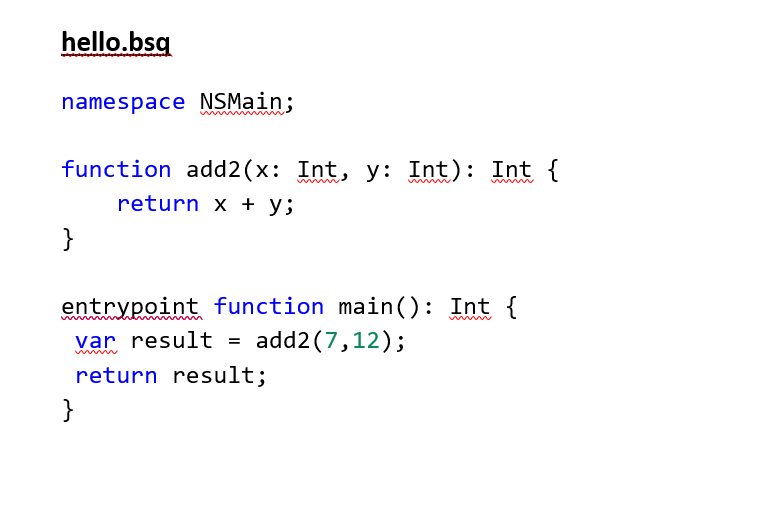
The newest language to have made an entry into the programmers’ community is BOSQUE. An open source language by Microsoft, it has been developed by Microsoft computer scientist Mark Marron. Marron, who has been working to make the language a reality over the years, believes that BOSQUE is an effort to move beyond the structured programming model that rose to popularity in the 1970s.
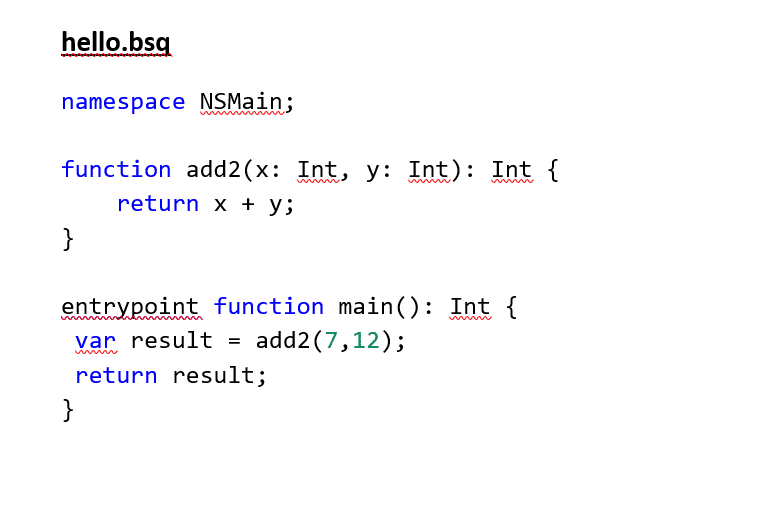
The very idea of introducing this language to the programming community is to embrace algebraic operations and to stop the use of techniques that may be highly complex. BOSQUE is inspired by TypeScript, which is a superset of JavaSCript and was released by Microsoft in 2012. It also derives similarity from Node.js and has been made in a way that enables creating code in a hassle-free manner for both humans and machines, by eliminating any accidental complexity.
What Does BOSQUE Bring To Table?
With BOSQUE, Marron aims to change the behaviour of the programme. The central goal of the language is to build an automated zero-effort code validation. Marron shares that BOSQUE also aims to automate SemVer (semantic versioning) checking and compilation to use SIMD hardware, such as AVX or SSE. While this has been achieved only partly until now, researchers are trying to overcome the challenges to bring out more practical implementations that are viable in the long run. While facilitating regularised programming, Marron aims to bring a version of BOSQUE that eliminates major sources of errors, simplifies code understanding and modification, and converts many automated reasoning tasks over code into trivial propositions. It aims to get rid of sources of complexity such as loops, mutable state, indeterminate behaviours, reference equality and more. Though it currently relies on an interpreter written in TypeScript, run on Node.js, as a reference implementation, Marron intends to further develop on this going forward. He aims to focus on TODO items, bug fixes, and developing features that will support writing larger programs in the language.