
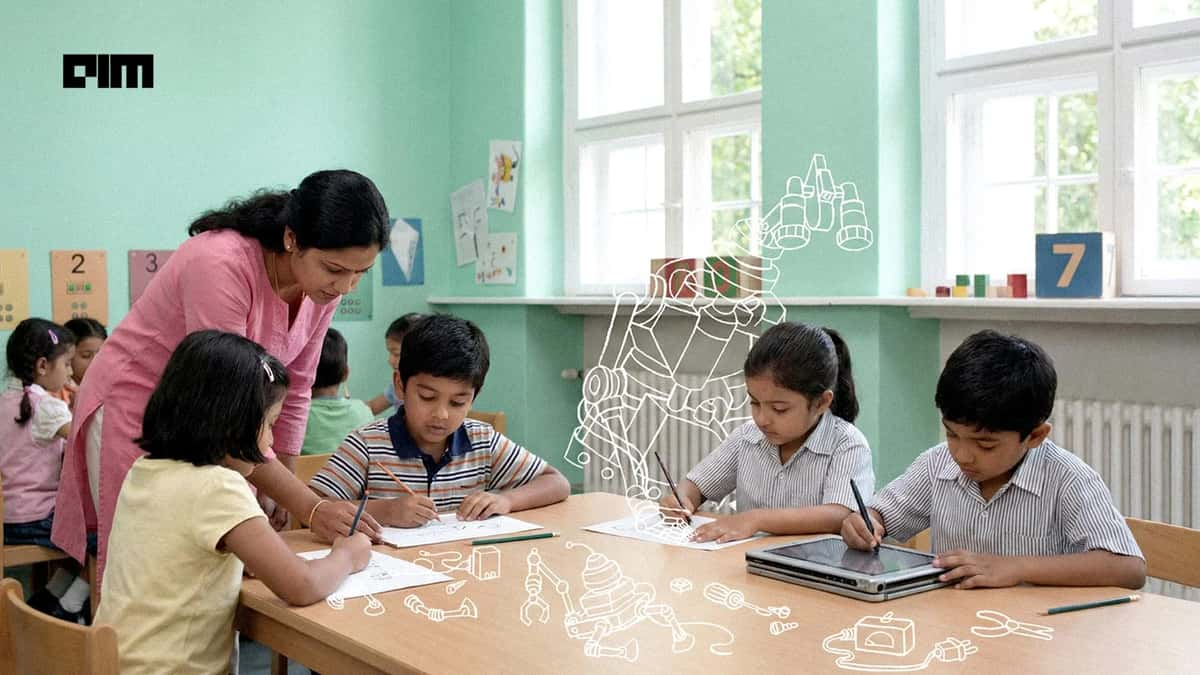

The Union Budget 2026 sharpened its focus on education, creative skills, tourism, and women’s participation, with Finance Minister Nirmala Sitharaman announcing a series of institution-building and skilling initiatives to align learning more closely with industry demand.
As part of a push to expand India’s animation, gaming and digital content ecosystem, Sitharaman announced government support for the Indian Institute of Creative Technologies (IICT), Mumbai, to set up AVGC (animation, visual effects, gaming and comics) content creator labs in 15,000 secondary schools and 500 colleges across the country.
In higher education, the Centre will support states through a challenge-based route to create five university townships near major industrial and logistics corridors. These planned academic zones will host multiple universities, colleges, research institutions, skill centres, and residential facilities, with a strong emphasis on STEM education, extended laboratory access, and collaborative research, the finance minister said.
Industry leaders say the proposals signal a structural shift in how education is positioned in India’s growth strategy.
“This Budget is about building capacity, not chasing short-term consumption,” says Chocko Valliappa, Founder and Managing Director of Vee Technologies and Vice Chairman of the Sona Group of Education Institutions. “Education is being treated as an economic engine, with skills, research and jobs expected to move together,” he tells AIM.
Women-Focused Measures, Higher Outlay
To improve access for women students, Sitharaman announced viability gap funding (VGF) and capital support to address financial constraints in higher education infrastructure, adding that one girls’ hostel will be established in every district.
The announcements come as the education budget has been scaled up to nearly ₹1.4 lakh crore for FY27, from ₹1.2 lakh crore in the previous fiscal year. Key allocations include over ₹6,000 crore for the PM SETU (Pradhan Mantri Skilling and Employability Transformation through Upgraded ITIs) mission and ₹32,000 crore for Atal Tinkering Labs, underscoring the government’s emphasis on innovation and employability from an early stage.
Calling the shift outcome-driven, Anil Kapasi, Managing Director and Co-founder of Arihant Academy, says the Budget reflects a move away from exam-centric education.“The focus on creative sectors, AI, tourism and technology-linked institutions shows an intent to align education with evolving industry needs. If implemented well, it can ease academic pressure and make learning more employable.”
However, concerns around execution persist. The PM Internship Scheme, announced last year with an outlay of ₹10,000 crore, has utilised only about ₹500 crore so far, highlighting implementation challenges.
Tourism and Skilling Push
Calling tourism a major driver of jobs, forex earnings, and local economic growth, Sitharaman proposed setting up a National Institute of Hospitality by upgrading the National Council for Hotel Management and Catering Technology. The institute will function as a bridge between academia, industry, and government.
A pilot upskilling programme will train 10,000 tourist guides across 20 iconic sites through a standardised 12-week hybrid course, developed in collaboration with leading management institutions.
The government will also establish a National Destination Digital Knowledge Grid to digitally document sites of cultural, spiritual, and heritage significance—an initiative expected to create new opportunities for local researchers, historians, creators, and technology partners.
GST Expectations Unmet
While edtech companies welcomed the Budget’s emphasis on skills, digital learning, and industry-aligned education, a key pre-Budget expectation remained unaddressed.
Ahead of the Budget, industry stakeholders, including Pankaj Jathar, CEO of NIIT Limited, called for reducing GST on online education services from 18% to 5%, citing affordability concerns and slower learner adoption. However, Budget 2026 made no mention of GST relief for the edtech sector.
“This Budget sends a strong signal that growth lies at the intersection of education, technology and industry,” notes Muneer Ahmad Khant, Managing Director, ViewSonic India. “But execution and ecosystem readiness will determine how quickly digital classrooms and future-ready campuses take shape.”
Skills, AI, and Employability
Industry leaders broadly view the Budget as a long-term, skills-led blueprint.“This Budget underscores that India is at a decisive inflection point where growth will be shaped by how effectively we skill our people,” notes Jathar, pointing to the proposed Education-to-Employment Standing Committee and AI-led capacity building.
Echoing this, Sanket Atal, SVP and India Country Head at OpenText, says the focus on services and AI-aligned skills is critical. “Bridging gaps between academic training and real-world AI and cloud systems will be key to workforce readiness.”
Edtech founders also highlighted opportunities beyond metros.“The focus on tier-2 and tier-3 cities is timely,” adds Anil Nagar, Co-founder and Group CEO of edtech startup Adda247, noting that regional talent development will be crucial as India targets a 10% share of the global services economy by 2047.
Despite missing GST relief, there is cautious optimism.“This is a structurally sound, reform-oriented Budget,” Valliappa notes. “The intent is strong, but execution will be the real test.”
- India’s Accessibility Rules are Forcing Software and App Design Rethink
- Succession, Scrutiny, and the Future of NVIDIA
- Can You Trust Your ‘Instinct’ and Not ‘Muse’ Over the Risks?
- Is AI-Powered Reverse Engineering the Death of Proprietary Software?
- Smaller Language Models Could Reshape How Enterprises Deploy AI
- Enmovil Plans to Quadruple FDE Team as Enterprise AI Hiring Moves Beyond Coding