
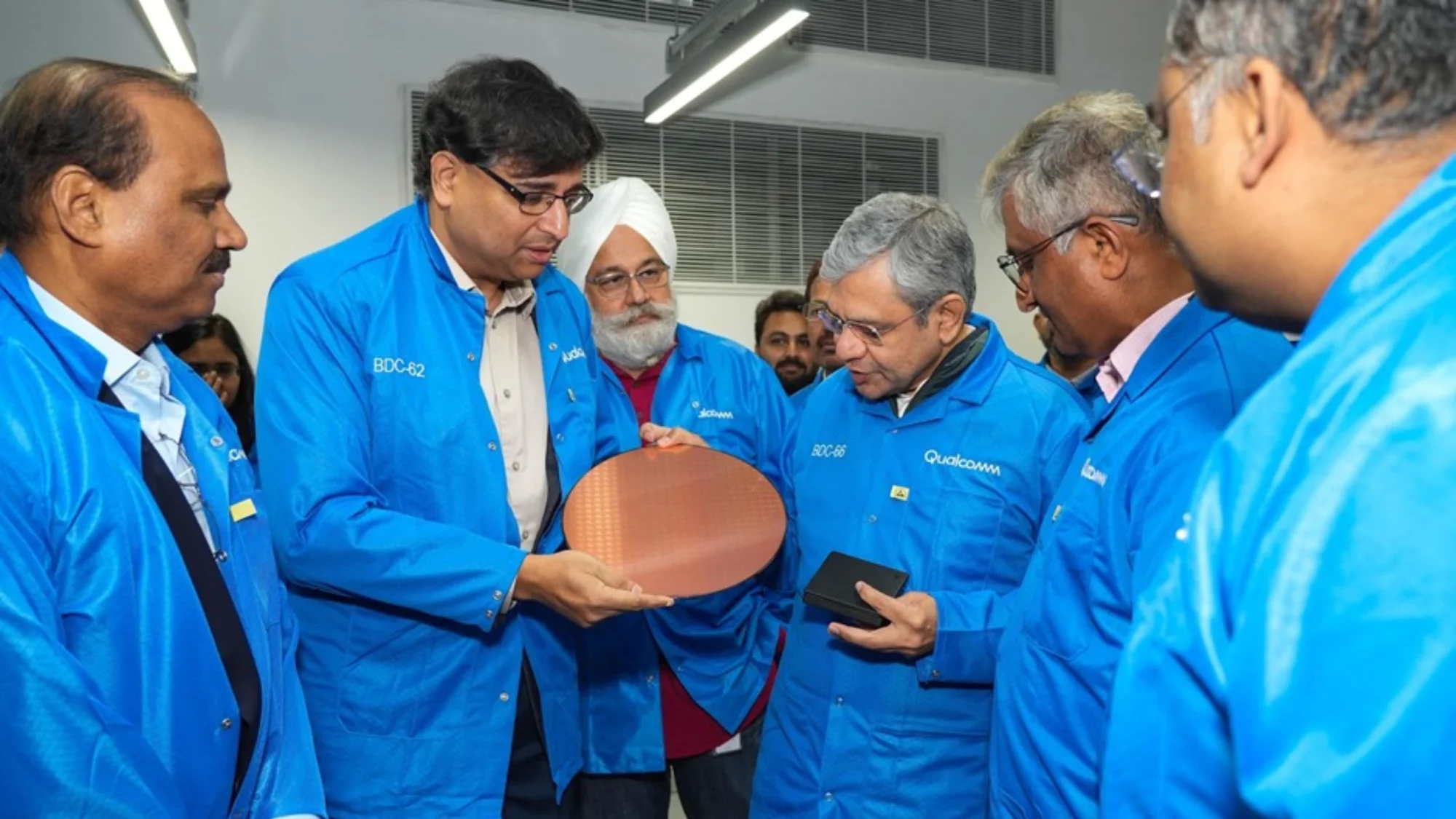
Union Minister for Electronics and IT, Ashwini Vaishnaw, has launched a two-nanometre semiconductor chip at Qualcomm’s facility in Bengaluru. The launch took place on February 7 during a keynote address and highlighted India’s role in advanced semiconductor design and global engineering operations.
The minister said the launch supports India’s push to build domestic chip design, manufacturing and talent capacity. “I am very happy to see this progress. The entire world is looking at us with hope because of the huge talent we have in our country,” Vaishnaw said. “The next level of achievement will come from India.”
He added that India aims to expand its semiconductor ecosystem across design, fabrication and manufacturing. “We can make a big difference in the entire global community. We are a country which believes in co-creating and co-developing,” he said.
This comes just after he expressed India’s plans to produce 3 nm semiconductor chips domestically by 2032. He said the country began its manufacturing roadmap with 28 nm technology.
This covers about 75% of domestic needs, including automotive, telecom, power management, and strategic applications. As many as 10 semiconductor units are currently under construction, and four have started pilot production.
According to Vaishnaw, these units are now qualifying and validating products with customers. He said the first unit will soon move to commercial production.
The minister revealed that 315 universities across the country now use key electronic design automation tools to train students in chip design. Students from remote institutions, he said, are designing chips, taping them out and validating them through real processes. This is creating a national talent pipeline for the semiconductor sector.
The government will launch India Semiconductor Mission 2.0 with a revised focus. “First focus will be on design companies and startups that can design a product and take it to the market,” he said.
The second focus will be building the complete domestic ecosystem, including equipment, chemical and gas suppliers, and testing facilities. Third, will be to deepen the talent base through partnerships with universities.

Your reaction