Key takeaways
- Recognize that AI can exacerbate existing gender inequalities through biased training data.
- Understand that 44% of AI systems exhibit gender bias, impacting hiring and wage predictions.
- Acknowledge the importance of preparation and access over mere investment in women-led businesses.
- Encourage women to engage with AI tools as opportunities rather than threats to their careers.
- Note that significant barriers remain for women in tech entrepreneurship and leadership roles.
While everyone’s busy fearing AI for wiping away jobs, something that demands equal stirring is AI deepening the existing gender inequalities. Since AI learns from historical data, when the training data reflects societal biases, AI systems inherit and amplify discrimination.
From hiring algorithms to wage prediction, models may deepen gender pay gaps.
A study by the Berkeley Haas Center for Equity, Gender & Leadership examined 133 AI systems across various industries and revealed that approximately 44% exhibited gender bias.
To make matters worse, many women hesitate to engage with AI tools, fearing obsolescence rather than seeing it as an opportunity.
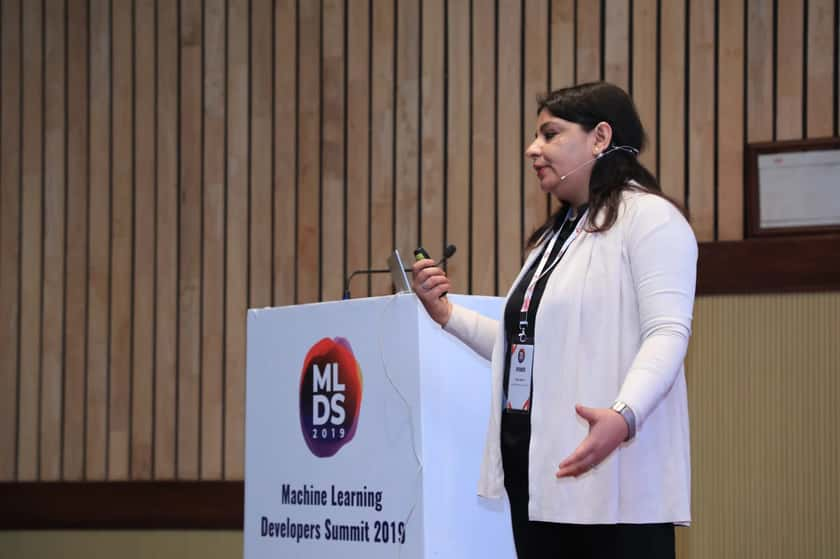
In an interview with AIM, Chaitra Vedullapalli, Women in Cloud founder and president, shared her insights on the challenges women face in the tech industry. Throughout her career, she discovered that women lacked access to essential funding and resources.
She realised that the issue wasn’t just a lack of investment in women-led businesses, it was a larger challenge of preparation and access.
During her tenure at Microsoft, Vedullapalli, also a TEDx speaker, observed that despite the industry’s advancements, women continued to face significant barriers in entrepreneurship and leadership roles in tech.
Reflecting on her journey, she noted, “At Microsoft, I was recruited as a 'compete hire' and was tasked with creating a Partner Velocity Platform (an $80 million project that unified all partner programs into a single technology platform).”
This experience gave her a holistic understanding of software creation, licensing, and sales channels, besides shaping her perspective on the industry's systemic challenges for women.
Levelling the Playing Field
This realisation pushed her to create Women in Cloud, an initiative designed to generate $1 billion in economic access for women by addressing systemic barriers. She strongly believes that while discrimination exists, women who are well-prepared and demonstrate strong business acumen can successfully navigate the industry.
“Recognising the difficulties faced by women, especially those balancing multiple jobs, Women in Cloud prioritised flexibility in its training programmes,” Vedullapalli said.
The initiative launched in India and has since expanded, impacting 5,000 women over the past three years. Of these participants, 18% have secured jobs, while 30% have earned Microsoft certifications.
These certifications play a crucial role in levelling the playing field, ensuring that women enter the workforce on equal footing with men, eliminating hierarchical disparities, and strengthening their competitiveness in the job market.
Additionally, acquiring a strong foundation in technology empowers women to pursue entrepreneurship, equipping them with the skills to develop AI and cybersecurity solutions.
Providing for the Indian Market
Given the high certification costs in India—ranging from ₹4,00,000 to ₹5,00,000—Women in Cloud sought innovative funding solutions. By leveraging corporate partnerships, it secured 1,000 fully funded scholarships underwritten by Microsoft and Coursera, evenly distributed between India and the global market.
The demand was overwhelming, with 4,000 applications received in a single day. Over time, 42,000 scholarships have been distributed across 100 countries.
Since certification exams require rigorous preparation, comparable to IIT entrance tests, the programme also offers essential support systems, including community engagement and expert trainers, to assist candidates.
While the initiative primarily focuses on women, it takes an inclusive approach by allocating 80% of opportunities to women while reserving 20% for men who require support. The organisation prioritises allyship over exclusivity, ensuring that learning resources remain widely accessible.
Today, the programme operates in 80 countries, with significant engagement in Nigeria, Morocco, Canada, the US, France, Germany, Thailand, the Philippines, Pakistan, Sri Lanka, and other global regions.
Adding to this, Manju Dhasmana , senior director of Corporate Social Responsibility, at Microsoft India emphasises that "when women thrive in AI, businesses, and entrepreneurship, entire economies benefit.”
In line with this belief, Microsoft is making substantial investments in AI skilling to ensure accessibility for women across urban and rural India. Through initiatives such as Women in Digital Business and ADVANTA(I)GE India, Microsoft has already trained millions across the country.
In 2024 alone, more than 2.4 million people were skilled under ADVANTA(I)GE India, with over 60% being women and more than 70% from non-metro areas—many from tier II and III cities—equipping them with the tools to build and scale their ventures.
Further reinforcing this mission, Microsoft’s partnership with IndiaAI aims to equip 500,000 individuals—including women entrepreneurs—with essential AI skills by 2026.
Rethinking DEI and Moving Beyond Fragmented Inclusion
Vedullapalli challenges the current approach to diversity, equity, and inclusion (DEI), arguing that it is often biased and fragmented. She believes that instead of prioritising true accessibility, DEI initiatives have been divided into separate groups—such as women’s groups, LGBTQ+ groups, and racial groups—leading to a disjointed framework.
Rather than enforcing rigid DEI policies, she advocates for a shift towards broadening access to resources in education, economic opportunities, and workplace accommodations.
Rency Mathew, people leader–India and South Asia, and MD, Sabre Bengaluru, highlighted how DEI initiatives have become an integral part of India's corporate landscape, with many organisations striving to foster inclusive work environments.
However, she pointed out that "these efforts in India have predominantly focused on gender diversity. Considering the country's vast diversity, it’s essential to broaden the DEI framework to embrace other dimensions.”
Parul Dhir, director of DEI and employee engagement at Acuity Knowledge Partners, shared insights into the company’s recent DEI efforts, stating, “This past year, we launched three major initiatives: a mentorship program for women, a series of workshops on unconscious bias, and over 55+ DEI events and initiatives to engage our employees.”
Ramya Parashar, chief operating officer at MiQ, emphasised the importance of translating DEI intentions into measurable impact.
“One of the biggest hurdles is moving beyond intent to measurable impact, ensuring that DEI is not just a checkbox but a deeply embedded part of our culture. Breaking unconscious biases in hiring and leadership development, creating truly inclusive policies that cater to diverse needs, and sustaining engagement beyond surface-level initiatives require continuous effort.
Spotted an error? Tell our editors. Read our editorial standards and corrections.