
The IIT Madras Incubation Cell (IITMIC) has emerged as one of India’s most powerful launchpads for deep-tech startups. From Ather Energy, which went public last year and sold 2,63,000 electric two-wheelers in FY26, to GalaxEye, whose Mission Drishti satellite rode a Falcon 9 by SpaceX into orbit, its graduates are making headlines across industries.
The momentum is reflected in the numbers. In FY26, IITMIC added 112 new startups—crossing the 100-startup mark for the second consecutive year. Thirteen years since its inception, the incubator’s portfolio now spans 567 startups, collectively valued at over ₹74,100 crore (~$8 billion). Two have already reached unicorn status.
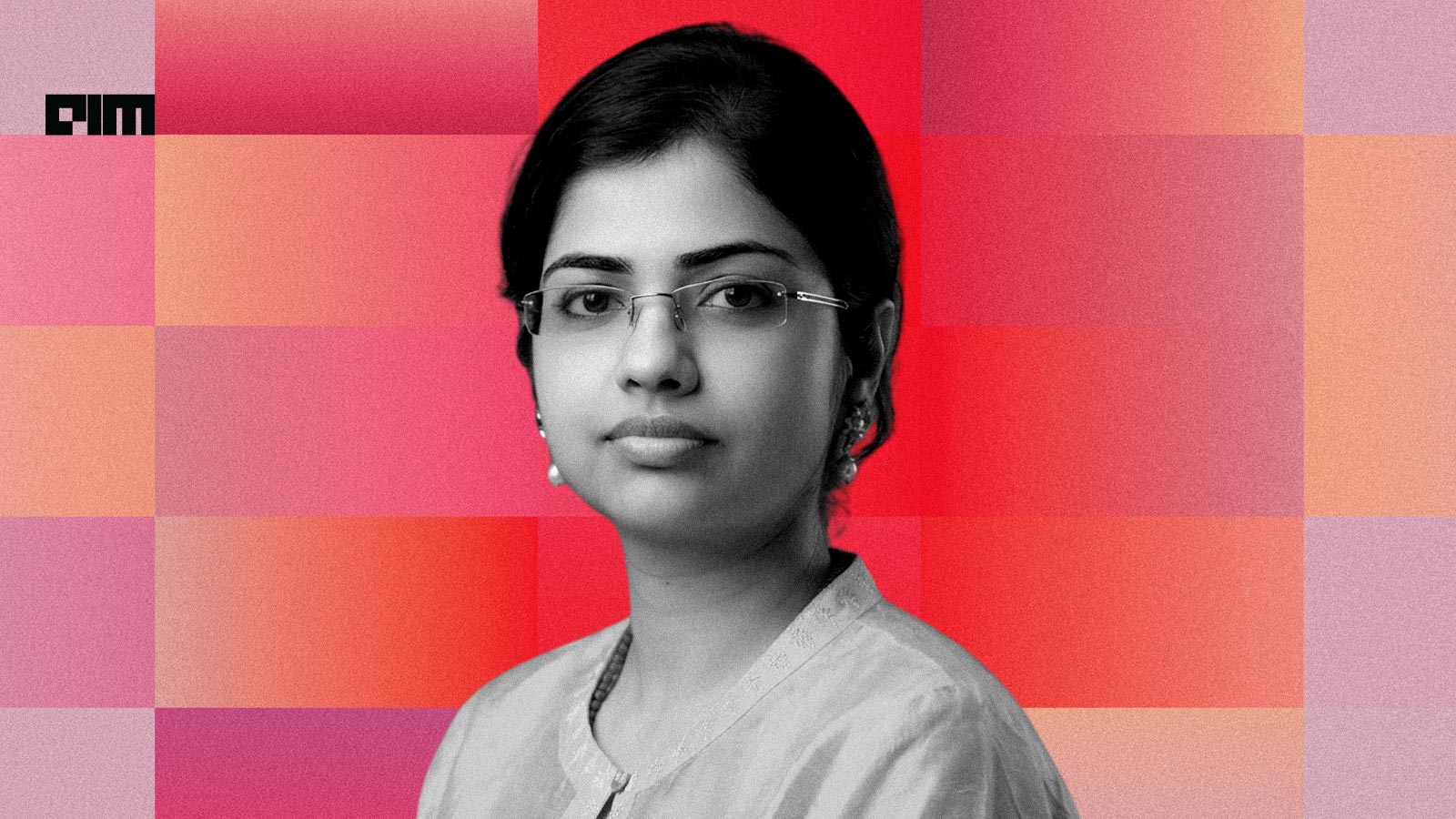
In an exclusive interview with AIM, Tamaswati Ghosh, CEO of IITMIC, says that back in 2013, there was no playbook, and the organisation had to be built from scratch.
That meant wearing multiple hats. “I got to do anything and everything, from planning what refreshments to get for our mentors to deciding what kind of office to set up, handling renovations and interior design, and even choosing the kind of startups to bring in,” she says.
The incubation cell grew out of IIT Madras’s broader innovation ecosystem, particularly the work centred around the IITM Research Park. Its early momentum was driven by faculty closely engaged with industry, including Ashok Jhunjhunwala and former Director Bhaskar Ramamurthi.
Years later, with the foundation firmly in place, Ghosh has her eyes on a bigger prize. She says the next goal is not just to create more unicorns, but to build public companies. “It’s not about valuation alone,” she says. “More important is revenue generation and wealth creation.”
The priority now is building IPO-ready startups with strong balance sheets rather than chasing billion-dollar valuations driven by funding rounds. “I think we have passed the unicorn targets now,” says Ghosh.
That said, she points to a strong pipeline of companies that could still reach unicorn status, including Agnikul Cosmos, Stellapps, MediBuddy, Modulus Housing, and GalaxEye.
Deep Tech, Not Fast Money
Unlike many incubators chasing SaaS or consumer internet plays, IIT Madras carved its niche in deep tech early on. Today, its startups span sectors like space, defence, robotics, semiconductors, AI, energy, and biotech.
She emphasises, however, that these are not easy markets to crack. “These are very impactful but also very challenging areas when it comes to commercialising a product or technology, especially in terms of revenue generation and attracting investment,” she says.
To tackle this, the IITMIC has built a strong support system around its startups, bringing together industry partners and experienced mentors to guide founders.
Reflecting on the early days, Ghosh says the larger IIT Madras community played a crucial role in supporting startups. This support extended far beyond the incubator itself, drawing from a global alumni network spanning India and overseas, particularly in the US.
“The alumni base in India and abroad, especially in the US, where many high-net-worth individuals and well-known figures in Silicon Valley were among the first investors in our startups,” she says.
As some of these early bets succeeded, confidence compounded. More investors, especially micro VCs and impact funds, entered the ecosystem, willing to take calculated risks on deep tech founders. “It had a ripple effect,” Ghosh explains. “Companies coming out of IIT Madras were seen as worth backing.”
Bet on Founders
Ghosh says that the starting point has always been the founder, not just the idea. She explains that startups are selected based on the conviction and preparedness of the people building them.
“We accept startups into our incubation programme primarily based on founders’ commitment, seriousness, and whether they truly understand how difficult the journey is going to be,” she says. “We also look at whether they are prepared for the financial challenges ahead and open to working closely with the ecosystem.”
When asked if AI researchers can make good founders, Ghosh says that a successful startup cannot be built by a single archetype of founder.
“Entrepreneurship is not something you learn from books, and no one person has all the attributes required to build a successful company,” she says. Instead, strong founding teams, often combining deep technical expertise with business acumen, tend to perform best.
At IITMIC, many founders begin as researchers, especially given the deep-tech focus of the ecosystem. But they are encouraged to build complementary teams, bringing in co-founders, CXOs, or mentors who can balance technology with execution.
Notably, the incubator is not limited to IIT affiliates. “About 60% of our startups have founders with no connection to IITs,” the CEO says. These entrepreneurs come from across India, cutting across cities, backgrounds, and age groups—from young students to experienced professionals and even professors—creating a diverse founder base.
Brain Drain Isn’t the Enemy
On the question of talent leaving India, Ghosh takes a nuanced view.
She argues that global exposure has, in many ways, strengthened India’s startup ecosystem. She points out that some of the earliest supporters of IIT Madras startups were Indians who had built successful careers abroad and later returned as mentors and investors.
“There are two sides to it. There is nothing wrong with people going abroad, and we have benefited from those who built successful businesses in the US and later came back to support and invest in our startups,” she says. “Giving back to the country does not necessarily mean being physically present here.”
While acknowledging that brain drain was once a concern, Ghosh notes that the trend is changing. Fewer students are now leaving for opportunities overseas, and many who do eventually return. She attributes part of this change to the rise of startups as a viable and attractive career path in India.
At the same time, she emphasises the importance of maintaining a global footprint. Exposure to international markets, networks, and experience remains critical for building scalable companies. “To build global companies, you need global networks—across investment, partnerships, and knowledge,” she adds.
The Next Wave: Space, Semiconductors, and Quantum
Ghosh identifies quantum computing and semiconductors as two of the most critical areas shaping the next phase of India’s deep-tech ecosystem.
“There is a lot of foundational work happening in quantum and semiconductors, and these are extremely important for India to become more independent in critical technologies,” she says.
Ghosh believes that progress is essential, not just for commercial reasons, but to reduce India’s dependence on global supply chains and strengthen capabilities in defence and advanced computing. She is also betting on areas such as robotics, space tech, e-mobility, health tech, medical devices, biotech, and agritech.
At its core, the IIT Madras incubation story is not just about startups, but about solving for India. “Our country has large problems that need solving,” Ghosh says. “If not us, nobody else will solve them.”
She sees startups as vehicles for innovation, job creation, wealth generation, and ultimately, technological independence. “Founders should think about creating something not just for themselves, but for the country,” she concludes.

Your reaction
Discussion
What's your take on this story?
No comments yet — be the first to share your view.