
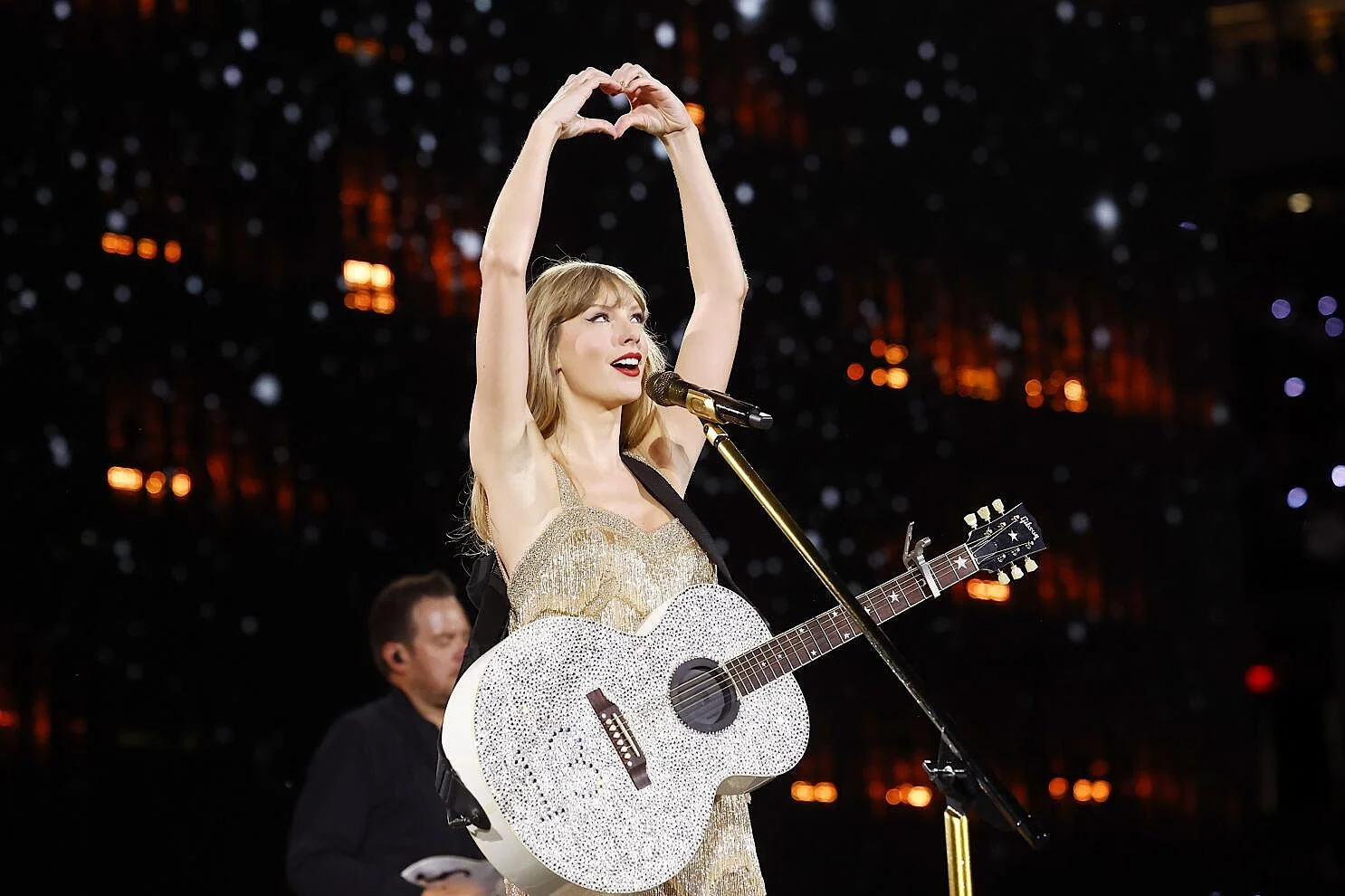
Singer-songwriter Taylor Swift has filed trademark applications in the United States to protect her voice and image amid growing concerns over the misuse of AI-generated content.
The filings submitted to the United States Patent and Trademark Office include two sound recordings featuring the phrases ‘Hey, it’s Taylor’ and ‘Hey, it’s Taylor Swift’, along with references to her 2025 album The Life of a Showgirl. A separate application covers a specific stage image from her performance, including visual elements such as lighting, costume, and props.
The move reflects a broader shift among celebrities seeking legal protection against the rapid rise of AI tools capable of generating realistic voice clones and deepfake images. Advances in generative AI now allow voices to be replicated from short audio clips, making it easier to create convincing imitations without consent.
Swift’s filings come amid increasing scrutiny over AI misuse. In 2024, explicit AI-generated images of the singer circulated widely online, sparking backlash and renewed calls for stronger regulation. Lawmakers in the US have since proposed measures such as the Preventing Deepfakes of Intimate Images Act, though comprehensive protections remain limited.
Other public figures have taken similar steps. Actor Matthew McConaughey has applied to trademark his voice and signature phrases, while celebrities like Tom Hanks have warned about unauthorised AI-generated likenesses being used in advertisements. Similarly, actress Scarlett Johansson previously pursued legal action over the use of an AI-generated avatar resembling her.
This trend signals a shift from protecting creative work to protecting identity itself. Trademark law, traditionally used for names and logos, is now being explored as a tool to safeguard voice and likeness in the absence of strong personality rights.
Yet, Swift’s move highlights how artists are adapting to an AI-driven landscape where control over identity is becoming as critical as control over content.

Your reaction
Discussion
What's your take on this story?
No comments yet — be the first to share your view.