

5 min
 Like in every good marriage, you need a healthy dose of give and take in order to be successful. In the same way, in order to live happily ever after with your content program, you need a healthy give-and-take between content and analytics. Making use of the best web analytics tools to shape your content as a revenue driver and not just for blind consumption or page views should be your goal.
For business purposes, content creation is a means to an end. What this simply means is that when you engage in content creation, you are not doing it to see how many eyeballs your content can draw. Instead, you want to see how much intended action is driven by the content you’ve put out.
This means that if you do not consciously create content with the intent to have some desired effect, you are wasting resources that could have been better used elsewhere. So it’s important that you have your goals and objectives in mind when you create content for consumption.
You then need to start measuring how efficient your content program is. As you do so, you will realize that you cannot measure the efficacy of your content program using a single metric. This is simply because no single data point can help you drill down into the granularity that you need for a global and local view of the different aspects that you need to monitor in your content program.
What you will find is that you need an array of metrics to help you closely examine the different facets of your content program.
So, with this in mind, how can you marry content and analytics? Well, what you have to do is:
- Concentrate on creating content (or turning the content that you currently have) into advocacy and leads, sales.
- Then start to track the content with relevant metrics, and finally;
- Use the metrics to inform how you will adjust and create your content moving forward.
1. Basic Consumption Metrics
Consumption metrics are the fundamental metrics that most content creators use. They answer basic questions that every content creator would like to know about their content. These metrics can easily be arrived at using Google Analytics or similar tools. [caption id="attachment_10624" align="aligncenter" width="975"] Figure 1: Google analytics screenshot[/caption]
Consumption metrics answer questions like:
- How well is your content performing based on your goals? Or
- How many people viewed or downloaded your content, and therefore how many people have consumed your content?
2. Sharing Metrics
These metrics tell you how much your content is being shared and through which social media platforms it is being shared. Tweets, re-Tweets, LinkedIn shares, Facebook likes and so on are the main data points used in the metrics. If your content is not being shared enough, you have to look into why it is not being shared.- Does the content inspire sharing? Or
- Do you need to find ways to make sharing easier and more obvious for your audience?
 Figure 2: Sharing metrics image[/caption]
3. Lead Generation Metrics
These are the metrics that will help you determine how successful your content program will eventually be because they help you to start gauging how much financial sense your content strategy makes. The key question that lead generation metrics answer is this: Are your content consumers engaging with your content in the desired way, and by how much? Lead metrics also help you answer the following questions and therefore help you shape your content accordingly.- How many people registered before downloading your content and how many people clicked away?
- How many people registered or filled in a lead form after consuming your content?
- Which specific content is driving leads and which content is driving exits?
- Should you track how often consumers revisit your content using cookies or scripts on computers and mobile devices
4. Sales Metrics
If you are seeking to drive sales through your content, you most likely have a database of your customers as well (if you don’t, then you should). Through the database, you should be able to track different data points, including:- Potential customers
- What they have in their wish lists
- What they have in their shopping carts
- What your customers like to search for and shop for
- Projected revenue and profit
- Customer lifetime value and so on.
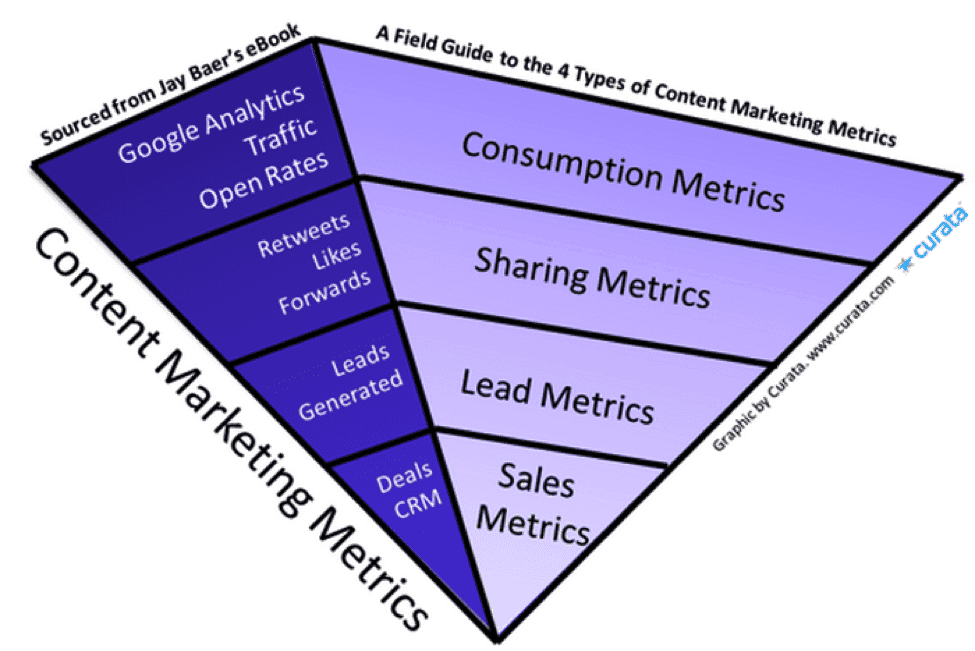 Figure 3: Different content marketing metrics (image from curata.com)[/caption]
5. Other useful metrics
Other useful questions that you will need your metrics to answer include the following:- Where does your most valuable audience live and are you creating content for them and in the right language?
- How loyal are your fans? Are they coming back to view your content and are they sharing the content? Are they possibly viewing your content through different devices?
- Do you possibly need a different content distribution channel? Are you optimized for mobile devices and are you able to track across different distribution channels?
- Which keywords or keyword phrases are visitors to your site searching for and what is the total number of internal searches on your website?
- Is your website fast enough or is the loading speed driving away visitors?
- How is your landing page performing, what is the source of traffic towards your content and what is the performance of the traffic according to each source?
The bottom line…
If you are able to use the metrics to give you more insight into the analysis of your content, then you will have a holistic and more robust content program that will allow you to achieve your business and marketing objectives as well as your content program objectives. You will be able to keep a better eye on your return on investment (ROI), even if you are not creating content for revenue purposes.Author
Mohammad Farooq works as a Social Media Analyst with Simplilearn. When not doing anything related to Social media, he goes backpacking around India. He regularly blogs about Travel, Movies, Political Issues and a lot of other things on his blog “ReveringThoughts”.
- Enmovil Plans to Quadruple FDE Team as Enterprise AI Hiring Moves Beyond Coding
- Does the World Need a New GitHub?
- Can India’s AI Boom Reach Bharat?
- AI's Next Agritech Frontier Is India's Fragmented Supply Chain
- India’s Frontier AI Race Gets a 240M Model That Beats Liquid AI
- The AI Slowdown Narrative Doesn’t Reflect Enterprise Reality