Key takeaways
- Karnataka announced six initiatives to enhance its research and innovation infrastructure at Bengaluru Tech Summit 2026.
- The event featured participation from 64 countries and included 1,518 exhibitors, with a significant representation of startups.
- Chief Minister D K Shivakumar highlighted Karnataka's role as a key player in India's software and services exports.
- The state attracted $9.4 billion in foreign direct investment in the first half of FY26, representing 26.7% of India's total.
- Karnataka is focusing on semiconductor research, with over 100 fabless chip companies and substantial investments from global firms.
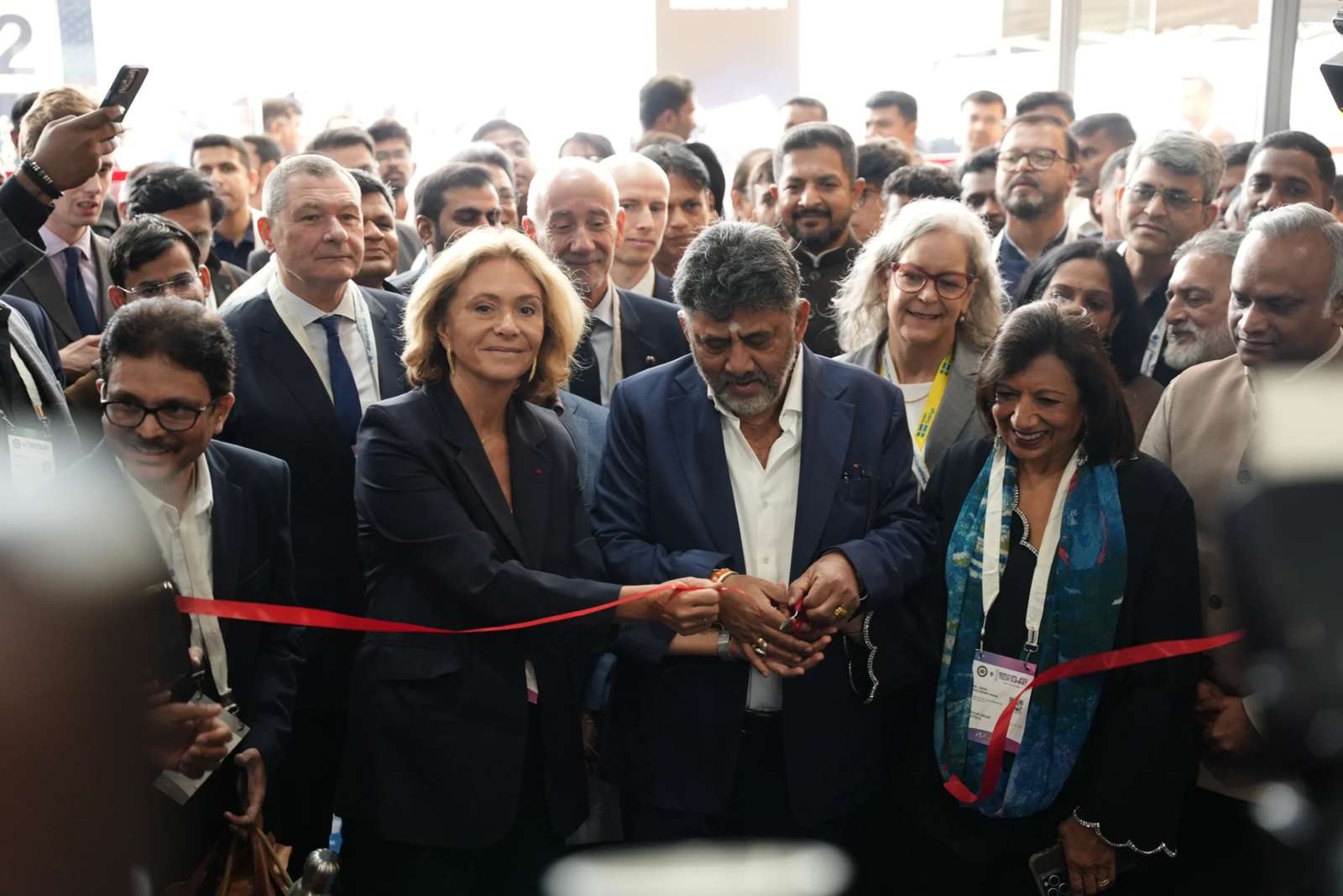
The 29th edition of the Bengaluru Tech Summit (BTS), held at the Bangalore International Exhibition Centre (BIEC), brought together entrepreneurs building the next generation of technology.
At the Bengaluru Tech Summit 2026, Karnataka announced six initiatives to strengthen its research and innovation infrastructure. The event spotlighted 64 countries, 704 speakers, 162 sessions, and 1,518 exhibitors, including 923 startups from 104 cities.
This marked Chief Minister D K Shivakumar’s first BTS, and he, along with IT-BT Minister Priyank Kharge, left little doubt about Karnataka’s ongoing ambitions to position itself as a global technology hub.
“Karnataka laid the foundations of modern industry and technology through institutions of learning and research, strong public sector enterprises and the trust of global companies. Some of India’s most ambitious scientific and engineering projects have found a home here,” said CM Shivakumar.
The chief minister said Karnataka accounted for two out of every five dollars India earned through software and services exports.
The state received $9.4 billion in FDI equity inflows in the first half of FY26, accounting for 26.7% of India's total inflows during the period. More than 1,000 GCCs have established operations in Bengaluru.
He added that Karnataka is home to more than 100 fabless chip companies, while three out of every five engineers working in India's semiconductor capability centres are based in Bengaluru.
Global companies are investing more than ₹23,000 crore in semiconductor research and manufacturing facilities in Bengaluru and Mysuru, he said. The state is also developing four electronics manufacturing clusters from Dharwad to Mysuru.
Agentic AI Training for 63,000 People
Karnataka announced six initiatives to strengthen its research and innovation infrastructure.
The Karnataka AI Hub, established at IIIT-Bengaluru, will focus on AI research, skilling, innovation, and entrepreneurship for 63,000 engineering and diploma students.
The state sees it as a precursor to its proposed AI University and has allocated ₹35 crore towards the initiative.
Another major announcement was BRAINZ (Bengaluru Robotics and AI Innovation Zone), a proposed nine-acre facility in collaboration with ARTPARK at the Indian Institute of Science (IISc). It aims to catalyse investments of ₹1,000 crore over five years.
The state is also supporting IISc’s proposed 200-mm research and pilot-line facility under the 2D Innovation Hub, alongside INFIfab, a proposed national facility for semiconductor fabrication, advanced packaging, and technology translation.
Other initiatives include K-HEAL, a Centre of Excellence for healthcare and assistive technology, and Innoverse, which will support 35 growth-stage deeptech ventures over five years.
On the talent front, the government announced AI skilling programmes with Google, Salesforce, Pega Systems, Sarvam AI, and Gnani.ai. These will target 63,200 engineering and diploma students and professionals, covering generative AI, agentic AI, voice AI, cloud computing, and responsible AI.
An education initiative announced at the summit was Sarvam AI’s partnership with BLDE (Deemed to be University) to establish an AI lab in North Karnataka.
The lab will provide GPU access and practical AI training to 2,000 students, including specialised certifications for 1,500 students and model training experience for 300.
The state government is also developing a dedicated drone testing facility at Jeedarahalli village in Chikkaballapur district. It will offer drone tech companies dedicated testing zones, runways, landing areas, communication systems, workshops, and hangars.
It aims to help companies test and validate drone technologies faster, reducing development timelines and accelerating commercial deployment across sectors such as agriculture, defence, logistics, marine technology, and urban planning.
More MoUs, Research Hubs, Funding
The Future Makers Conclave saw 24 venture capital firms announce investments of approximately ₹1,050 crore in Karnataka’s deeptech ecosystem. This is a substantial increase from the ₹400 crore commitment towards AI and deeptech startups at last year’s summit.
The commitments span startups working in AI, robotics, aerospace, semiconductors, and other emerging technologies.
Karnataka also expanded its international partnerships. A Joint Declaration of Intent with Dubai CommerCity will help Karnataka startups establish operations and access markets in the UAE. A separate agreement with Poland’s RIG Katowice and kato.hub will support startup collaboration, market access, and technology cooperation.
An MoU with Carve Startup Labs will help expand the state’s Global Innovation Alliance, with a focus on Germany, Japan, and other European markets. Agreements with Korean and Taiwanese chambers in Bengaluru intend to deepen industry engagement and attract more companies.
The state also signed MoUs with the Korean and Taiwanese chambers in Bengaluru to help more companies from South Korea and Taiwan to explore opportunities and establish operations in Karnataka.
Moreover, Biotechnology featured prominently through three initiatives announced by the Bangalore Bioinnovation Centre.
The first is a collaboration with the University of York to establish a Centre for Research in Anaerobic Digestion and Industrial Biotechnology in Bengaluru’s Electronic City. The second, with Danaher Corporation, will establish a Beckman Coulter Centre of Excellence.
The third, Karnataka PRIDE, will focus on peptide discovery, research and therapeutic development.
C-CAMP also signed an MoU with France’s Genopole to strengthen collaboration in life sciences and biotechnology. Meanwhile, the Centre of Excellence for Cybersecurity (CySecK) partnered with DSN Foundation to develop cybersecurity skills, research, and startup support.
The government also signed a Letter of Intent with Amagi Media Labs to explore a Sports Technology Centre of Excellence in Bengaluru. The proposed centre will develop and test emerging sports technologies.
Karnataka Now Has 1,000+ GCCs
At the summit, Kharge also launched the GCCs in Karnataka: Shaping the Future of Enterprise AI report, prepared by Zinnov in collaboration with the Karnataka Digital Economy Mission (KDEM).
The report puts Karnataka’s GCC count at 1,088, accounting for 51% of India’s 2,117 centres.
The state also employs 1.11 lakh AI and ML professionals within its GCC ecosystem, representing 43% of the national total.
The report found that surveyed Karnataka GCCs scored 1.12x the national average in overall AI maturity, with around 66% operating at the Portfolio Hub stage, compared with 43% nationally. Bengaluru also accounts for 44% of India's senior AI leadership job postings in GCCs.
“Karnataka has long stood at the forefront of India’s technology journey, and today our GCCs are key drivers of that leadership,” said Kharge.
“Karnataka is where global enterprises come to build AI. Through India’s first dedicated GCC Policy and our IT Policy 2025-30, we will keep strengthening AI capability, research and skills, and through Beyond Bengaluru we will take these opportunities to every region of the state.”
Karnataka's IT Policy 2025–30 offers eligible IT/ITeS companies 40% reimbursement of R&D expenditure, capped at ₹5 crore, and provides infrastructure developers outside Bengaluru with 20% capital expenditure support for new IT parks, also capped at ₹5 crore.
The policy further offers recruitment subsidies of up to 50% of hiring expenses, skilling reimbursements of up to ₹36,000 per graduate, and relocation assistance of up to ₹50,000 per employee to encourage technology companies to expand beyond Bengaluru.
Karnataka’s dedicated GCC Policy 2024–29 aims to attract 500 new centres, create 3.5 lakh jobs, and generate $50 billion in economic output by 2029. Karnataka has already crossed the policy's target of 1,000 GCCs, with 1,088 centres operating in the state as of FY2026E.
The Beyond Bengaluru initiative, meanwhile, seeks to decentralise technology-led growth by developing regional hubs in cities such as Mysuru, Mangaluru, and Hubballi-Dharwad. The state government has claimed the initiative generated nearly 5,600 jobs across these clusters between FY2021–22 and FY2024–25, with 126 companies establishing operations.
Spotted an error? Tell our editors. Read our editorial standards and corrections.