Key takeaways
- MIT's new tool enhances transparency in black box machine learning models by revealing underlying components.
- A structured pipeline is essential for managing machine learning models, allowing for flexibility and control.
- Pipelines consist of multiple iterative components that enable data manipulation and improve algorithm performance.
- Key processes in a machine learning pipeline include data collection, cleaning, feature extraction, validation, and visualisation.
 A machine learning model can have many dependencies and to store all the components to make sure all features available both offline and online for deployment, all the information is stored in a central repository.
The main objective of having a proper pipeline for any ML model is to exercise control over it. A well-organised pipeline makes the implementation more flexible. It is like having an exploded view of a car engine where you can pick the faulty pieces and replace it- in our case, replacing a chunk of code.
A pipeline consists of a sequence of components; components which are a compilation of computations. Data is sent through these components and is manipulated with the help of computation.
Pipelines, unlike the name would suggest are not one-way flows. They are cyclic in nature and enable iteration to improve the scores of the machine learning algorithms. And, make the model scalable.
A typical machine learning pipeline would consist of the following processes:
- Data collection
- Data cleaning
- Feature extraction (labelling and dimensionality reduction)
- Model validation
- Visualisation
- an incorrect model gets pushed
- incoming data is corrupted
- incoming data changes and no longer resembles datasets used during training
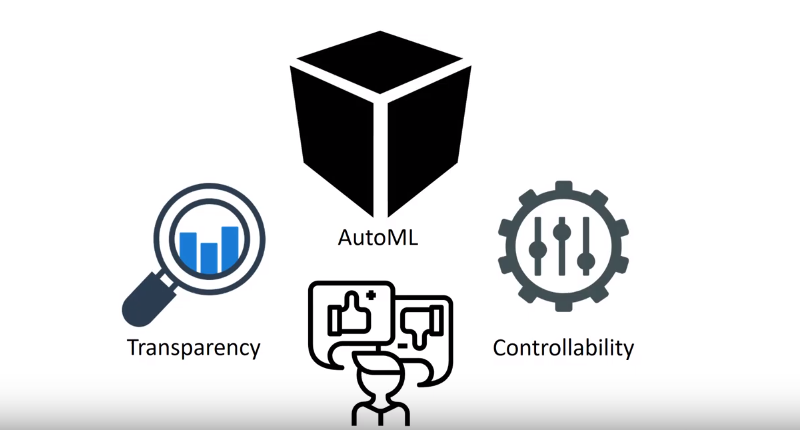 The tool, ATMSeer, generates a user-friendly interface that shows in-depth information about a chosen models’ performance, as well as the selection of algorithms and parameters that can all be adjusted.
At The Heart Of ATMSeer
This new tool ATMSeer is built around ‘Auto-Tuned Models (ATM).’ What this model does differently than other automated machine learning models is that it catalogues all the results as it tries to fit the models to data. ATM randomly selects an algorithmic approach, be it neural networks or decision trees and also model’s hyperparameters like the size of the tree or number of layers in a network. The model does this act of choosing and tuning hyperparameters repeatedly while assessing the performance. The results of this performance become a determining factor in choosing the next model; a better one. Finally, it displays all the results with models that suit a particular task.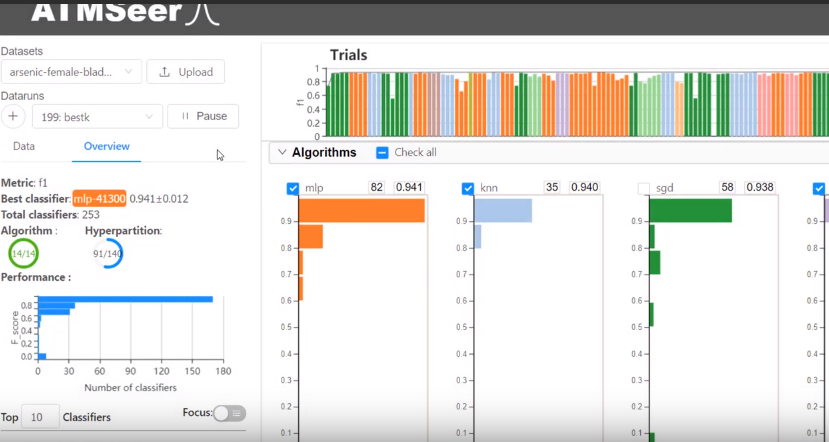
Spotted an error? Tell our editors. Read our editorial standards and corrections.