
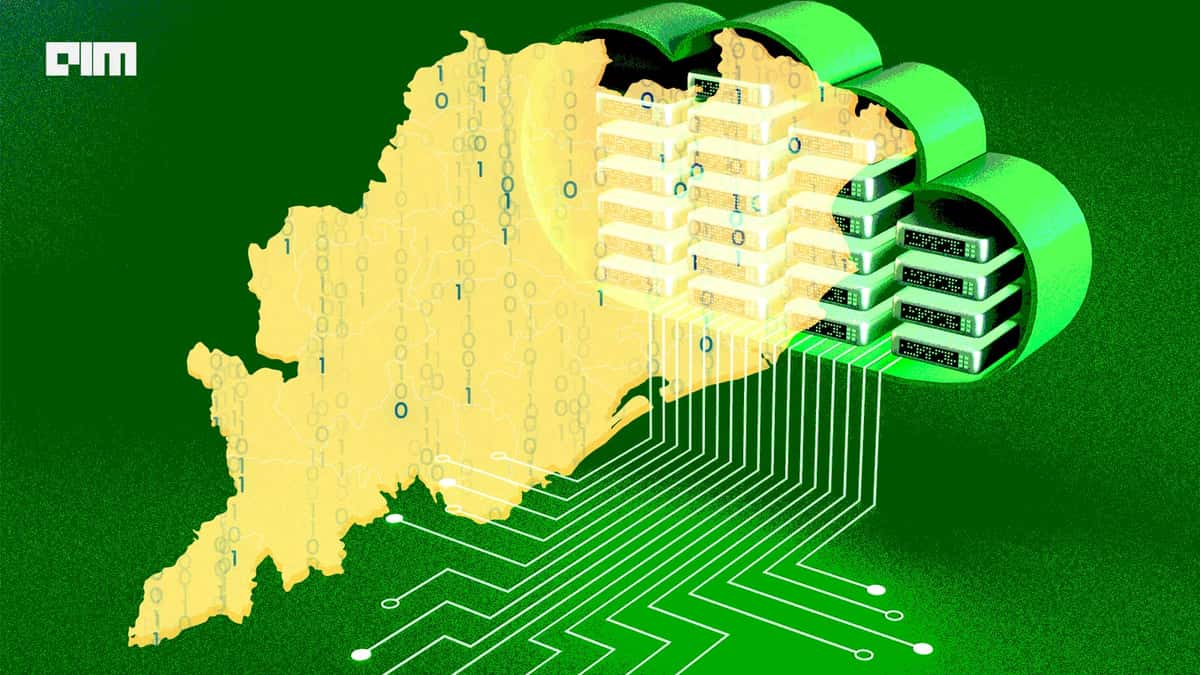

Odisha has long been known for mining minerals. But the state wants to change that and build a new economy based on compute, cloud infrastructure, and semiconductors—deploying the very minerals it extracts.
The strategy rests on two parallel tracks. It is attracting large-scale investment in AI computing and data centres on one side, while also ensuring policy support for semiconductor manufacturing and supply chains.
At the centre of the data centre push is the Odisha State Data Centre Policy 2022, amended in 2026 and designed to create a unified data governance architecture to manage more than 600 government applications while scaling up cloud infrastructure.
The policy is backed by the Invest Odisha (Utkarsh Odisha) programme, which targets major corporate investment in cloud computing, AI workloads, and sovereign digital infrastructure.
"Data centres are the digital backbone of the economy, and Odisha is reinforcing its position as one of the country's most progressive and preferred destinations by attracting major investments in the sector,” Vishal Kumar Dev, Additional Chief Secretary of Odisha's Electronics and Information Technology Department, tells AIM.
The data centre policy framework has been in the making for a decade and a half. While the 2022 policy focused on the building blocks and attracting investments through a myriad of fiscal incentives and business-friendly labour policies, the 2026 amendment aims to create a unified data governance architecture across the state. The focus is also on moving data centres to tier-2 and tier-3 cities.
“With the Odisha Data Centre Policy 2026 on the anvil and a compelling package of incentives already in place, the state offers a decisive competitive advantage: reliable, surplus power, and abundant water—critical enablers for data centre operations. For hyperscalers and cloud operators, this translates into faster project execution, lower operating costs and greater business certainty," he adds.
Eligible data centre projects can also draw a 20% fixed capital investment subsidy, excluding land costs, capped at ₹25 crore per unit.
The Anchor Deal
Among the biggest technology commitments so far is HCLTech's tie-up with the Odisha government and Sarvam AI to build an AI data centre within the proposed Odisha Sovereign AI Park. Under an MoU signed in July 2026, HCLTech plans to invest roughly ₹14,257 crore in the state.
The infrastructure will support indigenous foundation models and LLMs alongside GPU capacity, serving government bodies, research institutions, startups, and enterprises. It's expected to create more than 5,000 direct high-skilled jobs plus a larger pool of indirect employment across the surrounding tech ecosystem.
HCLTech also plans to open a global delivery centre in Bhubaneswar, positioning it as an AI and digital engineering hub to attract GCCs.
Odisha has also cleared an Adani Group proposal for a 1 GW AI data centre near Cuttack, representing an estimated investment of around ₹1 lakh crore that can generate roughly 3,000 high-end jobs. Separately, Adani has been allotted land at Infovalley in Bhubaneswar for a hyperscale facility carrying an investment of about ₹800 crore that will generate an expected 2,000 direct and indirect jobs.
Beyond Bhubaneswar
Odisha's digital infrastructure ambitions aren't confined to its capital. The state is exploring smaller edge data centres in Koraput and Keonjhar, with longer-term plans to extend digital infrastructure to Rourkela and Berhampur—an attempt to build a distributed computing ecosystem that can support government services and emerging-technology workloads statewide.
"Odisha aims to become a major hub for sovereign AI compute and cloud engineering. This includes expanding digital infrastructure to tier-2 cities such as Rourkela and Berhampur, integrating renewable energy to power green data centres, and building a highly resilient state cybersecurity framework," remarks Partha Sarathi Mishra, IAS, Director cum Additional Secretary, Public Enterprises Department in the Odisha government.
The state is planning a phased rollout, beginning its own systems. According to Mishra, the immediate priority is upgrading state e-governance infrastructure to a tier-3 compliant facility (SDC 2.0), while using single-window clearances to fast-track hyperscale data centre construction, roll out local-language Odia AI tools for public services, and generate near-term technology jobs.
In July this year, the Odisha government approved the proposal to establish the Odisha State Data Centre 2.0 at a cost of ₹266.48 crore. The project will involve migrating existing applications, strengthening cybersecurity measures, and instituting a disaster recovery facility for critical government services.
The Semiconductor Track
Data centres are only one part of the strategy.
Odisha's Cabinet has approved a third amendment to its Semiconductor Manufacturing & Fabless Policy 2025, aligning the state's approach with the India Semiconductor Mission 2.0 (ISM 2.0). The amendment widens fiscal and capital support beyond fabrication itself to cover semiconductor equipment manufacturing, semiconductor-grade chemicals, gases and materials, and other supply-chain segments. For mega projects involving investments above ₹500 crore in equipment, input supply chains or raw materials, the state plans customised incentives, subject to approval.
The underlying premise is to bolster the state’s semiconductor industry with a network of suppliers, materials firms, equipment makers, skilled workers, and supporting infrastructure.
To study what that network actually looks like, an Odisha government delegation led by E&IT Minister Mukesh Mahaling visited semiconductor facilities in Gujarat—including CG Semi, Kaynes Semicon, Micron, and Tata Electronics.
Odisha's technology push is deliberately structured as complementary halves. Data centres consume large amounts of computing hardware; a domestic semiconductor ecosystem builds capability across electronics, materials, equipment, and advanced manufacturing.
As the state's own officials frame it, the advantages of power, water, land, and industrial infrastructure can translate into the state becoming an eastern India technology hub. However, a lot will depend on whether they're matched with faster approvals, real talent development, and incentives that hold up under scale.
- Smaller Language Models Could Reshape How Enterprises Deploy AI
- Enmovil Plans to Quadruple FDE Team as Enterprise AI Hiring Moves Beyond Coding
- Does the World Need a New GitHub?
- Can India’s AI Boom Reach Bharat?
- AI's Next Agritech Frontier Is India's Fragmented Supply Chain
- India’s Frontier AI Race Gets a 240M Model That Beats Liquid AI