
5 min
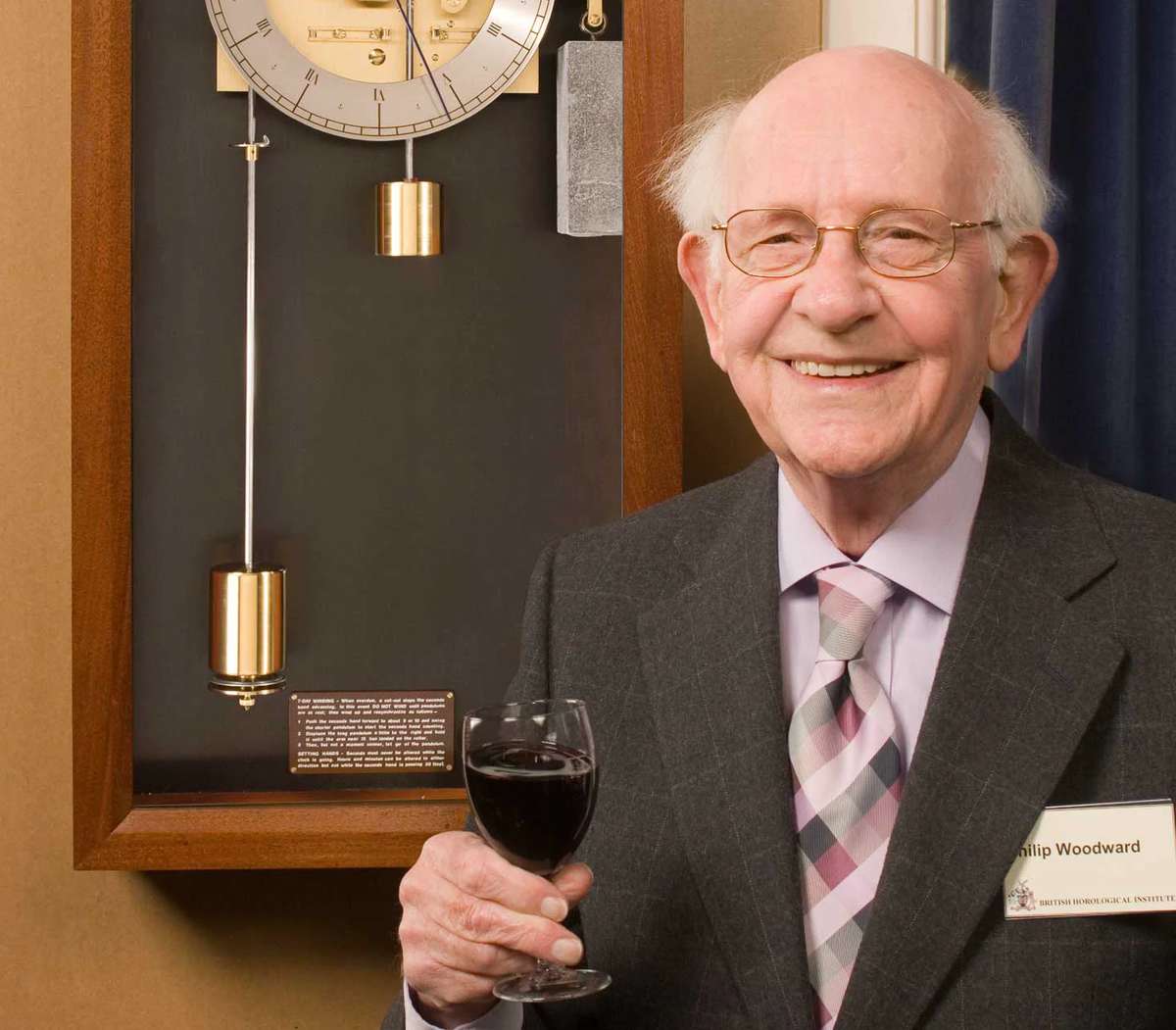
 Noted scientist Dr Philip Mayne Woodward who coined the term 'artificial intelligence', will be celebrated at his memorial service mid-April. Dr Woodward passed away in January this year was 98 years old. Known for his exciting work in radar engineering, the British mathematician was also a world-renowned horologist or a clock-maker.
According to his obituary that appeared in a British local newspaper, Dr Woodward was born on 6 September 1919 and was educated at Blundell’s School in Devon. In 1938 he won a scholarship to study mathematics at Wadham College, Oxford, but was in 1941 he was drafted to the Telecommunications Research Establishment — home of radar research for the RAF.
"One day at the Harvard University, Oliver Selfridge and Marvin Minsky called at the Cruft laboratory to discuss the programming of computers to exhibit quasi-intelligent behaviour, an emerging field at the time. Dr Woodward said that a snappy title was needed, if only to oust the anthropomorphic phrase 'electronic brain'. The word 'intelligence' had already been agreed when Woodward suggested prefacing it with 'artificial' to suggest the mimicking of mental processes. In five minutes, the now-familiar term 'artificial intelligence' had been coined," says the obituary.
Some of his other accomplishments include a four decade-old career in British Scientific Civil Services. According to historic reports, Dr Woodward was responsible for the software of one of the UK's first electronic computers (TREAC), followed by the UK's first solid state computer (RREAC).
In June 2005, the Royal Academy of Engineering gave Dr Woodward his first Lifetime Achievement Award, recognising him as an outstanding pioneer of Radar and for his work in precision mechanical horology. In 2009 he received the Institute of Electrical and Electronics Engineers (IEEE), Dennis J Picard Medal for Radar Technologies and Applications “for pioneering work of fundamental importance in radar waveform design, including the Woodward ambiguity function, the standard tool for waveform and matched filter analysis.”
- Industry Wants Faster Approvals and Cheaper Power in India’s Data Centre Policy
- Inside Jio Platforms: Its Tech Bets, Loss-Making Subsidiaries and Hidden Risks
- India’s GCCs to Add 1.4 Million Jobs, Drive 170 Million Sq. Ft. Office Demand by 2031
- AI Can Be Cyborg or Centaur. But Can Enterprises Monetise It?
- AMD’s Server CPU Business Faces a New AI Boom
- How an Engineer Is Using AI to Bridge the Accessible Education Gap