
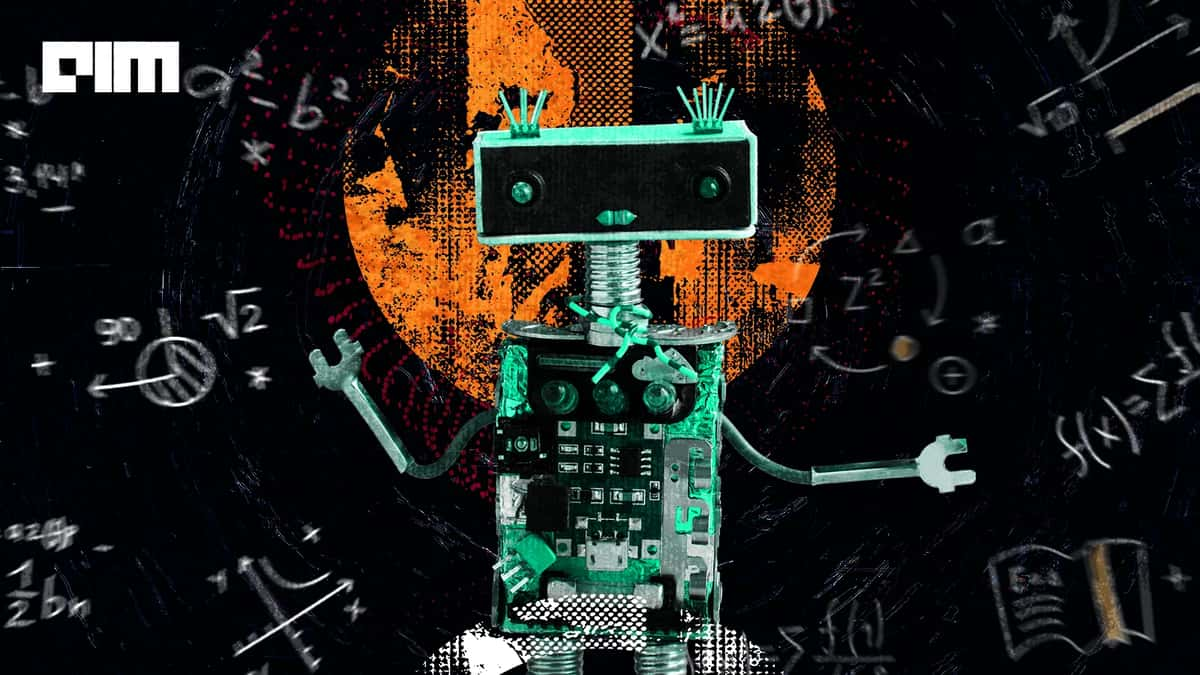
Disney Research is now researching real-time AI and subsumption architecture, which uses sensory data to select actions in autonomous robotics. Subsumption architecture can provide a robot with an emotional spectrum, same as humans can with sensory inputs. Subsumption architecture, often known as GOFAI, is a control architecture offered as an alternative to classical AI. It relates sensory information to action choices in an intimate and bottom-up manner, rather than using symbolic mental representations of the world to guide behaviour. Moreover, the Disney robot's eye stare is more lifelike due to subsumption architecture.
Objective
Subsumption architecture approaches the problem of intelligence in a fundamentally different way than conventional AI does. Four basic concepts guided the objective:
Situatedness
A basic concept of situated AI is that a robot should be able to react to its environment in a manner similar to that of a human. Rodney Brooks believes that a placed mobile robot should not model the world internally and then operate according to this model. Rather than modelling the environment, he asserts that "the world is its own best model," which means that appropriate perception-to-action configurations can be utilised to interact directly with it. Despite this, each module/behaviour continues to model the world near the sensorimotor signals, albeit at a very basic level. These simple models must make hardcoded assumptions about the world but avoid using memory to forecast the world's behaviour, depending instead on direct sensory feedback.
Embodiment
The first advantage is that it pushes the designer to test and construct an integrated physical control system rather than theoretical models or simulated robots that may not work in the real world. The second is that it is capable of resolving the symbol grounding problem, which many classical AIs face, by directly connecting sense-data to meaningful actions.
Intelligence
In light of evolutionary progress, Brooks contends that acquiring perceptual and movement abilities is an essential precondition for creating human-like intellect. Additionally, by ruling out top-down representations as a possible starting point for AI, it appears that "intelligence is determined by the dynamics of interaction with the world."
Emergence
Individual modules are not regarded as intelligent by themselves. As determined by observation of the agent and its surroundings, the interaction of such modules is typically regarded as intelligent (or not). Thus, "intelligence" is "in the observer's eye."
Primary Advantages
- The emphasis on iterative development and testing of real-time systems in their target domain.
- The emphasis on connecting limited, task-specific perception directly to the expressed actions that require it.
- The emphasis on distributive and parallel control, which integrates the perception, control, and action systems in an animal-like manner.
Disadvantages
- The challenge of constructing flexible action selection via a highly distributed system of inhibition and suppression.
- The architecture's lack of substantial memory and symbolic representation, which appears to preclude it from comprehending language.
When subsumption architecture was invented, its new setup and approach enabled it to succeed in a wide variety of critical domains where traditional AI had failed, most notably real-time interaction with a dynamic environment. However, its lack of extensive memory storage, symbolic representations, and central control puts it at a disadvantage when it comes to learning complex behaviours, in-depth mapping, and language comprehension.
Conclusion
Subsumption is a technique for robot control that is distinct from the "traditional" method. It is a bare-bones approach. Rather than a series of intricate individual "vertical" activities, the subsumption approach views the control problem as a series of "horizontally" ordered "layers." Each layer is intended to implement a "competence," or the capacity to exhibit a behaviour. Thus, each layer is entirely capable of directing the robot independently. Moreover, Robots' adaptability can be increased by using subsumption control, which allows them to work in complicated, unstructured settings.
- Industry Wants Faster Approvals and Cheaper Power in India’s Data Centre Policy
- Inside Jio Platforms: Its Tech Bets, Loss-Making Subsidiaries and Hidden Risks
- India’s GCCs to Add 1.4 Million Jobs, Drive 170 Million Sq. Ft. Office Demand by 2031
- AI Can Be Cyborg or Centaur. But Can Enterprises Monetise It?
- AMD’s Server CPU Business Faces a New AI Boom
- How an Engineer Is Using AI to Bridge the Accessible Education Gap