

5 min
[caption id="attachment_30396" align="alignnone" width="900"] Image credit: ‘Tug Of War’ by Patrick Whelan)[/caption]
Artificial Intelligence is making it harder for FinTech startups to compete with larger financial institutions such as banks and insurance companies. News outlets are rife with reports about India’s FinTech startups which are on hiring mode, duking out with each other over a war of talent. The FinTech sector has emerged as one of the most promising industries in India its market forecasted to touch $2.4 billion by 2020 from a current $1.2 billion, according to a NASSCOM report.
Digital finance is a growing trend in India and startups have paved the way for financial inclusion with deep tech solutions focused on microfinance, digital payments, credit scoring and remittances. P2P lending and MSME financing are the two emerging, promising areas which upended the banking sector with reduced dependency on banks by delivering a faster turnaround time in underwriting loans. In the lending space, FinTech startups have introduced transparency and are also lowering due diligence costs through faster-operating processes. This, in turn, is boosting economic development in India. This growth in technology is expected to add 21 million new jobs in the sector.
The current FinTech ecosystem in India consists of startups, digital payment players (most notably Paytm) banks, insurance companies and big tech players like Amazon, Google Pay and Facebook-owned WhatsApp. Google rolled out India-centric Tez while both Samsung and Amazon introduced Samsung Pay and Amazon Pay. On the other hand, there are homegrown digital payment firms like Paytm, PhonePe, MobiKwik and FreeCharge (which are all are UPI-enabled) are strengthening their arsenal. Interestingly, Paytm, which is India’s largest online payments and mobile wallet company, has invested $786 million in mobile payments to date.
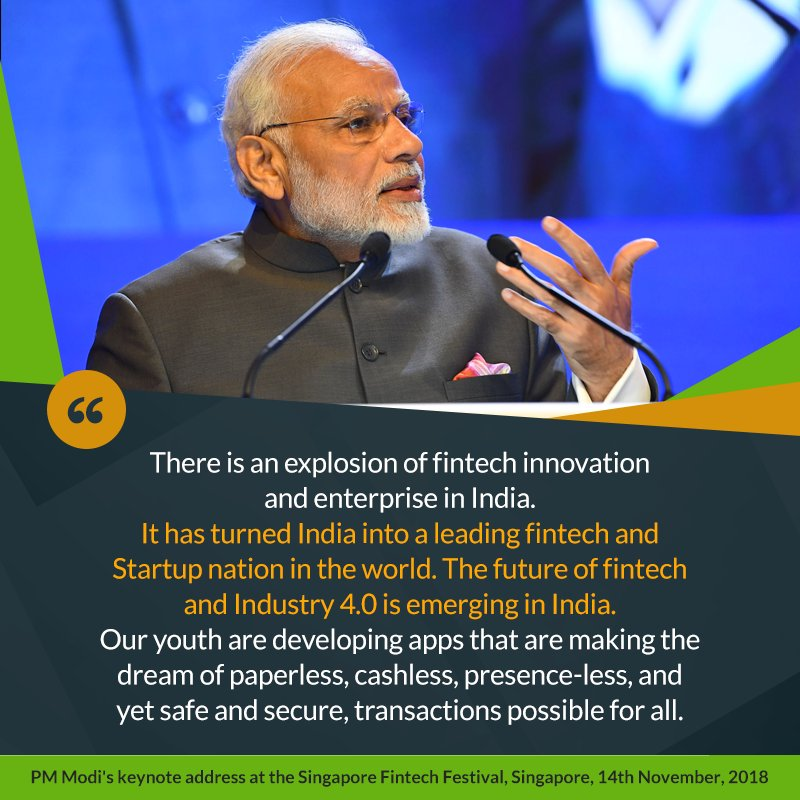
Image credit: ‘Tug Of War’ by Patrick Whelan)[/caption]
Artificial Intelligence is making it harder for FinTech startups to compete with larger financial institutions such as banks and insurance companies. News outlets are rife with reports about India’s FinTech startups which are on hiring mode, duking out with each other over a war of talent. The FinTech sector has emerged as one of the most promising industries in India its market forecasted to touch $2.4 billion by 2020 from a current $1.2 billion, according to a NASSCOM report.
Digital finance is a growing trend in India and startups have paved the way for financial inclusion with deep tech solutions focused on microfinance, digital payments, credit scoring and remittances. P2P lending and MSME financing are the two emerging, promising areas which upended the banking sector with reduced dependency on banks by delivering a faster turnaround time in underwriting loans. In the lending space, FinTech startups have introduced transparency and are also lowering due diligence costs through faster-operating processes. This, in turn, is boosting economic development in India. This growth in technology is expected to add 21 million new jobs in the sector.
The current FinTech ecosystem in India consists of startups, digital payment players (most notably Paytm) banks, insurance companies and big tech players like Amazon, Google Pay and Facebook-owned WhatsApp. Google rolled out India-centric Tez while both Samsung and Amazon introduced Samsung Pay and Amazon Pay. On the other hand, there are homegrown digital payment firms like Paytm, PhonePe, MobiKwik and FreeCharge (which are all are UPI-enabled) are strengthening their arsenal. Interestingly, Paytm, which is India’s largest online payments and mobile wallet company, has invested $786 million in mobile payments to date.
FinTech, The New Engine Of Job Growth
While the FinTech ecosystem in India is better known for digital payments, other emerging areas are lending, digital wealth management and RPA which are also gaining adoption. In terms of the landscape, a Yes Bank report indicated that 64 percent of these startups or organisations are less than 3 years old with a staff strength of 14. And around 7 percent of these startups have turned profitable. According to a KPMG - Google report, Indian FinTech industry is expected to drive 5x more employment by 2022 with FinTech hotspots in Mumbai, New Delhi, Gurgaon and Bangalore.How Are Companies Competing?
So how are banking institutions and FinTech startups competing for talent? According to survey findings from Teradata, there is a huge talent gap between big tech firms, banks and smaller companies. Big tech firms and banks are able to lure away AI and analytics talent thanks to their planned AI initiatives and IT infrastructure, while smaller firms lack a cohesive strategy. On the other hand, big tech firms provide a clear roadmap for success and career growth with tools and programs that allow data scientists to thrive. They also allow data science teams to flourish and enable them to take risks and test out new approaches. Most banks are now forging strategic partnerships with FinTech companies for their fresh perspective and expertise in specific areas. Through these partnerships, organisations are able to test out new approaches, build POCs and even get an in-house team to work on focused AI solutions. The two clear areas organisations look out for are:- Domain expertise
- Modelling expertise
Outlook
A Wharton article cited the Nasscom-KPMG report which predicted that the total FinTech solutions and services market in India will increase 1.7 times by 2020. Meanwhile, the Indian FinTech software market alone is expected to touch $2.4 billion by 2020. The NASSCOM report emphasised how digital payment area is maturing, P2P lending, robo-advisory, bank-in-a-box, security and biometrics as “striding fast towards mass market implementation,” and blockchain also show immense promise. Meanwhile, PwC India report emphasised how Indian companies have the potential to offer the highest ROI on projects at 29% versus a global average of 20%. Even though Indian FinTech ecosystem lacks behind other developed markets such as US, Singapore in terms of market size, unicorns and investments, India can soon emerge as a dominant player in the field of FinTech innovation.- India’s Frontier AI Race Gets a 240M Model That Beats Liquid AI
- The AI Slowdown Narrative Doesn’t Reflect Enterprise Reality
- India’s Enterprises are Scaling AI. Is the Infrastructure Ready?
- Industry Wants Faster Approvals and Cheaper Power in India’s Data Centre Policy
- Inside Jio Platforms: Its Tech Bets, Loss-Making Subsidiaries and Hidden Risks
- India’s GCCs to Add 1.4 Million Jobs, Drive 170 Million Sq. Ft. Office Demand by 2031