'Won't Part With Our Land': Why Bidadi Farmers are Not Buying Into Karnataka’s AI City Dream
By Smruthi Nadig, Novinston Lobo ·
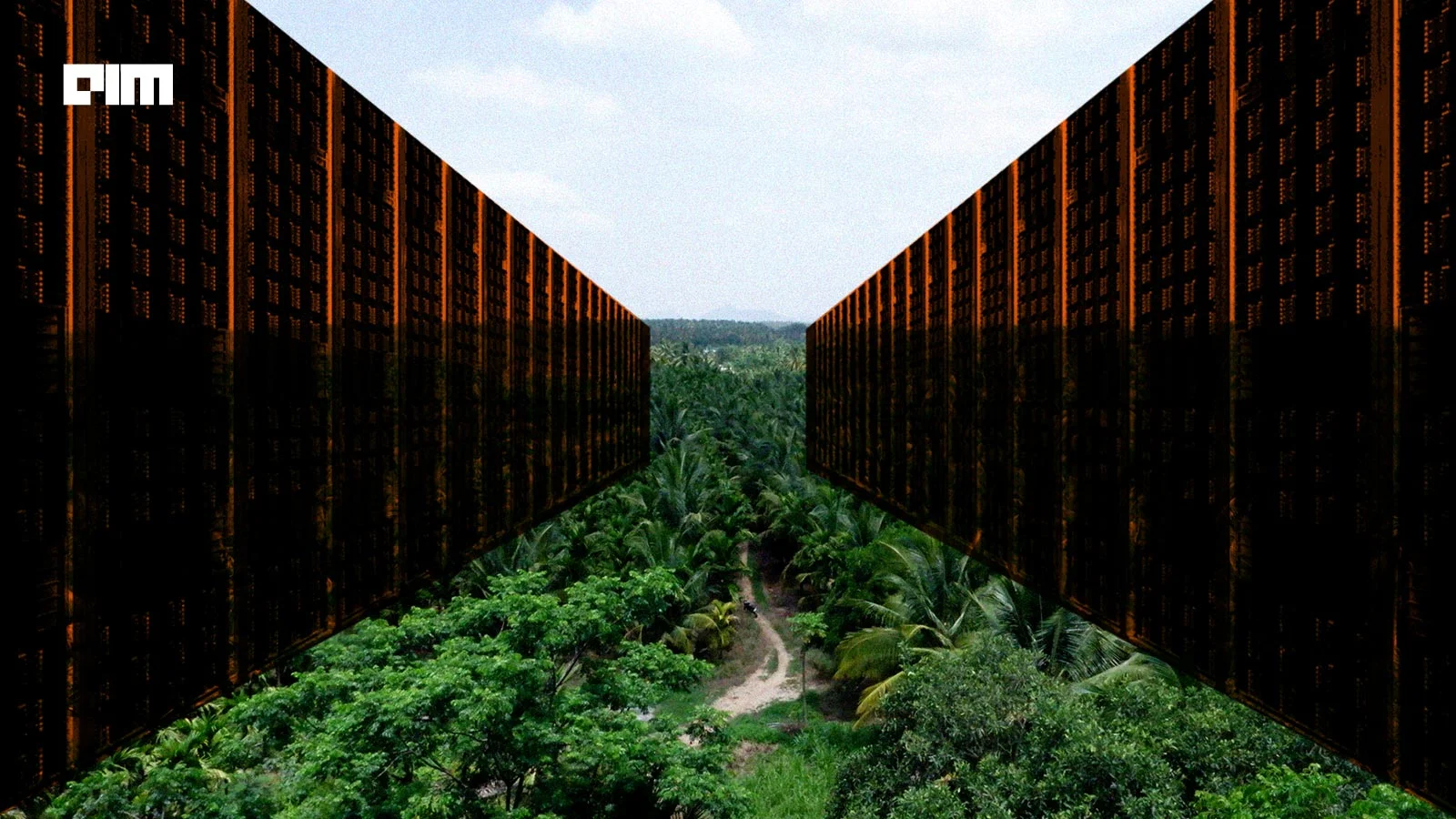
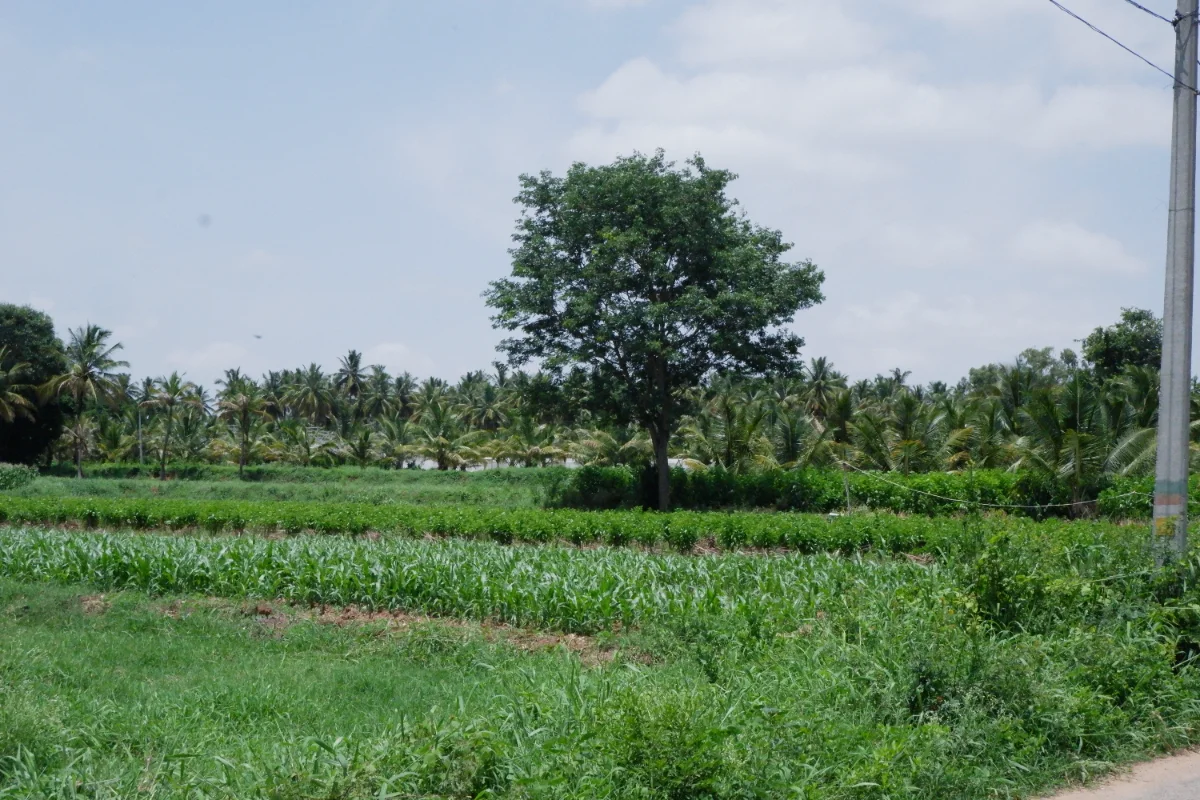
It only takes a right turn from the concrete, urban corridor along the Mysuru-Bengaluru Expressway to reveal the vast, green expanse of rural Bidadi, just 30–40 kilometres from the centre of Bengaluru. Tree tops cover the landscape till the eyes can see, only to be enveloped by Megalithic monoliths. The soil is fertile. It grows coconuts, areca nuts, mangoes, bananas, chikoos, etc.
Jayamma, in her 40s, has called this land her home all her life. It has been her provider. She has raised her three children through dairy and sericulture. One is now a doctor, and another is an engineer. Unlike many others, she did not have to sell her land to pay for their education.
“Our life here is good. We are surrounded by towns and urban centres within a two- to three-kilometre radius,” Jayamma tells AIM.
That world is on the verge of being a paradise lost—lost to the mechanical drone of a data centre, part of the upcoming AI city, also known as the Greater Bengaluru Integrated Township (GBIT), in Bidadi. With a proposed massive investment of ₹18,000+ crore, the Karnataka government has planned the project across 9,600 acres, featuring a work-live-play smart city, an AI data centre, tech parks, and green zones. It features dedicated hubs for AI and tech innovation as well as a space for global capability centres (GCCs) to take root.
Then the farmers of the Ramanagara district, where the project is being finalised, took to the streets, staging constant agitations since the latest government notifications in June to acquire 518 acres of land as part of the first phase of the project. The protest now spans over 400 days.
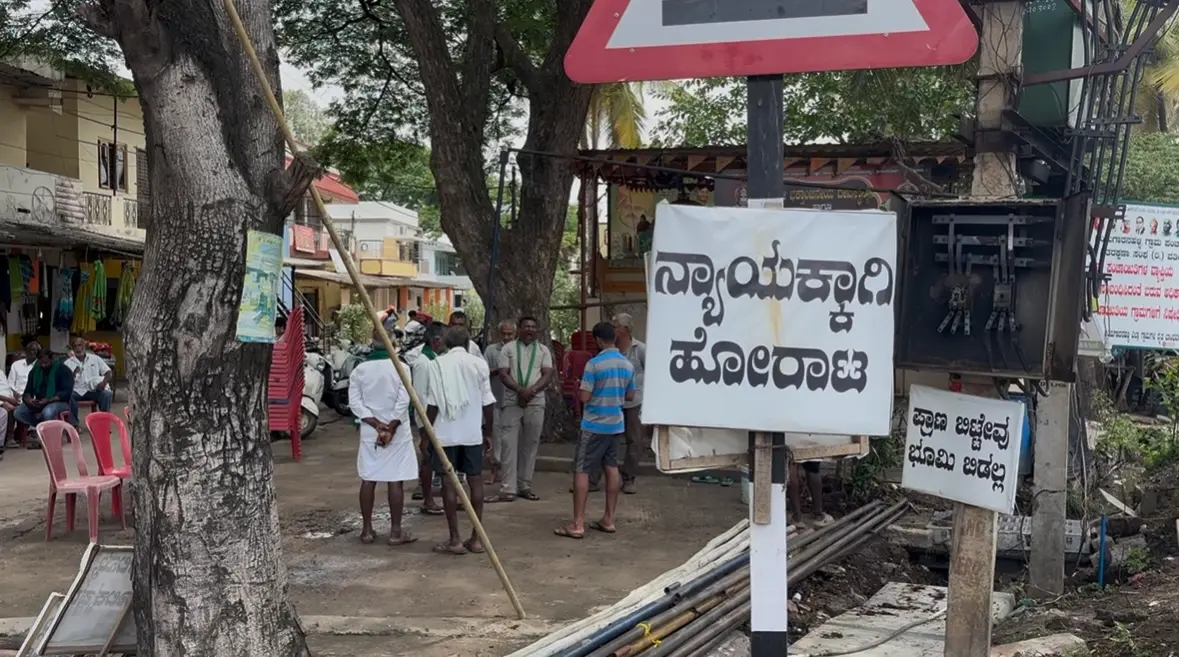
For decades, nine revenue villages and about 16 non-revenue villages (lacking formal land rights and revenue boundaries) have called this stretch of land home, living off its fertile soil. With the AI City, the government now promises to generate 1,00,000 jobs, with an emphasis on local employment to move people from farming to tertiary sectors.
However, farmers like Jayamma, who is also part of the Byramangala Panchayat, remain sceptical. “We do not want any jobs from the government. We only know how to cut grass, feed cattle, grow silkworms, cultivate crops, and milk cows. What kind of new job will my [family] learn now?”
There are 10 family members in her household. The younger children are currently studying, one son drives a government bus, while the parents rear silkworms. The family earns around ₹1.5–1.75 lakh each month.
“We want our village to remain as it is. We will not part with our land,” she adds.
Blueprint for India’s First AI Township
The dream of developing Bidadi into a future-forward township has been decades in the making,
The GBIT initiative was first announced by former Chief Minister of Karnataka and current Union Minister HD Kumaraswamy in 2006. Roughly 1,000 acres were procured and assigned by the Karnataka Industrial Areas Development Board during the Bharatiya Janata Party (BJP) administration.
The Congress government now wants to take the initiative forward to ease pressure on Bengaluru. It envisions it as the first AI-driven ‘work-live-play’ township in India, as part of a key infrastructure push led by current Chief Minister DK Shivakumar.
Out of the entire proposed area of nearly 7,500 acres, approximately 1,800 acres are designated for residential developments, while 5,681 acres will be allocated for large-scale construction of multi-storied buildings. About 44.5% of the total land area is expected to be available as marketable space.
At the time of writing, the GBDA has released a tender worth ₹26 crore to hire a consultant to create a master plan and a detailed project report (DPR) for the proposed AI City and integrated township in Bidadi. The consultant will develop the master plan for the township, formulate an infrastructure strategy, create a project implementation roadmap, and plan investor mobilisation for the proposed GBIT. The technical bid opened on June 24.
The total estimated cost of the project, which includes land acquisition, is ₹18,133 crore. The government intends to fully fund it through borrowing and the mobilisation of internal resources.
The Housing and Urban Development Corporation is expected to extend a loan of ₹9,011 crore, while the Bengaluru Development Authority is set to contribute ₹3,000 crore, with an additional ₹3,500 crore to be raised through the mortgaging of civic amenity sites. The projected expense for civil works is estimated at ₹6,580 crore.
The initial phase encompasses 518.45 acres across three villages: Kempaiahnapalya with 384.22 acres, Mandalahalli with 71.13 acres, and Vaderahalli with 63.10 acres, affecting approximately 754 farmers.
“AI inherently minimises human labour. What employment will an AI City generate for our local rural population? It will only render hundreds of families unemployed, displace 3,500–4,000 households, send 70,000–80,000 cattle to slaughterhouses, and uproot over a million trees,” Manjunatha, a farmer in the district, laments.
Cash Compensation
The government claims that over 200 farmers have applied for the compensation.
The Urban Development Department has established two compensatory measures. Landowners have the option to receive compensation for relinquishing their lands through either an upfront cash payout or a land-pooling scheme combined with annual livelihood grants. The upfront cash payment ranges from ₹2.07 crore to ₹2.55 crore per acre, depending on the land’s proximity to main roads.
Alternatively, under the land-pooling scheme, farmers can share their land and receive 50% of their plot back as developed land, either 50% designated for residential use or 45% for commercial purposes, thereby allowing them to continue participating in the development of their land.
The rehabilitation package for affected farmers includes several forms of financial support. Compensation for existing crop trees ranges from ₹6,000 to ₹9,000 per arecanut tree and up to ₹64,000 per mango tree.
In addition, farmers will receive an annual annuity or livelihood grant of ₹30,000 to ₹50,000 per acre until they receive final compensation or develop plots. To further alleviate their financial burden, the package also offers exemptions from income tax and stamp duty.
However, while the compensation may seem lucrative, obtaining it is another story altogether.
“Another major issue is the compensation payment process itself. Firstly, only landowners or people who own pakka houses, not kutcha houses, are entitled to compensation. About 50% of the people on any patch of agricultural land are not landowners, meaning they are not entitled to any compensation under the Act,” Retired Major General and civil rights activist SG Vombatkere tells AIM, referring to the Right to Fair Compensation and Transparency in Land Acquisition, Rehabilitation and Resettlement Act, 2013.
To claim compensation, individuals must provide documentation of ownership, which can be complicated by historical divisions among heirs. Often, property titles remain in the name of a deceased relative, leading to challenges when farmers approach officials, who may note name discrepancies. Even with valid documents, farmers are often expected to pay ‘fees’ to officially register their names.
“The compensation process is extremely tedious, lengthy, and ridden with corruption at every stage. Even if I finally get my name on the compensation list, the actual payment won’t be made until six months or a year later,” the Major adds.
However, farmers also don’t see large sums of upfront cash as a favourable measure of compensation.
“Rural women earn around ₹50,000 a month consistently through livestock and farming, leading a proud, self-reliant life. If you suddenly hand over ₹2 crore in cash, it will trigger family disputes between parents and children within six months,” Manjunatha fears.
“Large sums of cash often lead to bad habits and gambling. Moreover, with the rise of cybercrime, rural folks will easily fall prey to online fraudsters and lose everything. This cash compensation will only destroy families,” he adds.
The Ecological Crisis
While urging the government to reconsider the Bidadi township, Vombatkere says the project would not only impoverish Project Affected Families (PAFs), heighten social unrest, and increase the government’s social welfare burden, but also exacerbate the local impacts of global warming and climate change.
“On one side, you are killing the food producers, and on the other side, you are worsening climate change and global warming. Urban expansion means an increase in carbon emissions, whereas cultivation means a reduction of carbon emissions, or rather, carbon sequestration,” he notes.
The project will also see the felling of around two lakh trees, according to an RTI filed by The Hindu.
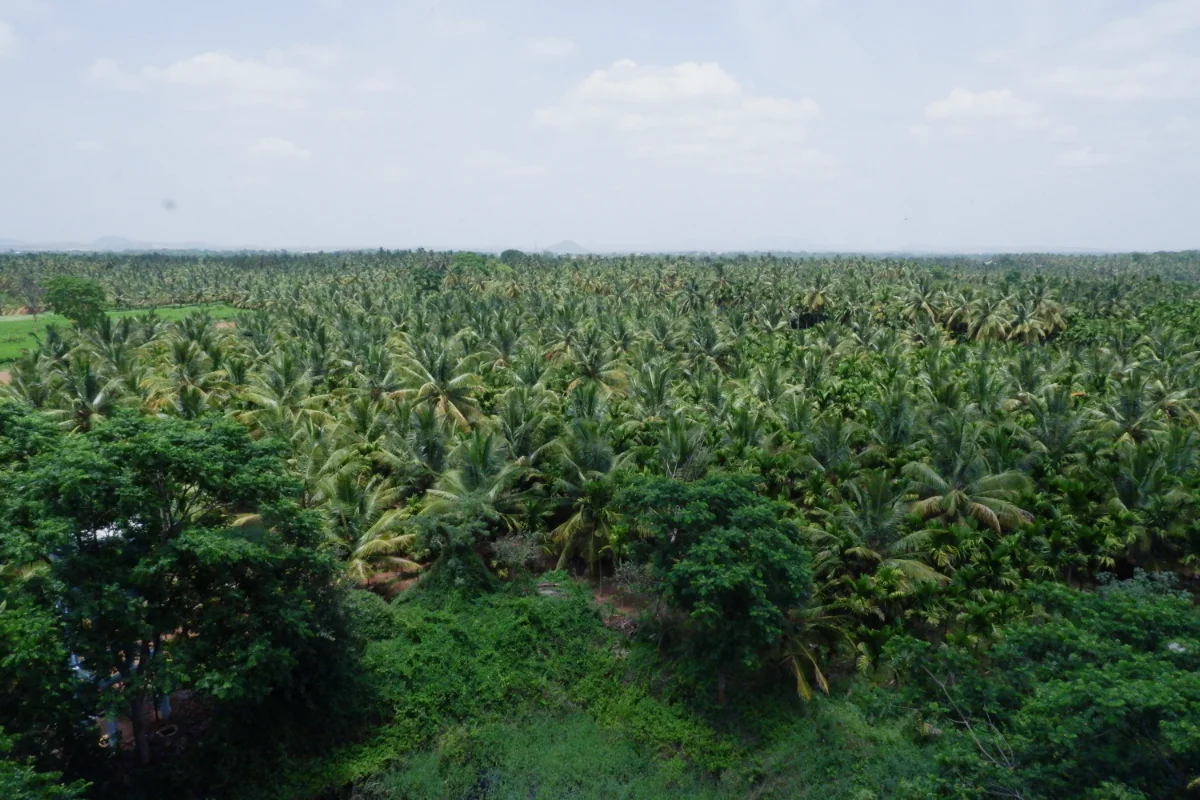
It will impact 87,903 coconut trees, 83,536 arecanut trees, more than 3,00,000 banana plants, 12,550 mango trees, 2,344 chikoo trees, along with rose plants, custard apple trees, silk fields, and crops such as ragi, paddy, and red gram. Ragi is cultivated on 231 acres within the proposed acquisition zone.
Then there’s the issue of other planned neighbourhoods, particularly in North Bengaluru, which remain underutilised.
Over the last 15 years, the state government has plotted developments through planned neighbourhoods like Shivaram Karanth Layout, Visvesvaraya Layout, Kempegowda Layout, Arkavathy Layout, and Surya City. However, stakeholders claim barely 10% of those layouts are developed, and 90% of the plots are still lying vacant.
“Even 15 years after the construction of Kempegowda Layout, drinking water and electricity haven’t been provided. The same situation exists in Shivaram Karanth Layout,” R Ashoka, the Leader of Opposition in the Karnataka Legislative Assembly, told Deccan Herald.
“If they set up industries and provide jobs in North Karnataka, where people are actually calling for development, people wouldn't need to migrate here. That would prevent congestion entirely,” K Ramaiah, President of the Raithara Bhoohitha Rakshana Sangha, the farmers’ organisation leading the protests against the land acquisition, tells AIM.
However, Manjunatha voices a more existential fear. “If they build another massive satellite town here, do they even have the capacity to supply water?”
Bidadi’s existing industrial ecosystem currently requires about 3.62 million litres of water per day (MLD), of which 1.265 MLD is used for industrial processes, according to environmental compliance data for the KIADB industrial area. Major manufacturers such as Toyota Kirloskar Motor, Bosch, and Britannia operate from the region, with industries drawing water from KIADB supplies, borewells, tankers, and, increasingly, treated wastewater.
According to G Sundarrajan, an environmental activist and coordinator of Chennai-based NGO Poovulagin Nanbargal (Friends of Earth), this proposal is a water catastrophe in the making.
“Let’s say they add another 300 MW of data centres that could easily triple or quadruple that demand. A single megawatt of data center capacity requires roughly 1.5–2.7 million litres of water annually just for cooling. We’re talking about potentially 450–810 million litres annually for data centres alone, before you add the residential and commercial components of this 9,000-acre city,” he explains.
The Karnataka government has not yet released an official estimate of GBIT’s total water demand. “The government must release the full water impact assessment and conduct genuine hydrological studies before a single acre is cleared. Otherwise, we’re building a 9,000-acre industrial complex on the bones of a region's ecological future,” Sundarrajan asserts.
However, the project includes a proposed 100 MLD sewage treatment plant, suggesting planners expect wastewater generation at a scale far beyond the current industrial demand in Bidadi. “This isn't development; it's resource colonisation. We cannot sacrifice one of Karnataka's water-stressed regions to subsidise the global tech industry with cheap water,” the NGO coordinator says.
Environmental activist Vijay Nishanth also emphasises that the government has moved forward with final notifications for this project while neglecting the concerns of local farmers. He notes that the district officer didn’t visit the area, no tests were conducted to evaluate the land’s fertility, and no Grama Sabha meeting was been held to seek the community’s approval.
The Bureaucratic Maze
Karnataka’s IT Secretary, N Manjula, informed AIM that she was not aware of the Bidadi AI City project or the farmers' protest. Following this, AIM also contacted MB Patil, Karnataka’s Minister of Large and Medium Scale Industries, who also stated that he does not oversee the project, as it does not fall under his ministry. Krishna Byre Gowda, the Minister for Bengaluru Development and Revenue in the Karnataka government, also reiterated that this matter does not fall under his jurisdiction and refused to comment.
AIM also reached out to the Chief Minister’s Office but didn’t receive any response at the time of publishing.
The farmers have called on their local MLA, HC Balakrishna, to mediate. However, they say he continues to avoid direct engagement. The lack of communication is turning the farmers even more sceptical about the project.
“We challenge [the CM] and the government to come here and sit with us. If they can prove that even 50% of the locals support the acquisition, we will drop our protest this very day.
The truth is, 90% of the people are protesting with us. Their claims are a massive lie,” Ramaiah dares.
Opposition parties, including the BJP and the JDS, claim that the government is misrepresenting the proposed GBIT project and is urbanising Bidadi to advance a real estate venture. Farmers share similar concerns about the project’s true nature. “This is not a genuine government development project. It is entirely driven by a private real estate land mafia. The authorities are working hand in glove with private real estate interests,” they claim.
However, some government leaders are rethinking the project. BK Hariprasad, the Karnataka Pradesh Congress Committee, indicated that the proposed township project might be abandoned if farmers refuse to relinquish their land. “If the farmers say no, we will not go ahead with the project,” he told the media.
On July 13, two FIRs were registered following clashes during a land survey in Ramanagara, where officials alleged they were obstructed and attacked by protesters and farmers.
Subsequently, former Prime Minister HD Deve Gowda announced that he would go on an indefinite hunger strike if the Karnataka government did not withdraw the FIRs against protesting farmers and halt land acquisition for the proposed Bidadi AI township. Responding to the clash, CM Shivakumar said the government doesn’t want to disrespect the farmers. “The law doesn't allow me to drop the proceedings. We will take care of the farmers," he noted.
India is now ranked among the global “big three” in AI alongside the US and China, with Amazon committing $35 billion, Microsoft pledging $17.5 billion, and Google anchoring a $15 billion AI hub, effectively turning the country into the world’s AI back office. Karnataka is positioning itself at the centre of that ambition. But the calculus of who benefits and who bears the cost is deeply uneven.
Karnataka has been here before. After a 1,200-day farmer protest in 2025, the state government was forced to abandon land acquisition in Devanahalli for an aerospace park. The lesson, apparently, did not travel down the road to Bidadi.
(Disclaimer: The story was updated to reflect the events on July 13.)