
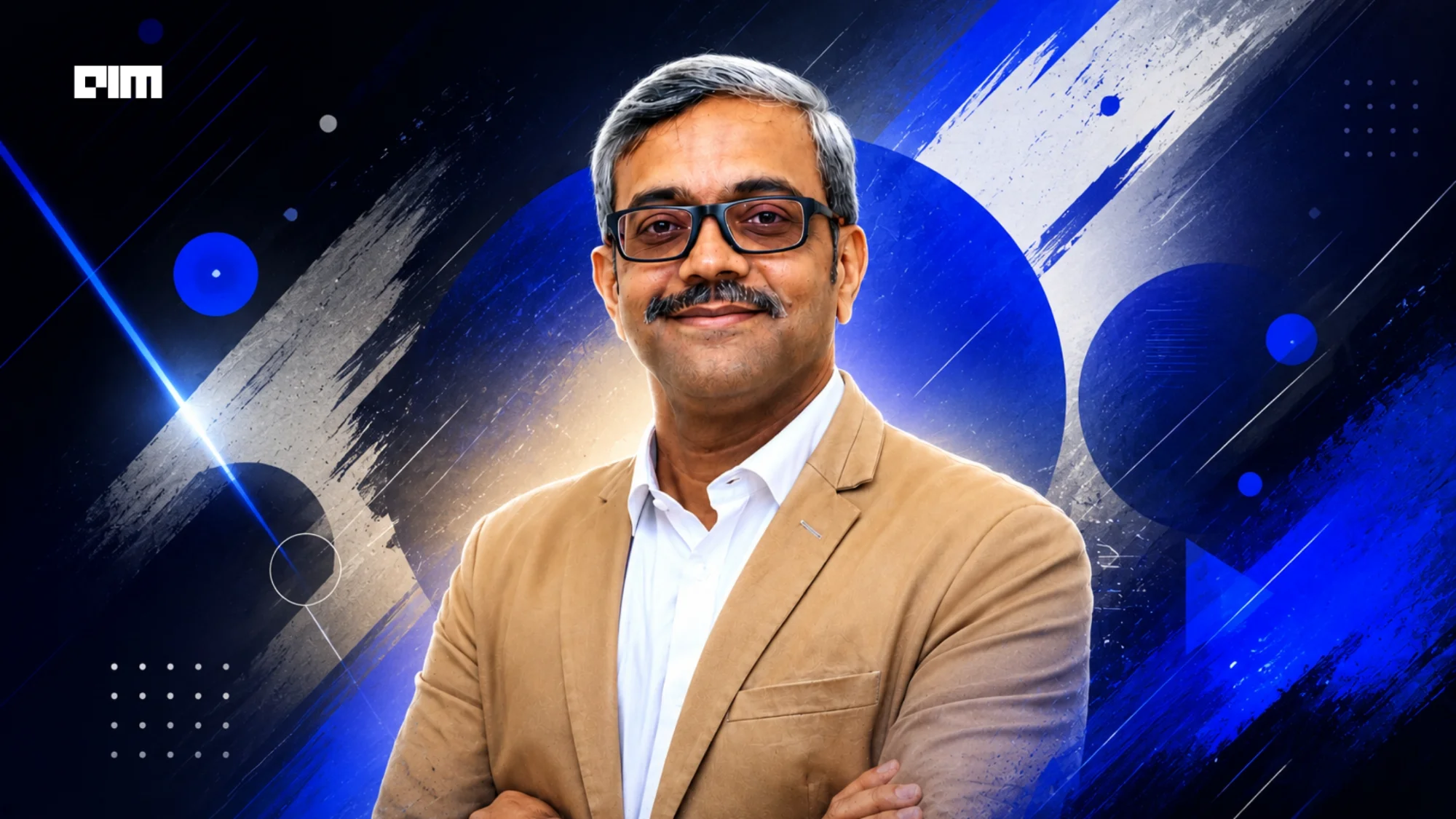
At some point during the pandemic, Zoom stopped being a product and became a habit. People were not even sure which tool they had used, but they would still say they had “just stepped out of a Zoom meeting.” That kind of cultural capture is rare.
It is also, as Sameer Raje, Country Leader and Head, India and SAARC, Zoom Video Communication admits, a complicated gift. Because once the world reopened, habits were tested.
The offices came back. Microsoft Teams scaled to hundreds of millions of users. Google Meet was built into every Workspace account. The collaboration market did not shrink. It got crowded. And then AI showed up, flattening whatever differentiation remained.
This is where Zoom’s next story begins. It wants to move from being the app people open for a call to becoming the layer that helps work happen before, during and after the call. “When we first introduced meeting notes, which is the simplest form of AI in meetings, we found CEOs telling us, ‘This is fantastic. When I meet my team in person, I switch on a Zoom meeting and leave it on so that I get the notes after that,” he tells AIM.
But Raje’s central argument is simple: meeting notes are no longer the point. AI summaries are table stakes. The real opportunity, Raje believes, lies in “conversation to completion.”
Zoom is building a platform that can prepare users before a meeting, assist them during the discussion, and then convert the conversation into tasks, workflows, and follow-ups after the meeting ends.
“Meeting summaries are just one aspect of it,” he adds. “Conversation to completion” is the more important idea.
So, Where’s the Moat?
That distinction matters because Zoom is no longer competing only with Microsoft Teams and Google Meet on video quality or ubiquity. It is competing on usefulness.
Raje frames the company’s AI push around human-to-human and human-to-system interactions. Before a meeting, AI can gather the right context. During a meeting, it can capture what matters. Afterwards, it can generate tasks, assign them, and even connect with other enterprise tools. For example, the Zoom AI Companion can orchestrate workflows across systems and interact with software such as ServiceNow to raise a ticket directly in chat.
That is also where Zoom is trying to differentiate itself from bigger rivals. Raje repeatedly returns to the idea that Zoom does not want to force customers into a closed ecosystem. Instead, it wants to sit inside whatever stack an enterprise already uses.
The company works with its own LLMs and SLMs, but also with models from OpenAI and Anthropic, because “we don’t say it’s our way or highway.” That customer-first logic, he argues, has always been Zoom’s real moat.
The company’s broader push in India reflects that thinking. Zoom, he says, is no longer just a meeting app. It now has Zoom Phone, Zoom Contact Center, APIs, SDKs, and AI features woven into the stack. He describes Zoom Phone as a cloud Private Branch Exchange (PBX) that lets office numbers, mobile numbers, and even calls elevated into meetings move across devices without the old mess of separate systems.
The bigger promise is continuity. A sales call can be transcribed into CRM automatically. A support call can pull in the right billing person on the same platform. A conversation can be turned into a tracked outcome instead of getting lost between teams.
Raje believes that enterprises are burdened by too many systems and too much friction. Employees log into one app for leave, another for IT, another for email, another for meetings, and then another layer of AI tools on top of that. Customers face their own version of the same problem when they are shuffled from agent to manager to billing team and forced to repeat everything again.
That’s why Zoom’s next chapter is not really about communication. It is about removing the repeated pain that communication creates inside large organisations.
Here, the contact center bet matters. Raje admits that Zoom is a late entrant in that category, but emphasises that the adoption has still picked up because the product is omnichannel, easy to deploy, and already connected to analytics and AI. Many deployments happen quickly because the system is low-code or no-code and can be rolled out in days.
In his view, the market is responding not to a shiny new feature but to a simpler idea: one platform, fewer silos, less friction.
“If you look at the majority of the platforms which are available today in the market, they don’t break these barriers. They, in fact, create more frictional points,” Raje says. “We don’t say it’s our way or highway. We facilitate what the customer wants. We help you break down those communication barriers within your organisation and outside your organisation.”
The India Opportunity
India, for Zoom, is no longer just a consumption market either. Raje says the country is its second-largest market by user base, but the real value lies in engineering and talent. Zoom has tech centres in India, a sizable support and engineering presence, and an R&D footprint that contributes to global product development.
“Beyond the market size, what is of real interest for Zoom in India is the talent pool, especially in engineering and R&D, and that is something we are focusing on very strongly,” Raje says.
He also points to the country’s regulatory complexity as a reason the local operation matters. Products like Zoom Phone and Zoom Contact Center have to be adapted for Indian rules, which makes the India team both a market and a product team.
That local shift is especially important because Zoom’s identity in India has changed. Raje says many early deployments were about replacing a meeting app with a better meeting app. That era is over. The company now wants to be seen as an enterprise-grade collaboration platform with employee and customer experiences stitched together.
The trust question, of course, still hangs over Zoom. Raje does not dodge that. He argues that the company has addressed the concerns raised in 2020 around encryption and data routing, and that security teams now routinely see stronger controls than they expected.
He says Zoom lets customers choose the data centre where data is routed, offers 256-bit GCM encryption (a block cypher mode of operation), and was among the first to offer end-to-end encryption with bring-your-own-key support. His point was less defensive than it was practical: security is no longer just a repair job for Zoom.
Raje argues that Indian enterprises have a flexibility problem. Many large organisations choose tools based on cost or convenience and then get trapped because switching later becomes expensive. They also remain dangerously underprepared for communication outages, even though employees themselves live on backup devices and dual SIMs.
His observation is blunt: people protect their own connectivity better than their companies protect business continuity.
He also believes Indian users are unusually fast adopters of AI, sometimes in ways that even technology leaders do not fully anticipate. Employees are already using AI on personal devices, he says, whether or not companies have formally approved it.
And unlike some other markets, Indian users are quick to improvise. “What I see with large enterprises in India is that they are putting their eggs into one single basket. They choose one system, and when it doesn’t work, the cost of moving away becomes too high,” Raje says.
He calls it the “jugaad” nature of AI adoption, and gives an example from education where Zoom Whiteboards with AI were used to build thousands of templates for teachers. That, in his view, is the real Indian edge: speed, improvisation and a willingness to adapt before the playbook is complete.
For all the talk of AI, however, Raje returns again and again to one old-fashioned idea: human connection. He does not believe async tools, chat tools or AI summaries will replace the value of speaking to another person in real time.
“Will human-to-human connection go away? I don’t think that’s going,” he remarks, adding that virtual meetings remain the next best thing to being in person.
Even in a world of digital twins, avatars, and agentic AI, he sees live conversation as the core use case that will survive.

Your reaction
Discussion
What's your take on this story?
No comments yet — be the first to share your view.