Key takeaways
- Artificial Intelligence is a rapidly evolving technology that is transforming various industries.
- Researchers are making significant progress in creating prototypes that aim to replicate human intelligence.
- Artificial Narrow Intelligence focuses on specific tasks, while Artificial General Intelligence aspires to broader cognitive capabilities.
- Current AI accomplishments include chatbots and AI-based assistants, showcasing practical applications of technology.
Artificial Intelligence as a booming technology has disrupted all the major industries and there is still much more to it that researchers are on a way to develop. A branch of computer science, AI has been gaining rapid popularity with researchers building prototypes to match human intelligence.
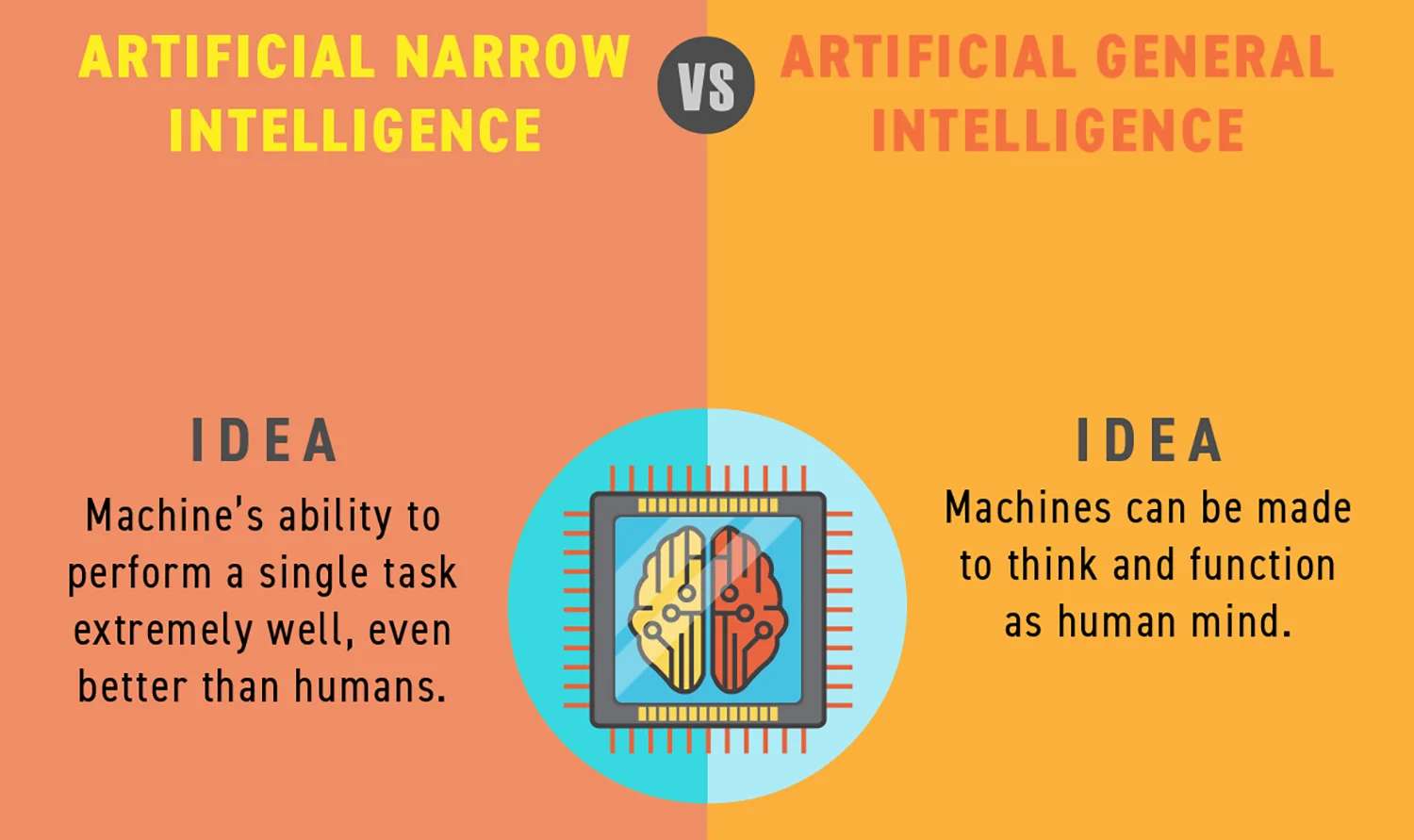
While that is a work still in progress, there is a lot of other accomplishments such as chatbots, AI-based assistants and much more, that AI researchers can be proud of. And talking about these two branches of AI-- that's the basic difference Artificial Narrow Intelligence and Artificial General Intelligence, which we bring to you in the form of an infographic as below:
Read the complete article here
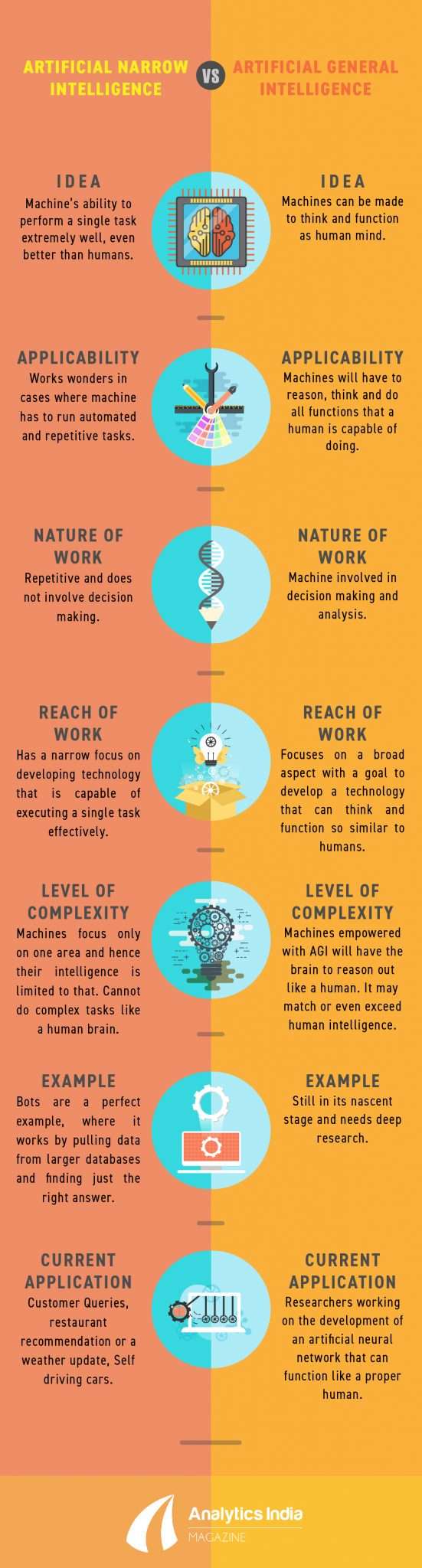
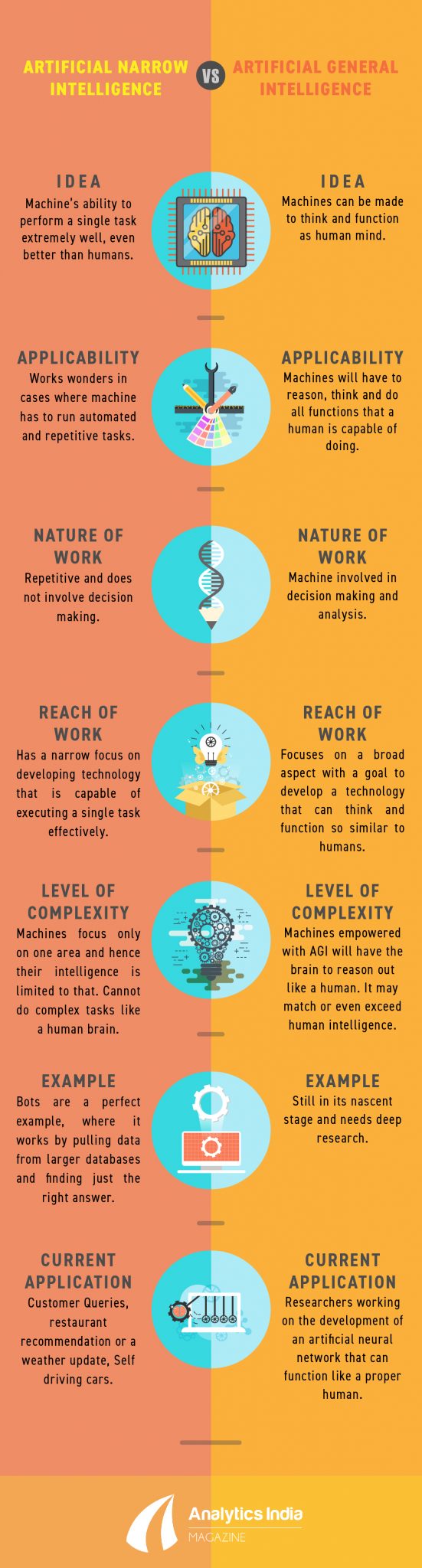
Artificial narrow intelligence (ANI) is a machine's ability to do one task extremely well, often better than people: automated, repetitive work that involves no real decision-making, such as chatbots answering customer queries, restaurant recommendations, weather updates and self-driving features. Artificial general intelligence (AGI) would let machines reason, think and make decisions across everything a human can do, possibly matching or exceeding human intelligence. This infographic compares the two on idea, applicability, nature and reach of work, complexity, examples and current use, and notes that AGI was still at a research stage.
Spotted an error? Tell our editors. Read our editorial standards and corrections.