
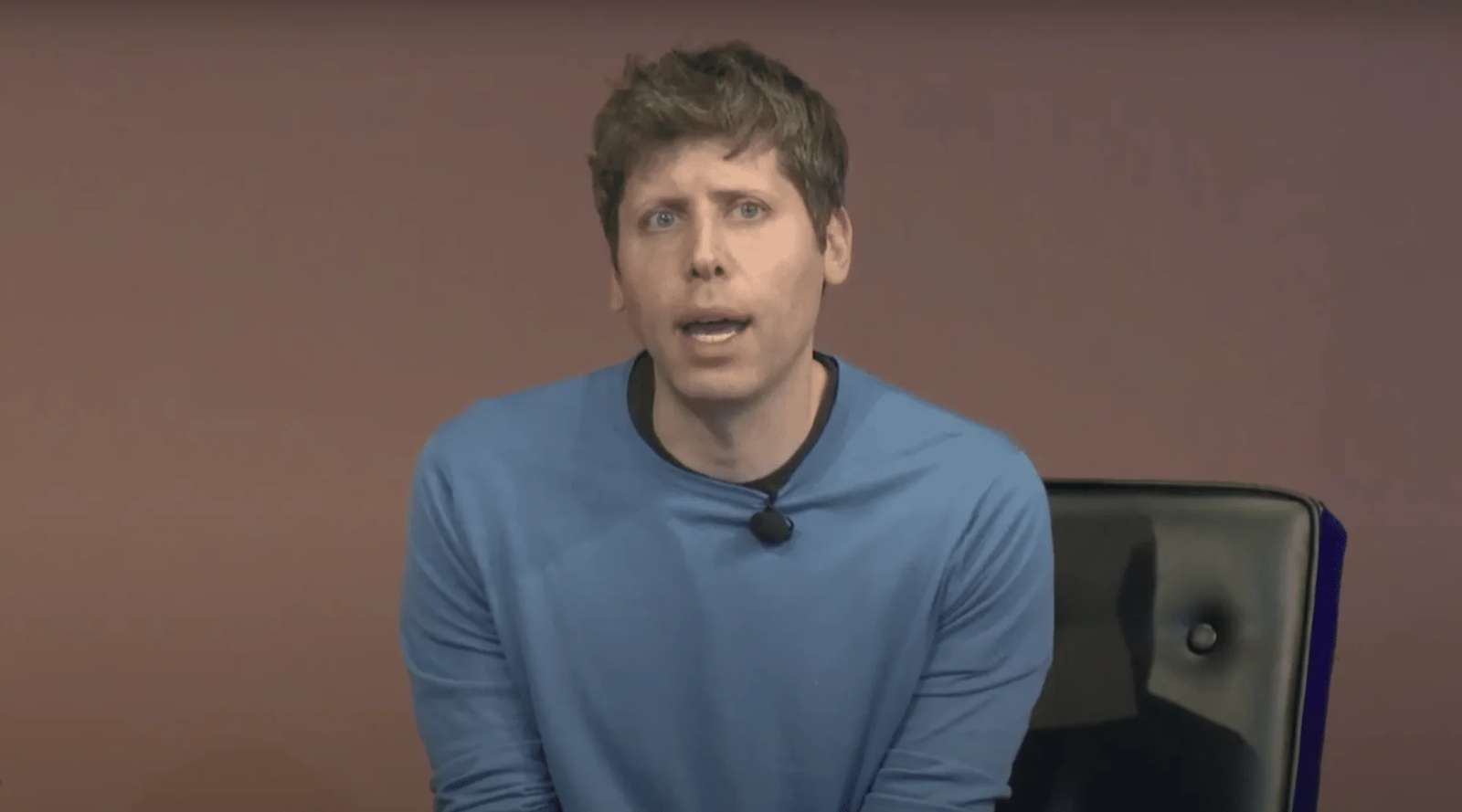
OpenAI chief Sam Altman is confident in the development of artificial general intelligence (AGI) and predicts that AI agents could enter the workforce by 2025.
“We believe that, in 2025, we may see the first AI agents join the workforce and materially change the output of companies,” Altman wrote in a recent blog post.
He further expressed confidence that OpenAI has mastered the methods necessary to build Artificial General Intelligence (AGI) as traditionally understood, emphasizing the potential of these technologies to enhance human capabilities. “We continue to believe that iteratively putting great tools in the hands of people leads to great, broadly-distributed outcomes,” he said.
Looking beyond AGI, Altman revealed that OpenAI is shifting its focus toward developing superintelligence, which he believes could revolutionise scientific discovery and innovation. He described superintelligent tools as capable of performing tasks far beyond human capabilities, potentially leading to unprecedented levels of abundance and prosperity.
“With superintelligence, we can do anything else,” he said, suggesting that these advancements could accelerate progress in fields such as medicine, climate science, and technology.
Altman acknowledged that the concept of superintelligence may sound speculative but expressed confidence that its significance will become apparent in the coming years. “We’ve been there before and we’re OK with being there again,” Altman said, referencing the company’s history of pursuing ambitious goals.
When OpenAI released its most powerful o3 series of models, speculations arose about whether the model achieved AGI, given its performance on benchmarks.
The o3 model scored almost 90% on the ARC-AGI benchmark, exceeding human performance.
Meanwhile, Microsoft and OpenAI have agreed on a new, specific definition of AGI, or artificial general intelligence. According to a report, OpenAI can only achieve AGI when it has built a system that can generate $100 billion in profits.
Interestingly, a few days ago, Google’s senior product manager Logan Kilpatrick, posted on X, “Straight shot to ASI is looking more and more probable by the month… this is what Ilya saw.”
Kilpatrick highlighted the approach taken by Ilya Sutskever, co-founder of OpenAI and the Superintelligence (SSI). “Ilya founded SSI with the plan to do a straight shot to Artificial Super Intelligence,” Kilpatrick said. “No intermediate products, no intermediate model releases.”
- OpenAI Introduces ChatGPT Wallet for Agent-Led Payments
- ReNew Pledges ₹80,000 Cr for Green Data Centre to Fuel India’s AI Push
- Mars Opens Hyderabad GCC With Genpact to Expand Digital, AI Capabilities
- Shield AI Opens Bengaluru Engineering Office to Build Defence Autonomy Software
- Adobe, Google Expand AI Partnership Across Creative and Productivity Tools
- Google Launches Gemini 4 Hydrogen for Faster Coding and AI Workflows