
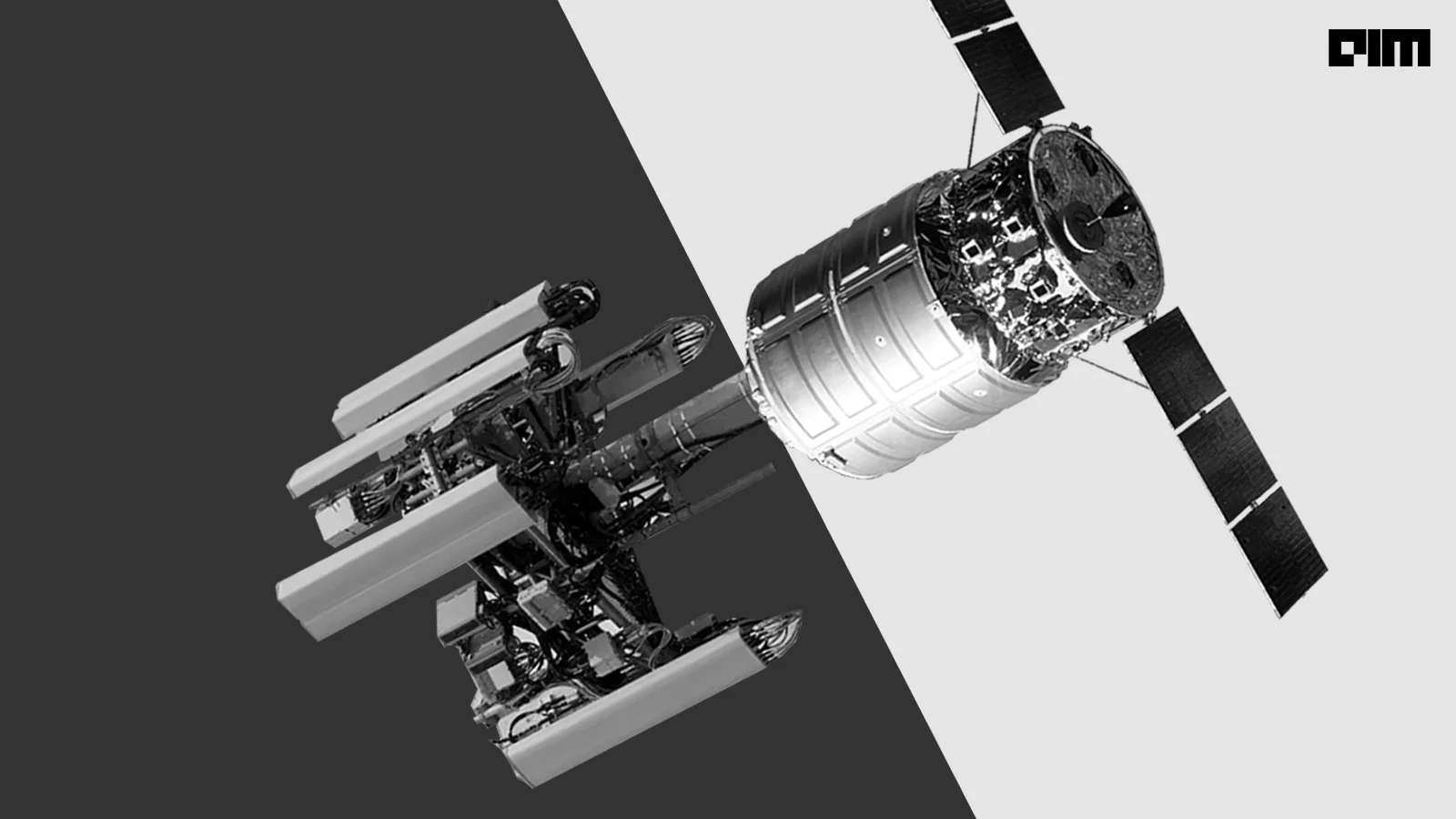
In a first-of-its-kind space experiment, Amazon Web Services (AWS) successfully ran a suite of AWS compute and machine learning (ML) softwares on an orbiting satellite, the company announced at AWS re:Invent 2022.
AWS conducted the experiment over the past 10 months in low Earth orbit (LEO). The aim was to develop an efficient method for customers to collect and analyse valuable space data directly on their orbiting satellites using the cloud.
Throughout the experiment, the team applied various ML models to satellite sensor data to quickly and automatically identify specific objects both in the sky – such as clouds and wildfire smoke – and objects on Earth including buildings and ships.
Raw satellite images and datasets like these are usually quite large, so AWS created a way to break down the large data files into smaller ones. Using AWS AI and ML services helps reduce the size of images by up to 42%, increasing processing speeds and enabling real-time inferences on-orbit.
The team managed the bi-directional movement of space data over multiple ground station contacts to provide allowance for an increased delay tolerance between communications. This was achieved by managing a reliable TCP/IP proxy between the satellite and the AWS Cloud. This modification made it simpler for ground crews to manage the file transfers automatically, without manually processing the downlinks over multiple contacts.
“Providing powerful and secure cloud capability in space gives satellite operators the ability to communicate more efficiently with their spacecraft and deliver updated commands using AWS tools they’re familiar with,” Max Peterson, AWS vice president, worldwide public sector, said.
For the experiment, AWS teamed up space partners D-Orbit and Unibap. By applying AWS compute and machine learning services to Earth Observation (EO) imagery, D-Orbit was able to rapidly analyze large quantities of space data directly onboard its orbiting ION satellite.
“Our customers want to securely process increasingly large amounts of satellite data with very low latency. This is limited by using legacy methods, downlinking all data for processing on the ground. We believe in the drive towards edge computing, and that it can only be done with space-based infrastructure fit for purpose, giving customers a high degree of confidence that they can run their workloads and operations reliably in the harsh space operating environment,” said Sergio Mucciarelli, vice president of commercial sales of D-Orbit.
- Amazon Warns Engineers Against AI Productivity Traps in Latest Memo
- Gnani AI Launches Prisma v3.0 Speech Recognition Model for 10 Languages
- Venttup Raises $3 Million To Expand Precision Manufacturing
- Articul8 Launches Bivia To Help Enterprise AI Agents Make Decisions
- NVIDIA Launches Open-Weight Transcription Model for 40 Languages
- Sarvam AI Rolls Out Indus Cowork to 2,500 Maharashtra Govt Officials