Key takeaways
- Shirudo is an open-source tool launched by OpenAI and Cisco to enhance Linux system security without needing updates or restarts.
- The tool employs eBPF technology to monitor and block malicious activities while allowing legitimate operations to continue.
- Shirudo uses small programmes called shields to target vulnerabilities, demonstrated by blocking a Java4Shell exploit on Elasticsearch.
- The partnership aims to help teams protect systems while developing permanent fixes, addressing the challenge of immediate vulnerability resolution.
- By building tools collaboratively, organisations can leverage shared solutions to enhance cybersecurity without starting from scratch.
OpenAI and Cisco have introduced Shirudo, an open-source security tool that protects running Linux systems from vulnerabilities without requiring software updates or system restarts.
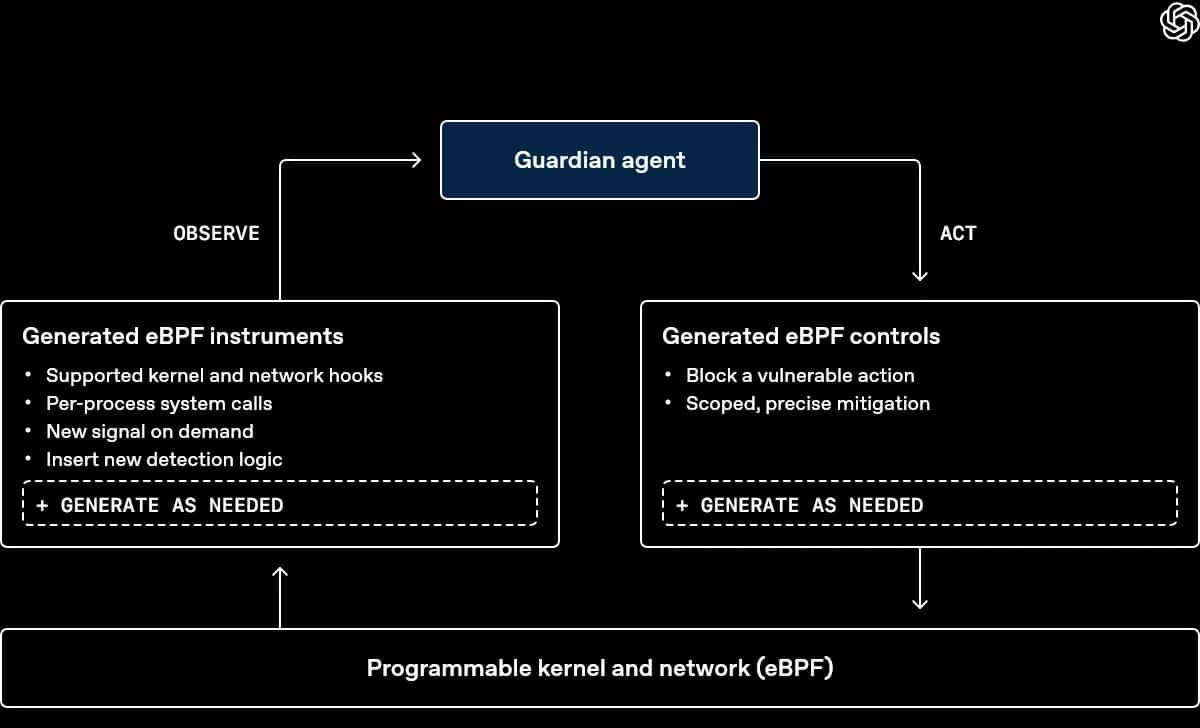
Shirudo uses a Linux technology called extended Berkeley Packet Filter (eBPF) to monitor system activity and block specific malicious behaviour. It does this through small programmes called shields, which target vulnerable parts of software without taking the application offline.
The companies demonstrated the tool using a shield generated with OpenAI’s Codex. The shield blocked a Java4Shell exploit targeting a running Elasticsearch service. It added a check to Java’s Base64 decoder and attached the protection to the running process. Malicious input was rejected, while Elasticsearch continued to operate.
"We’re giving defenders better models and tools to find and fix vulnerabilities faster, but finding a bug today doesn’t mean you can patch every system tomorrow," OpenAI President and Co-founder Greg Brockman said in a blog post.
"We are partnering closely with Cisco on Shirudo to help teams protect the systems they need to keep running while they build and roll out a fix. So many teams rely on the same software that it makes sense to build these tools in the open. Now when one team finds a better way to protect a system, others don’t have to start from scratch," he added.
The tool is designed to address a common cybersecurity problem: finding a vulnerability does not mean it can be fixed immediately.
Developing, testing, and deploying a permanent patch can take days or weeks. In the meantime, security teams must decide whether to block potentially vulnerable operations, which could also affect legitimate users, or leave systems exposed.
Shirudo offers a way to put temporary protections in place while teams work on a permanent fix.
Its Guardian agent monitors activity across the system and network, looks for suspicious behaviour, and helps develop shields for specific vulnerabilities. Teams can first test a shield in monitoring mode to see how it affects normal application activity before allowing it to block anything.
The runtime is designed around four capabilities: protecting systems without restarting them, using AI agents to investigate vulnerabilities and develop shields, verifying protections before deployment, and using hardware to keep a record of security changes.
Every shield must be digitally signed and checked before it can be loaded. Linux also checks whether the programmes meet its safety requirements, while kernel security controls prevent unauthorised changes. Shirudo uses a Trusted Platform Module (TPM), a hardware security component, to maintain a record of shields being added or removed.
AI agents can help investigate vulnerabilities, generate shields, and test them against known exploits and normal workloads. However, security teams remain responsible for deciding which protections to deploy.
OpenAI and Cisco see Shirudo as an early step towards using AI agents to find vulnerable systems, test defences, and deploy protections across infrastructure. Their longer-term plans include securing Linux kernels and core services, limiting the permissions available to workloads, and helping systems recover after a security breach.
The companies have released Shirudo under the BSD 2-Clause licence. Its eBPF programmes are available under both BSD and GPL licences. They are inviting developers, security researchers, and infrastructure operators to contribute to the project and build additional shields.
Spotted an error? Tell our editors. Read our editorial standards and corrections.