Key takeaways
- Dario Amodei emphasizes Anthropic's focus on enterprise customers, avoiding consumer AI competition.
- Anthropic claims a privileged position, allowing for steady growth without the urgency of 'Code Reds.'
- The company is optimizing AI models for specific industries like finance and biomedicine.
- Amodei warns of a potential AI bubble due to excessive capital spending in the industry.
- Model switching for businesses is more complex than it seems, impacting long-term defensibility.
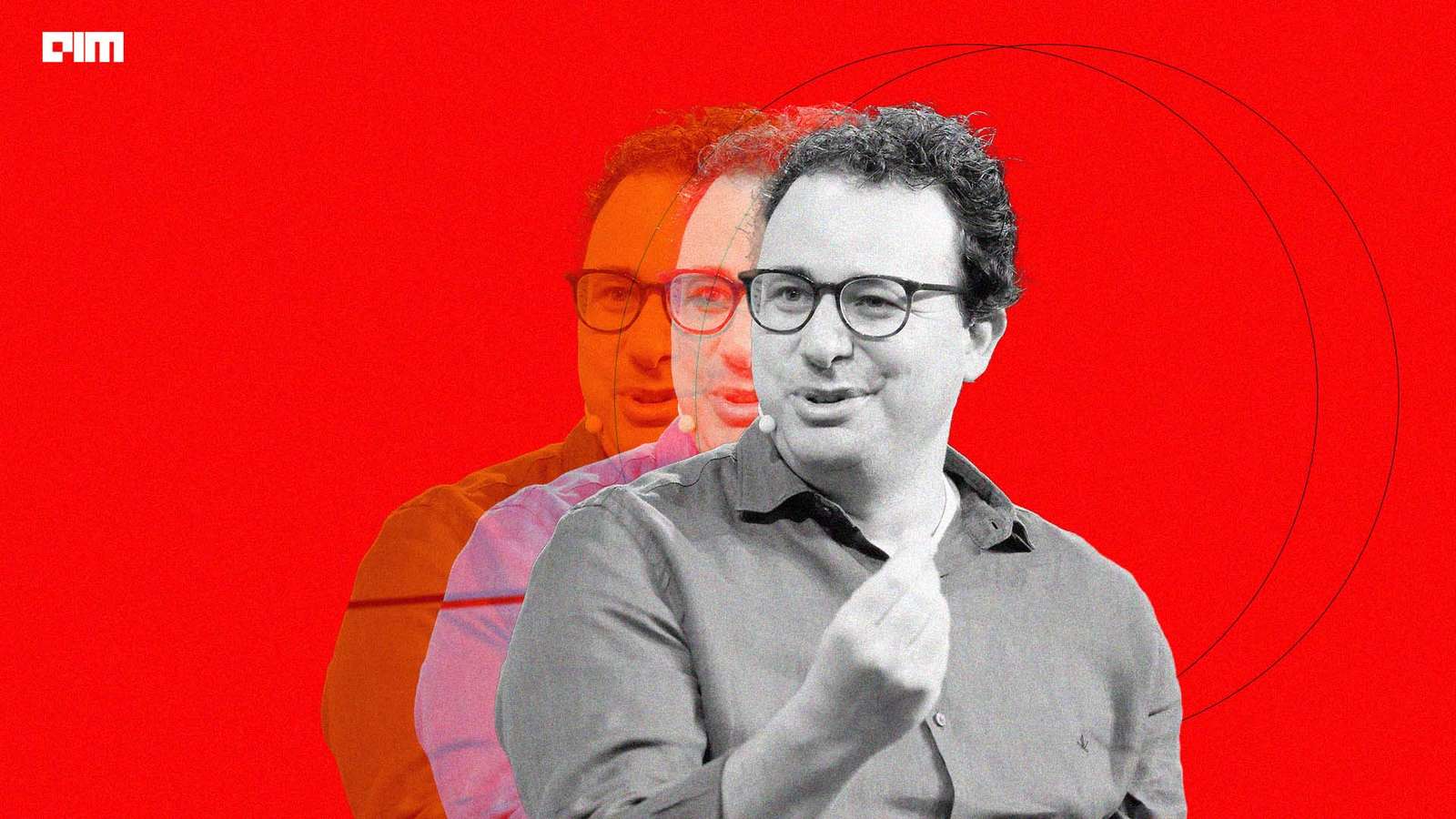
Anthropic CEO Dario Amodei, in a recent interview with the NYT at DealBook Summit, said the company “doesn’t do any code reds,” distancing itself from the ongoing consumer-focused AI race between OpenAI and Google.
He said the company is taking a different approach from other major AI firms, choosing to focus on enterprise customers rather than competing in the consumer market. “Both[OpenAI and Google] of the players that you mentioned… are primarily focused on the consumer,” Amodei said, adding that this is the reason for the ‘Code Red’ intensity between them.
According to him, Anthropic is not part of that battle. “We kind of have to worry less about this back and forth. We have a little bit of a privileged position where we can just keep growing and just keep developing our models, and we don’t have to do any Code Reds,” he said.
Amodei added that the company has been optimising its models specifically for business use cases, with coding emerging as the fastest-moving area. Notably, the company recently released Claude 4.5 Opus.
He said Anthropic is now extending its capabilities into finance, biomedicine, retail, energy, and manufacturing. Amodei argued that enterprise-oriented AI systems differ significantly from consumer-focused ones. “It is surprising how different the personality and capabilities of the models are if you’re building for businesses versus consumers,” Amodei said.
Addressing questions about long-term defensibility, Amodei said model switching is harder than it appears, even for companies using APIs.
AI Bubble?
Amodei said parts of the AI industry may be entering a bubble, pointing to massive capital spending by leading companies and warning that some players are “YOLOing” in their approach.
He said the economic side of the AI boom carries real risks, even though the technology continues to progress rapidly. “There may be players in the ecosystem who, if they just make a timing error, if they just get it off by a little bit, bad things could happen,” he said. While he declined to name companies, the comment comes as OpenAI and others plan tens of billions in annual spending on compute and data centres.
Amodei said he distinguishes between the strength of the technology and the uncertainty of the economics surrounding it. “On the technological side, I feel really solid,” he said, adding that scaling laws have held steadily for more than a decade. “…As you train these models in this very simple way, with a few simple modifications, they get better and better at every task under the sun.”
Anthropic, he said, is seeing that translated into revenue. The company expects between $8 billion to $10 billion in revenue at the end of this year, he said.
The concern, he noted, lies in the gap between uncertain future revenue and the long lead times for data-centre construction. “There’s a real dilemma deriving from uncertainty in how quickly the economic value is going to grow and the lag times on building the data centres that drive this,” he said.
Spotted an error? Tell our editors. Read our editorial standards and corrections.
Selling to AI teams? Put your brand in front of the 5M+ people who read AIM every month. Plan a campaign