
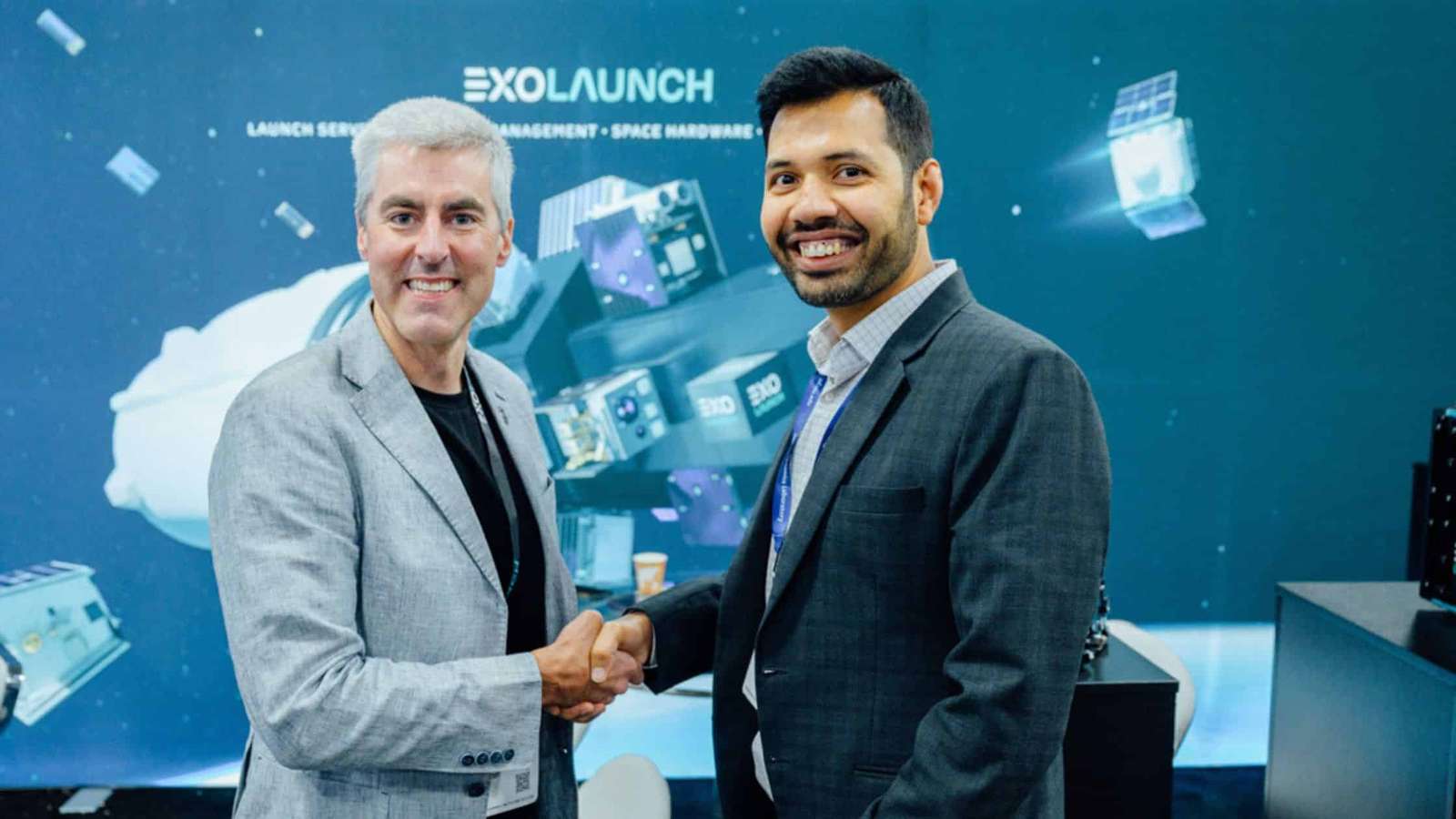
Exolaunch of Germany and Hyderabad’s Skyroot Aerospace have signed a partnership agreement to provide end-to-end satellite launch services. The collaboration will use Skyroot’s Vikram launch vehicles, starting with Vikram-1, to serve commercial, institutional, and government customers.
The agreement outlines how the companies will manage mission planning, satellite integration, and on-site execution. The companies aim to increase launch flexibility and improve mission efficiency for small satellite operators.
Robert Sproles, CEO of Exolaunch, said, “Skyroot’s Vikram rockets bring an impressive new capability and much-anticipated launch capacity to the global launch ecosystem.” He added that the companies aim to offer reliable and cost-effective access to orbit.
Under the partnership, Exolaunch will integrate and deploy customer satellites using its flight-proven deployment systems. The services will apply to both dedicated and rideshare missions.
The partnership includes Exolaunch’s EXOtube payload stacks to support multi-payload rideshare launches. These payload stacks will help streamline constellation deployment and maximise launch vehicle use.
Pawan Kumar Chandana, co-founder and CEO of Skyroot Aerospace, said, “Democratising access to space requires an integrated solution that seamlessly addresses every aspect of a satellite customer’s journey, from mission planning to integration to launch. Through our partnership with Exolaunch, Skyroot aims to provide a launch experience that is comprehensive and tailored to the needs of the modern space economy.”
Exolaunch has deployed over 580 satellites across 39 missions, serving operators, universities, and space agencies. The companies expect this partnership to appeal to emerging satellite customers seeking global launch options.
In a recent update on X, the startup also shared progress on its Orbital Adjustment Module (OAM). The post confirmed the successful testing:
“Our Orbital Adjustment Module just completed its full stage-level test. Meeting flight conditions through more than 1,000 thruster pulses—one Raman-2 engine, four Raman Mini thrusters, eight cold gas thrusters, all firing in perfect harmony.”
Skyroot’s Vikram-1, an all-carbon composite launch vehicle, can carry up to 350 kg to low Earth orbit and is designed for responsive launch services. Development of Vikram-2 is underway, with a capacity of up to 900 kg.
- In a Stunning Fall, Jensen Huang Resigns as NVIDIA Chief After 33 Years
- Space Tech Startup Astrome Bags ₹64 Cr RDI Fund for AI Satellite Network
- Siemens Wants to Continue NVIDIA Partnership Even If Jensen Huang is Ousted
- LTM Integrates AI Tool to Fix Quantum Computing Errors on IBM
- Chariot Launches Multilingual TTS Model with Support for 11 Indian Languages
- Lenovo Unveils New AI, HPC Servers With AMD’s 6th Gen EPYC Processors