
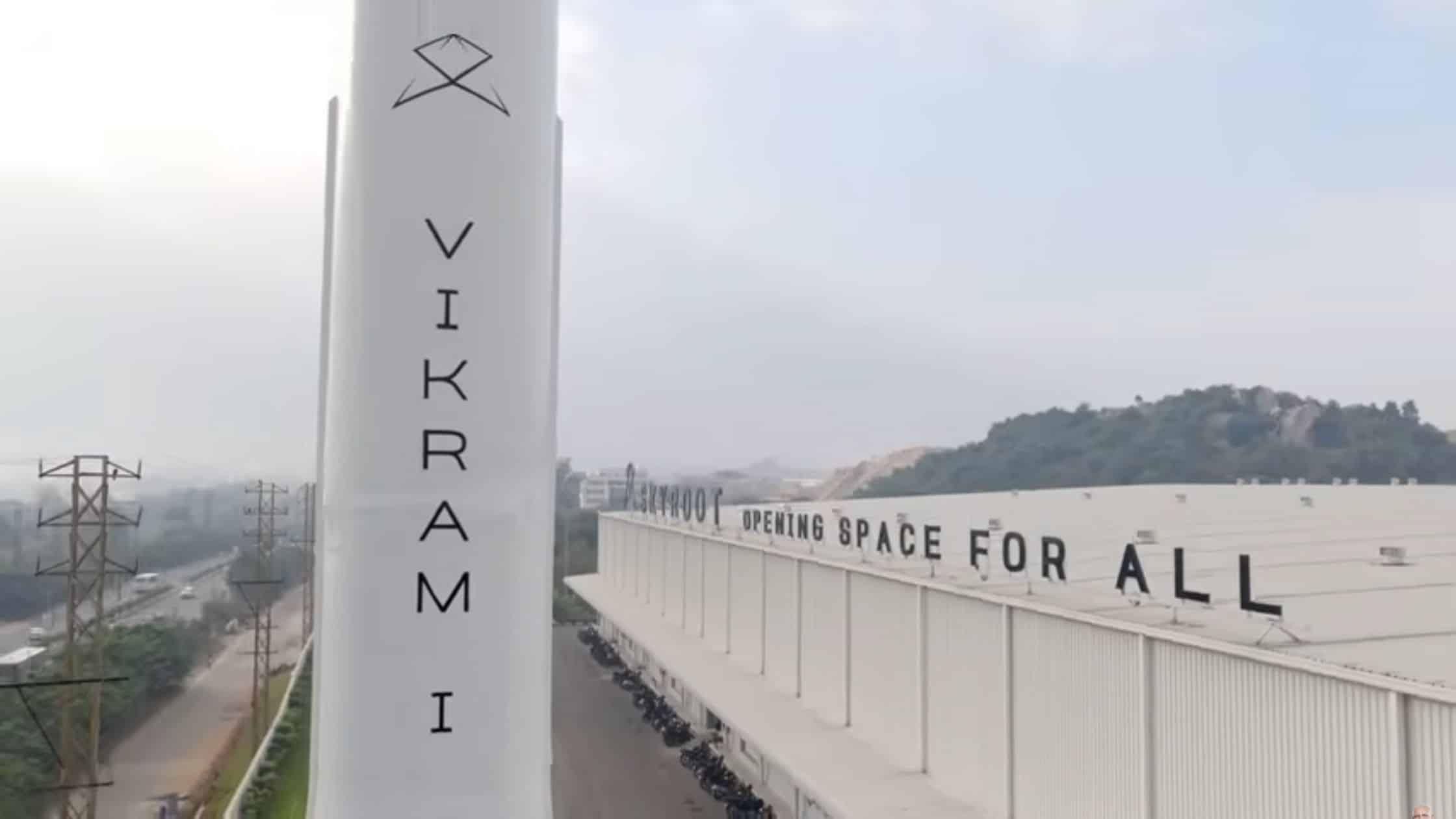
Prime Minister Narendra Modi inaugurated Skyroot Aerospace’s Infinity Campus in Hyderabad, where he also unveiled Vikram-1, the startup’s rocket.
The event outlined what the facility is, who is involved, where it is located, when it opened, why it matters to India’s private space sector, and how Skyroot plans to scale rocket production.
Skyroot said the new 200,000-square-foot facility can produce one rocket a month. The company plans to enter the global launch market with Vikram-1, which is scheduled for its first mission in early 2026.
Modi said the campus represents “India’s new thinking, innovation and the power of youth.” He added that the event points to a future where India becomes a leader in the satellite launch ecosystem.
Infinity Campus adds to the firm’s existing Max-Q Campus. It includes automated filament-winding systems, CNC machines, and cleanrooms for carbon-composite work.
The company said Vikram-1 can deploy multiple satellites to orbit. It is India’s first fully carbon-fibre launch vehicle and uses 3D-printed hypergolic engines. The Kalam-1200 booster is India’s most significant privately built rocket stage.
IN-SPACe chair Pawan Goenka said the rise of more than 350 space startups shows the impact of policy changes. He said the new campus and rocket show what can be achieved through a mix of ambition and support.
Skyroot founder Naga Bharath Daka said the factory strengthens the company’s plan to build launch vehicles that support wider access to space.
Referring to the startup’s earlier launch of Vikram-S rocket, Lt. Gen. AK Bhatt, director general of the Indian Space Association (ISpA) said, “Skyroot’s journey from Vikram-S to Vikram-I shows how Indian startups are now building end-to-end launch capabilities for the global small-satellite market, easing the load on ISRO and expanding national capacity.
This milestone is emblematic of the broader private ecosystem that is emerging across rockets, satellites, applications and services. It will be central to realising India’s ambition of a much larger, innovation-led space economy in the coming decade.”

Your reaction
Discussion
What's your take on this story?
No comments yet — be the first to share your view.