
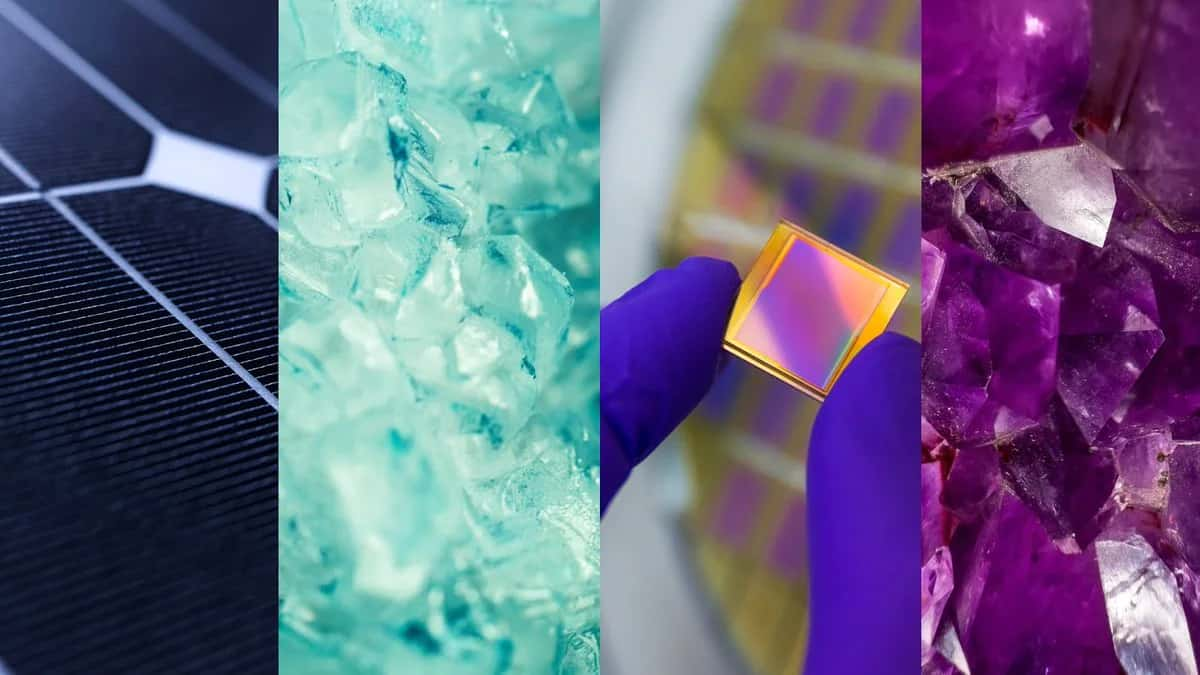
Google DeepMind and Lawrence Berkeley National Laboratory researchers recently introduced Graph Networks for Materials Exploration (GNoME), an AI tool to discover new materials and predict material stability.
“We are releasing 381K stable materials to help scientists pursue materials discovery breakthroughs,” said Pushmeet Kohli, head of research (AI for science, robustness and reliability) at DeepMind.
Check out the GitHub repository here.
With this, Google DeepMind looks to accelerate the discovery of stable materials for new technologies, alongside eliminating the need for slow and expensive traditional methods of material discovery.
So far, GNoME is said to have discovered over 2.2 million new materials, including 380,000 stable materials – i.e. equivalent to nearly 800 years’ worth of knowledge. It is said that these materials could power future technologies like superconductors, supercomputers, next-generation batteries and more.

(Source: Google DeepMind)
Interestingly, the team boosted the discovery rate of materials stability prediction from around 50% to 80%. Moreover, the GNoME project looks to drive down the cost of discovering new materials significantly.

(Source: Google DeepMind)
GNoME uses graph networks and deep learning to predict the stability of new materials. It is said to combine two pipelines: structural (creating candidates with structures similar to known crystals) and compositional (a randomised approach based on chemical formulas). The predictions are evaluated using Density Functional Theory calculations.
- Coforge Revenue Rises 54% as AI Engineering and Deal Bookings Gain Momentum
- Tech Mahindra Partners With SpaceXSI to Bring AI Into Software Engineering
- Infosys AI Revenue Rises 29% in Q2, FY27 Growth Guidance Cut
- LTM Launches BlueVerse Industrial AI Lab in Chennai
- Chariot Launches Speech Recognition Model for 10 Indian Languages
- Meta Expects Up To $145 Billion In Capex As AI Investments Expand