
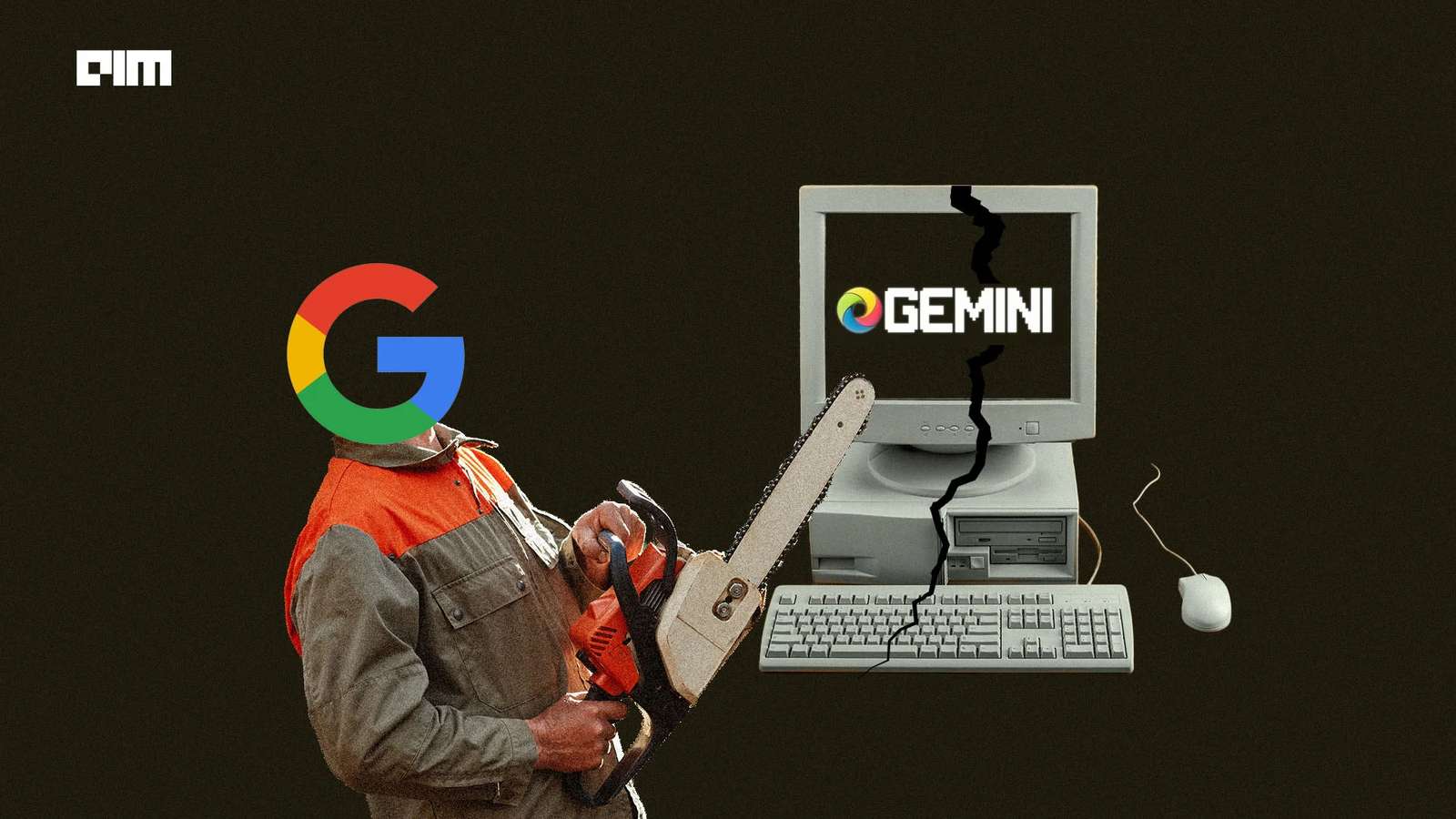
Google has postponed the release of Gemini to the first quarter of the next year, according to sources cited by The Information. The delay suggests that Google is facing challenges in the development of Gemini, putting it in a catch-up position with OpenAI.
Initial expectations had pointed to a fall release for Gemini, but it seems Google failed to deliver that.
Google has created multiple iterations of Gemini to address varying tasks based on their complexity. External developers have already examined smaller versions of the model, quantified by the number of parameters or calculations they perform. However, the company is still in the process of completing the main and largest version of Gemini, the report added.
At the recent earnings call, Google chief spoke about Project Gemini, briefly. “We are just really laying the foundation of what I think of as the next-generation series of models we’ll be launching all throughout 2024,” shared Pichai, hinting that it would be multimodal – highly efficient with the tool and API integrations – and is going to be available in various sizes and capabilities.
He said that Gemini would be used immediately across all their products internally as well as bringing it out for both developers and cloud customers via Vertex AI.
No Improvement in Bard
In the meantime, Google's counterpart to ChatGPT, Bard, has struggled to gain traction. This poses a challenge for Google, as ChatGPT's numerous users contribute valuable data crucial for OpenAI to monitor and enhance the quality of its products. ChatGPT has over 100 million weekly users as of now.
Furthermore, compounding Google's challenges, according to Vectara's Hallucination Leaderboard, both Google’s PaLM 2 and PaLM Chat ranked the lowest, with hallucination rates of 12.1% and 27.2%, respectively, in contrast to GPT-4, which has a hallucination rate of 3%.
- Amazon Warns Engineers Against AI Productivity Traps in Latest Memo
- Gnani AI Launches Prisma v3.0 Speech Recognition Model for 10 Languages
- Venttup Raises $3 Million To Expand Precision Manufacturing
- Articul8 Launches Bivia To Help Enterprise AI Agents Make Decisions
- NVIDIA Launches Open-Weight Transcription Model for 40 Languages
- Sarvam AI Rolls Out Indus Cowork to 2,500 Maharashtra Govt Officials