
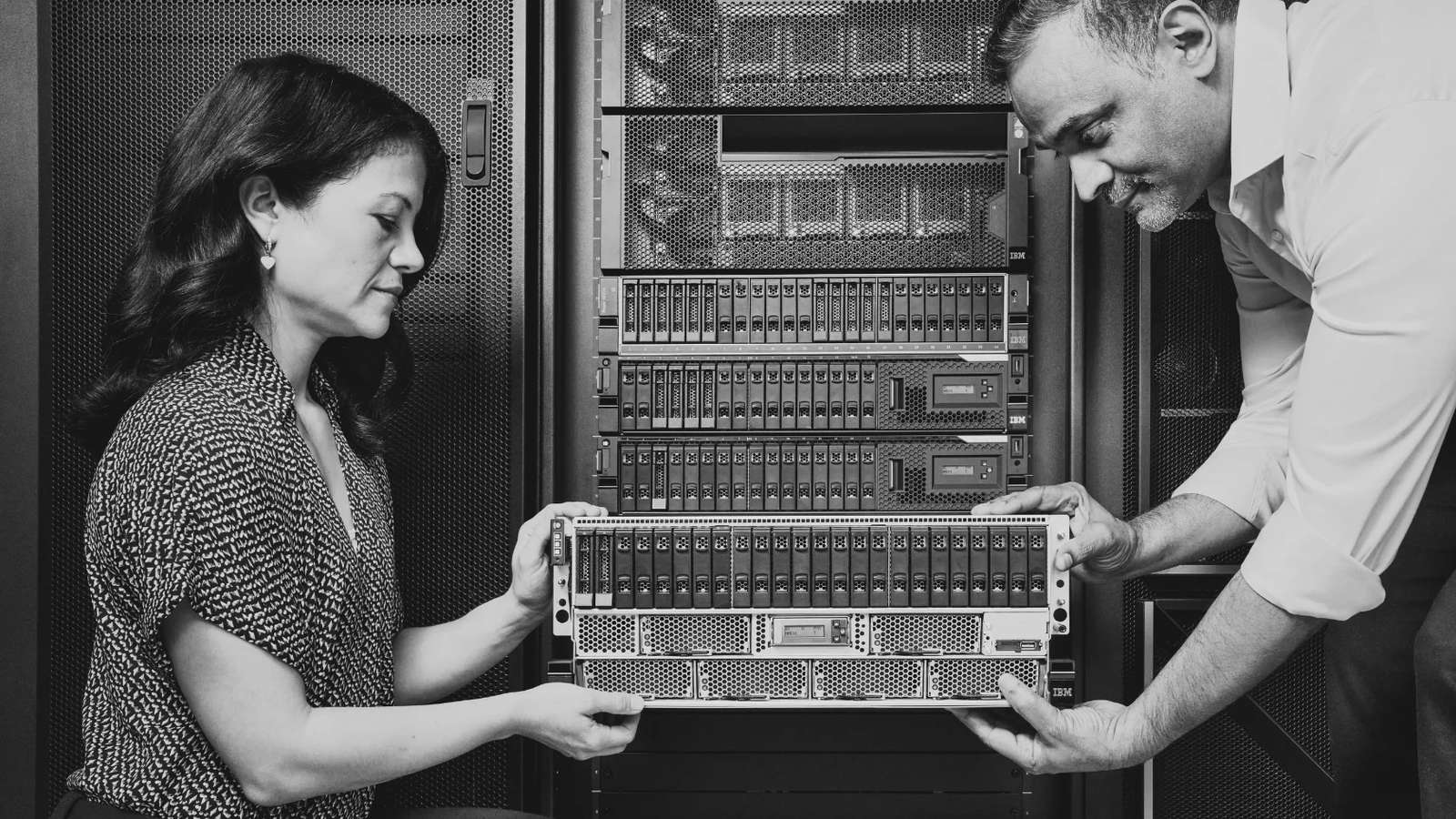
IBM and AMD have announced a partnership to develop new computing systems that merge quantum computers, high-performance computing, and AI accelerators. The collaboration aims to create scalable open-source platforms for what the companies describe as “quantum-centric supercomputing.”
The effort will combine IBM’s work on quantum computers with AMD’s leadership in high-performance and AI technologies.
“As we partner with IBM to explore the convergence of high-performance computing and quantum technologies, we see tremendous opportunities to accelerate discovery and innovation,” added AMD chair and CEO Lisa Su.
How the Partnership Will Work
Quantum-centric supercomputing integrates quantum computers with classical systems, including CPUs and GPUs. This hybrid model enables each type of machine to address distinct aspects of a problem.
Quantum systems could simulate atoms and molecules, while classical supercomputers powered by AI could process large-scale data.
IBM and AMD plan to integrate AMD CPUs, GPUs and FPGAs with IBM quantum systems. This approach is expected to support the development of new algorithms and contribute to IBM’s goal of delivering fault-tolerant quantum computers by the end of the decade.
IBM chairman and CEO, Arvind Krishna, said, “By exploring how quantum computers from IBM and the advanced high-performance compute technologies of AMD can work together, we will build a powerful hybrid model that pushes past the limits of traditional computing.”
Next Steps in Development
The companies will demonstrate how their technologies can work together later this year through hybrid workflows. They also intend to expand the open-source ecosystem, using platforms such as Qiskit to encourage adoption of new quantum-classical solutions.
IBM has already linked its modular IBM Quantum System Two with Fugaku, one of the world’s fastest supercomputers in Japan. It has also tested applications with partners including the Cleveland Clinic, Lockheed Martin and the Basque Government.
AMD currently powers the two fastest supercomputers in the world, Frontier and El Capitan, according to the TOP500 list. Its processors and GPUs also support a range of generative AI systems used by enterprises and cloud providers worldwide.
- Musk Says SpaceX Closed $40 Bn GPU Debt Deal, Warns Most Neoclouds Won’t Survive
- Coforge Revenue Rises 54% as AI Engineering and Deal Bookings Gain Momentum
- Tech Mahindra Partners With SpaceXSI to Bring AI Into Software Engineering
- Infosys AI Revenue Rises 29% in Q2, FY27 Growth Guidance Cut
- LTM Launches BlueVerse Industrial AI Lab in Chennai
- Chariot Launches Speech Recognition Model for 10 Indian Languages