Key takeaways
- Enhance Indian Navy's maritime security with the successful GSAT-7R satellite launch.
- Improve real-time communication capabilities for naval operations across the Indian Ocean Region.
- Showcase India's space technology advancements with the indigenously developed GSAT-7R satellite.
- Demonstrate the reliability of ISRO's LVM3 rocket in carrying heavier payloads.
- Succeed GSAT-7, enhancing secure connectivity for naval forces and operations.
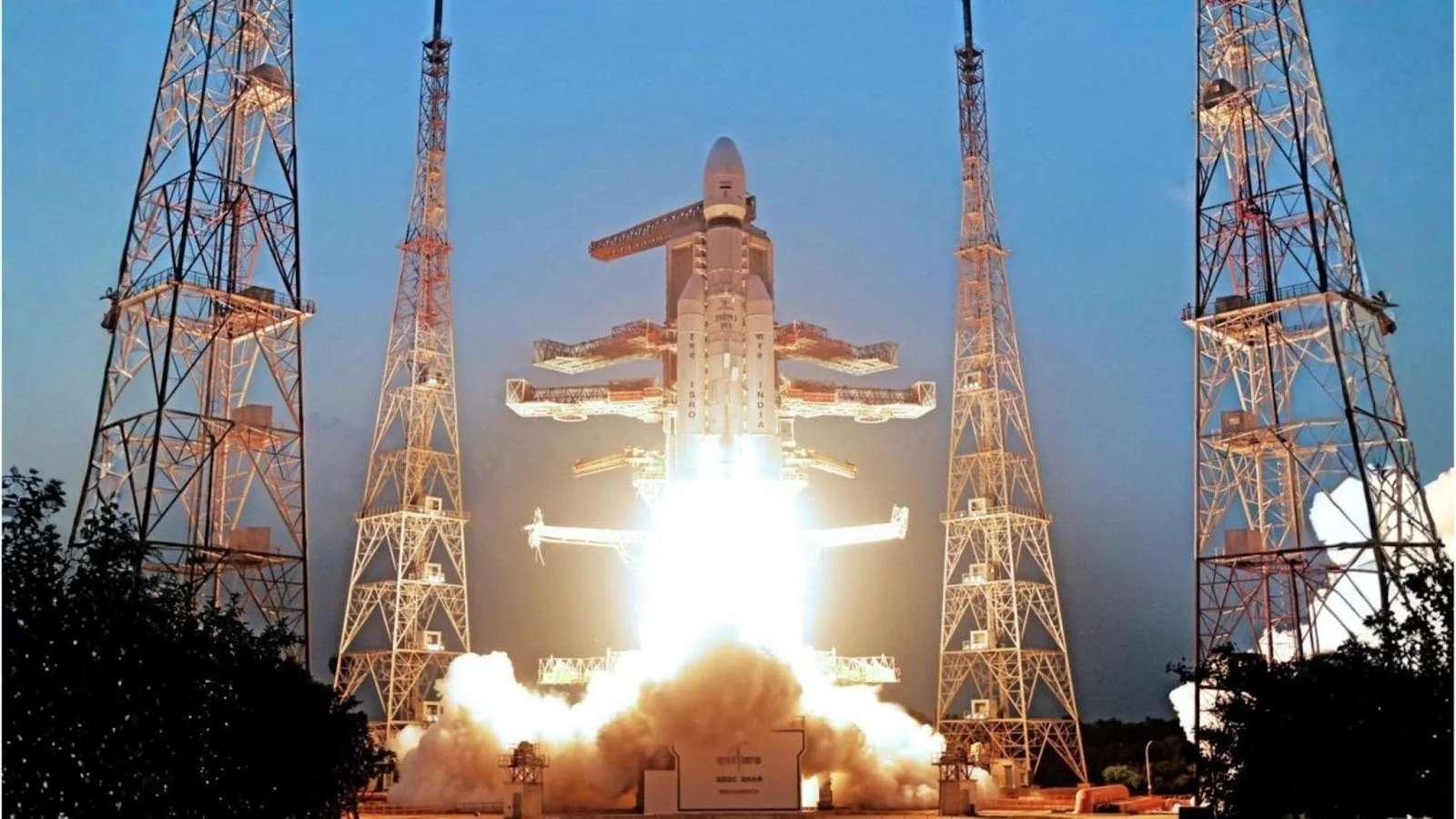
The Indian Space Research Organisation (ISRO) successfully launched the Indian Navy’s GSAT-7R (CMS-03) communication satellite from the Satish Dhawan Space Centre in Sriharikota. The mission carried out on November 2 aims to enhance the Navy’s space-based communications and maritime domain awareness across the Indian Ocean Region.
The satellite was carried aboard ISRO’s LVM3-M5 rocket, often referred to as ‘Bahubali’. It was placed into a Geosynchronous Transfer Orbit and will be manoeuvred to its final geostationary position over the coming days.
V Narayanan, secretary of the department of space and chairman of ISRO, said, “The Indian space sector is soaring high to provide valuable services to the user community in and around the Indian region.”
Former ISRO chairman S Somanath added that the mission demonstrated “the reliability and versatility of the LVM3 launcher.” He added that the team used a smart approach to carry a heavier payload without reducing the mission’s lifespan.
Weighing about 4,400 kg, GSAT-7R is India’s heaviest communication satellite and has been fully designed and developed indigenously. It will provide secure voice, data, and video connectivity between ships, submarines, aircraft, and maritime operations centres, bolstering real-time coordination at sea.
GSAT-7R succeeds GSAT-7, also known as Rukmini, which was launched in 2013 as India’s first dedicated communication satellite for the Indian Navy. The new satellite expands coverage and offers enhanced data handling capabilities.
Prime Minister Narendra Modi congratulated ISRO on the achievement, calling it a symbol of national progress and empowerment. Vice President C. P. Radhakrishnan also lauded the launch, noting that the LVM3-M5 rocket had “successfully placed the most advanced communication satellite for the Indian Navy into orbit.”
He said the satellite would strengthen space-based communications and maritime domain awareness, supporting Aatmanirbhar Bharat.
Lt. Gen. AK Bhatt, DG of the Indian Space Association, described the launch as a “monumental achievement” for India’s strategic capabilities. “This satellite will be a game-changer for our maritime and national security,” he said, emphasising its role in secure communication networks and the growing participation of private industry in space development.
The successful deployment of GSAT-7R marks a significant step in strengthening India’s naval communication infrastructure and demonstrates the nation’s expanding self-reliance in space technology.
Spotted an error? Tell our editors. Read our editorial standards and corrections.