
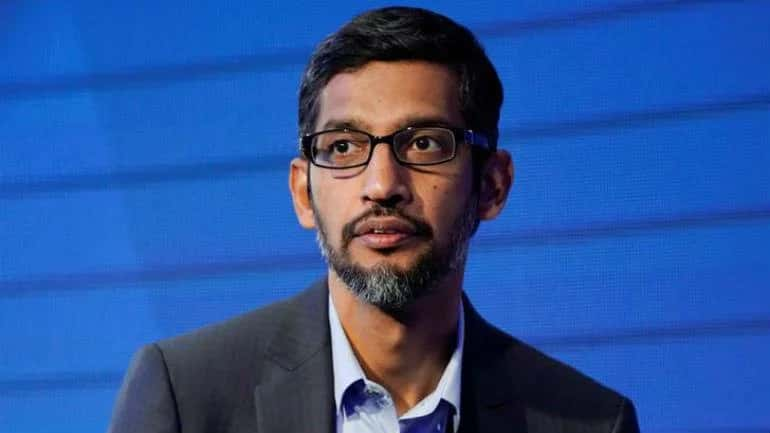
At the AI Action Summit 2025 hosted in Paris, France, Google CEO Sundar Pichai spoke about how AI can influence various sectors such as education, healthcare, science, etc. and why the company invests as much in the industry.
While Google has taken multiple opportunities to showcase how the company plans to use AI to benefit humanity, Pichai’s recent talk included several personal anecdotes as he urged the world to embrace AI and address issues related to public policy.
He took the stage to help ease the scepticism associated with AI and spoke about how policies must be framed with a balanced approach.
“I grew up doing math using logarithmic tables, and I was uncomfortable watching my kids learn math with smartphones. They’ve turned out just fine,” he added.
‘We Mustn’t Let Our Bias for Present Get in Way of Future’
Pichai began his talk by sharing his experiences while growing up in Chennai. He shared how he had to wait five years before his family acquired a rotary phone, which changed their lives.
Moreover, he revealed once he had to take a “four-hour round trip” to get blood test results for his mother, but, now, all he needed to do was just pick up the phone.
Citing similar examples, Pichai highlighted the power of transformative technologies. “We’re still in the early days, yet I already believe AI will be the most profound shift of our lifetimes,” he said.
Pichai added that to unlock the full potential of AI, an ecosystem of innovators must be enabled, and a powerful infrastructure must be built. “We’re excited for the path [US] President [Donald] Trump, [French] President [Emmanuel] Macron and other countries are forging here,” he said.
Pichai highlighted the need for industries to invest in people and prepare them for the workforce ahead. He believes people will have to act boldly to advance the applications of AI responsibly.
Along these lines, Pichai outlined a framework for a successful AI public policy. This policy must address the risks associated with the technology without affecting progress. He also suggested that policies must fill gaps and draw on existing laws instead of creating new ones.
However, the AI race is not limited to the United States. China made a bold entry recently, France is showing promise with Mistral, and India is actively working on a foundational model. Hence, Pichai suggested that policies must be aligned across countries.
“AI can’t flourish if there is a fragmented regulatory environment, with different rules across different countries and regions,” he said.
According to him, AI is a once-in-a-generation opportunity to improve lives. “We must not let our own bias for the present get in the way of the future.”
Taking the stage at the summit, Indian Prime Minister Narendra Modi, said that AI is writing the code for humanity.
PM Modi said AI is developing at an unprecedented scale and speed, and being adapted and deployed even faster. He stressed the need for collective global efforts to establish governance and standards.
“Governance is not just about managing risk and rivalries, it is also about promoting innovation
and deploying it for the global good. So we must think deeply and discuss openly about innovation and governance,” he said, echoing Pichai’s sentiment.
France & EU to Loosen Regulations
Aligning with Pichai’s expectations, Macron said that Europe is planning to reduce AI regulations. As per Reuters, European Union’s digital chief Henna Virkkunen promised to simplify rules and implement them in a business-friendly way.
With regards to AI infrastructure in France, Macron announced plans for €109 billion of private AI investment, analogous to The Stargate Project in the US.
The recent few events have been a ray of hope for Europe and its relatively restricted tech ecosystem. Sam Altman, CEO of OpenAI, announced that the company is opening a new office in Munich, Germany. This is in addition to their previous offices in Dublin, London, Paris and Brussels.
Furthermore, Mistral announced plans to invest “several billion euros” in building its first data centre in France. The AI startup also recently announced a new application called Le Chat, which it claimed is the fastest AI assistant capable of producing over 1,000 tokens per second. The chatbot is powered by Cerebras Inference, which is also touted as the world’s fastest AI inference engine.
- Tata Communications Plans $450 Mn Investment to Build 10,000 Km AI Network
- Telangana Unveils AI-Powered Digital Twin of IT Minister at DevFest 2026
- Musk Says SpaceX Closed $40 Bn GPU Debt Deal, Warns Most Neoclouds Won’t Survive
- Coforge Revenue Rises 54% as AI Engineering and Deal Bookings Gain Momentum
- Tech Mahindra Partners With SpaceXSI to Bring AI Into Software Engineering
- Infosys AI Revenue Rises 29% in Q2, FY27 Growth Guidance Cut