
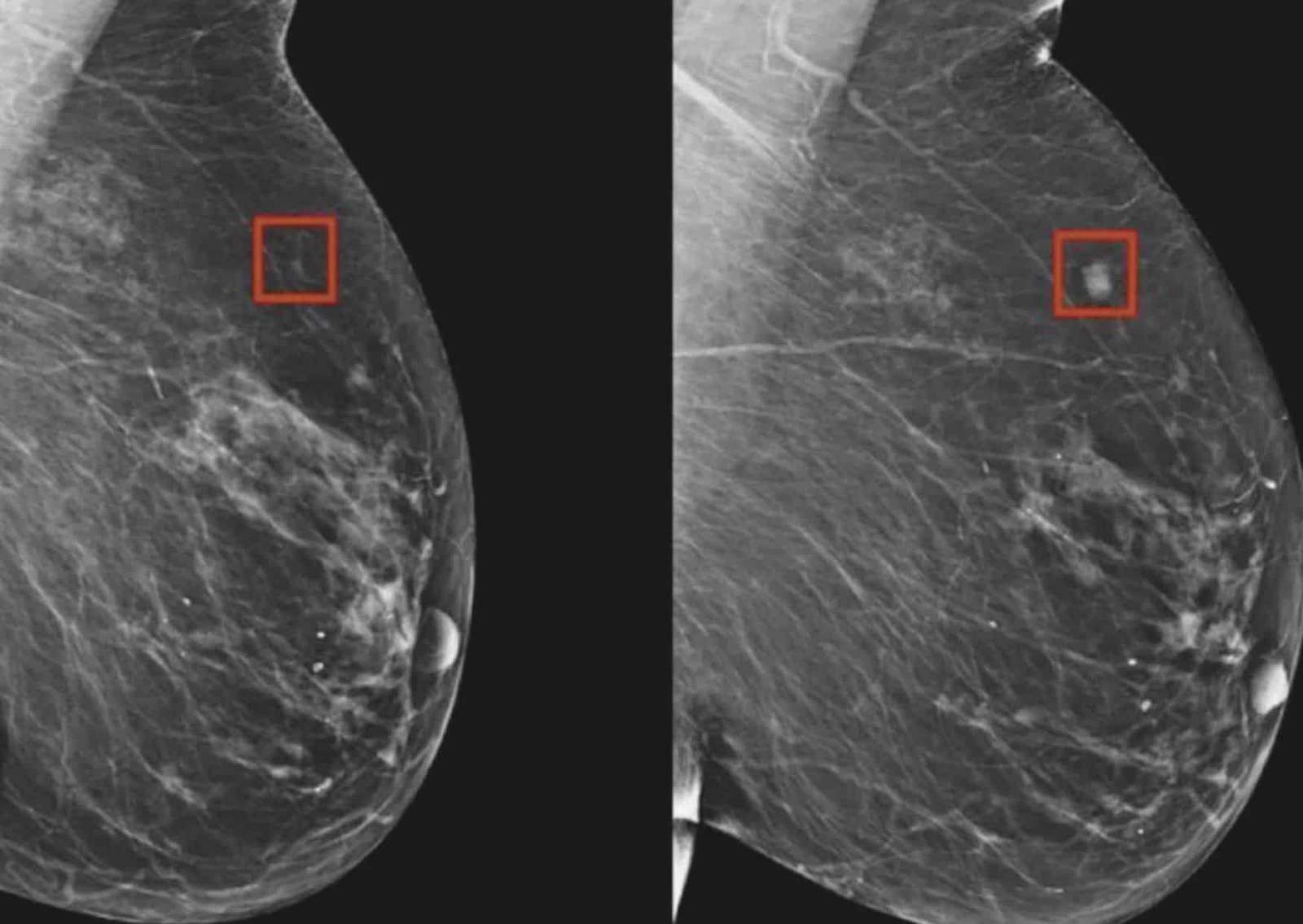
The Massachusetts Institute of Technology (MIT) has achieved a groundbreaking advancement in breast cancer detection. Researchers at the Jameel Clinic for Machine Learning and MIT’s Computer Science and Artificial Intelligence Laboratory (CSAIL) have developed an AI model capable of identifying breast cancer up to five years before clinical diagnosis.
This deep learning model, named Mirai, is based on mammography and aims to detect precancerous changes in high-risk women.
It predicts a patient's risk across various future time points and can incorporate clinical risk factors like age and family history when available. Additionally, Mirai is designed to maintain consistent predictions despite minor clinical variances, such as different mammography machines.
Technology Explained
The AI model analysed chromatin images from 560 tissue samples across 122 patients, identifying eight distinct cell states throughout various stages of ductal carcinoma in situ (DCIS).
By considering both cellular composition and spatial arrangement, the model revealed that tissue organisation is crucial in predicting disease progression.
Utilising a convolutional variational autoencoder, the AI learns from simple chromatin staining images, a more cost-effective and accessible method compared to complex sequencing techniques. Remarkably, the model detected cell states associated with invasive cancer even in tissue that appeared normal to the human eye.
Anand Mahindra lauds ‘Mirai’
Business tycoon Anand Mahindra highlighted this medical advancement and shared a post on X appreciating the AI’s ability to detect breast cancer five years in advance.
With current five-year survival rates for breast cancer at approximately 90% when detected early, this five-year head start on diagnosis and treatment could significantly improve patient outcomes.
Breast Cancer Detection By Google’s AI
Google’s AI has started detecting breast cancer in screenings where identifiable information has been removed. Google’s AI spotted cancer with greater accuracy and fewer false negatives and false positives than experts.
In collaboration with Deepmind, Cancer Research UK Imperial Centre, Northwestern University and Royal Surrey County Hospital have tested the AI to help radiologists around the world to assist them in detecting breast cancer more accurately.
- ReNew Pledges ₹80,000 Cr for Green Data Centre to Fuel India’s AI Push
- Mars Opens Hyderabad GCC With Genpact to Expand Digital, AI Capabilities
- Shield AI Opens Bengaluru Engineering Office to Build Defence Autonomy Software
- Adobe, Google Expand AI Partnership Across Creative and Productivity Tools
- Google Launches Gemini 4 Hydrogen for Faster Coding and AI Workflows
- Kalshi to Develop Trading Platform for Compute Futures: Report