Key takeaways
- Nagaland University pioneers quantum research by simulating natural fractals in quantum systems.
- Research led by Biplab Pal shows non-crystalline materials can enhance quantum device development.
- Study published in a peer-reviewed journal could impact India's National Quantum Mission.
- Potential applications include advancements in nanoelectronics and improved quantum algorithms.
- Fractal geometries enable novel approaches to electron behavior and quantum memory technologies.
Nagaland University has entered the global quantum research spotlight with a breakthrough study that brings nature’s fractals into the quantum world.
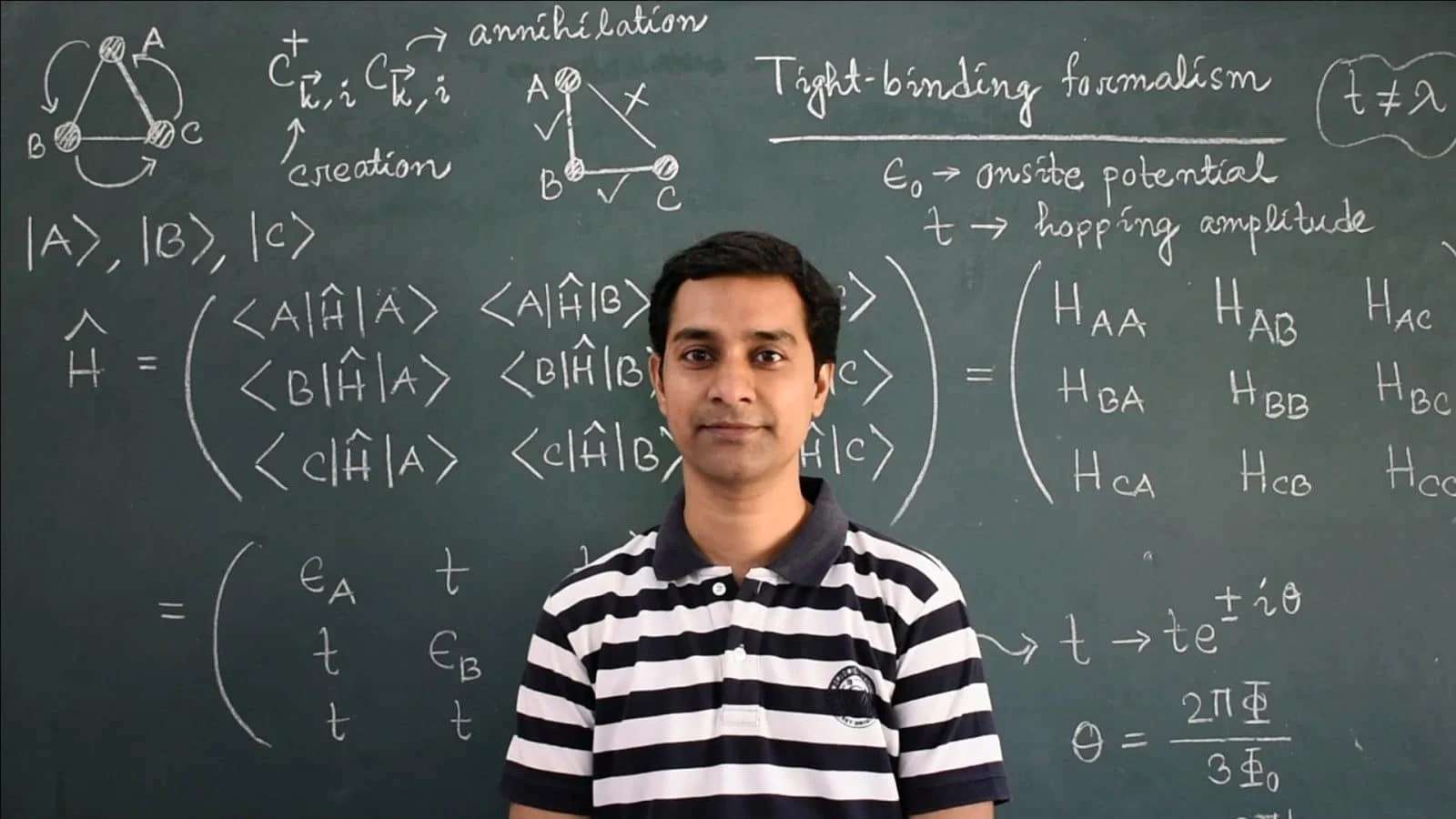
The work, led by Biplab Pal, assistant professor of physics at the university’s School of Sciences, demonstrates how naturally occurring patterns such as snowflakes, tree branches, and neural networks can be simulated at the quantum scale.
Published in the peer-reviewed journal Physica Status Solidi – Rapid Research Letters, the research could influence India’s National Quantum Mission by broadening the materials and methods used to design next-generation quantum devices.
Fractals—repeating patterns seen in coastlines, blood vessels, and lightning strikes—have long fascinated scientists and mathematicians. This study uses those self-similar structures to model how electrons behave under a magnetic field within fractal geometries. Unlike most quantum device research that relies on crystalline materials, the work shows that non-crystalline, amorphous materials could also be engineered for quantum technologies.
“This approach is unique because it moves beyond traditional crystalline systems,” Pal said. “Our findings show that amorphous materials, guided by fractal geometries, can support the development of nanoelectronic quantum devices.”
The potential applications are wide-ranging. They include molecular fractal-based nanoelectronics, improved quantum algorithms through finer control of electron states, and harnessing the Aharonov-Bohm caging effect, which traps electrons in fractal geometries for use in quantum memory and logic devices.
University officials called the study a milestone for both Nagaland University and India’s quantum research ecosystem. “Our research shows a new pathway where naturally inspired fractal geometries can be applied in quantum systems,” vice-chancellor Jagadish K Patnaik said. “This could contribute meaningfully to the development of future quantum devices and algorithms.”
With this study, Nagaland University joins a small group of Indian institutions contributing visibly to international quantum research.