
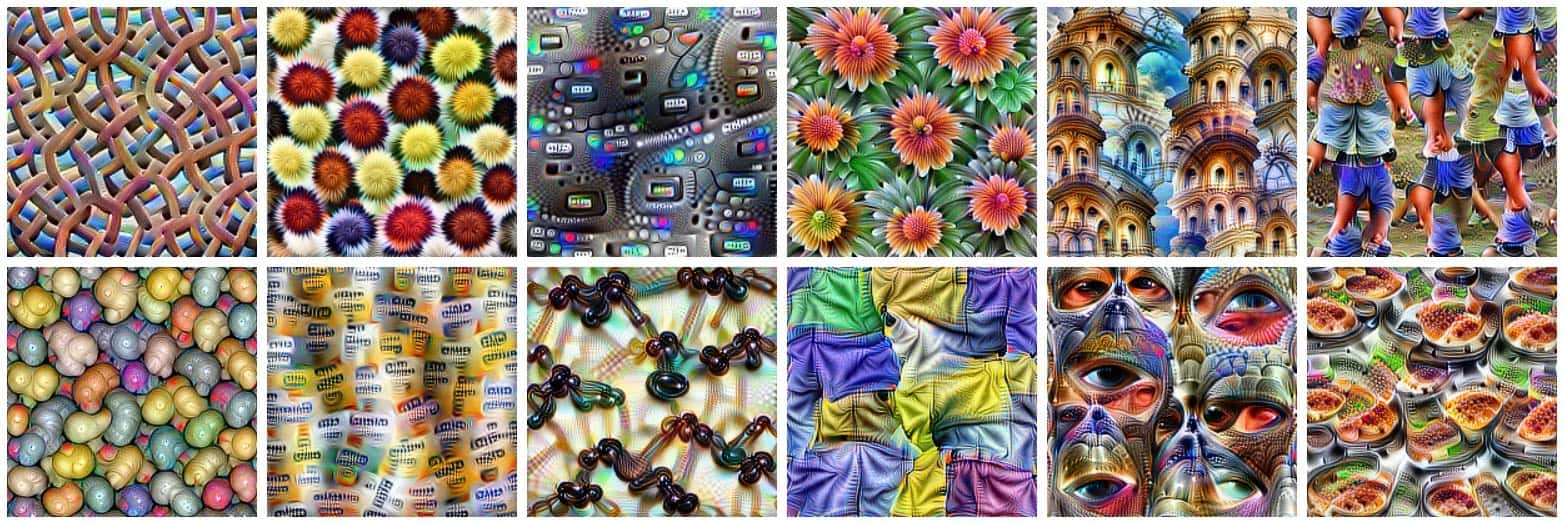
OpenAI has recently launched Microscope in order to help researchers understand the architecture and behaviour of neural networks in a better way.
According to the company, Microscope is a library of neuron visualisations starting with nine popular or heavily neural networks -- a vast collection encompasses millions of images.
As the name suggests and similar to its usage, in a laboratory, Microscope has been designed to help AI researchers better understand the complex structure of neural networks with tens of thousands of neurons.
In the OpenAI Microscope website, it has been stated that the “OpenAI Microscope is a collection of visualisations of every significant layer and neuron of several common “model organisms” which are often studied in interpretability. Microscope makes it easier to analyse the features that form inside these neural networks, and we hope it will help the research community as we move towards understanding these complicated systems.”
“While we’re making this available to anyone interested in exploring how neural networks work, we think the primary value is in providing persistent, shared artefacts to facilitate long-term comparative study of these models. We also hope that researchers with adjacent expertise — neuroscience, for instance — will find value in being able to approach the internal workings of these vision models more easily,” OpenAI said on the website.
To further explain, it stated that — “The OpenAI Microscope is based on two concepts, a location in a model and a technique. Metaphorically, the location is where you point the Microscope, the technique is what lens you affix to it.”
Also, the models are composed of a graph of nodes, also known as the neural network layers, which are connected through edges. Each node contains hundreds of units, which are roughly analogous to neurons. Most of the techniques that are being used are useful only at a specific resolution. For instance, feature visualisation can only be pointed at a unit, not its parent node.
While introducing Microscope, OpenAI also said it hopes Microscope will contribute to circuits collaboration work being done to reverse-engineer neural networks through understanding connections among neurons.
In addition to Microscope’s neuron visualisations, several works in recent years have attempted to visualise the activity of machine learning models.
Although Facebook’s Captum uses visualisations to explain decisions made by machine learning models, last year March, OpenAI, in collaboration with Google, released the activation atlases technique for visualising decisions made by machine learning algorithms. Alongside, there are other popular TensorBoard tools for visualisation when training machine learning models.
- Europe's Biggest Tech Startup Cuts AI Coding Costs by 90% Using Chinese Model
- E2E Networks Launches Blaze To Offer Pay-Per-Token AI Inference Services
- Apple Posts Record Revenue in India for Q4 FY26
- Dispatch Network Raises ₹5 Cr Pre-Seed Led by Antler India to Build AI-Powered Delivery Network
- Coforge Launches BridgeCX With Pega, Mastercard for Customer Personalisation
- HCLTech Launches AI Agents to Support Mainframe Operations