
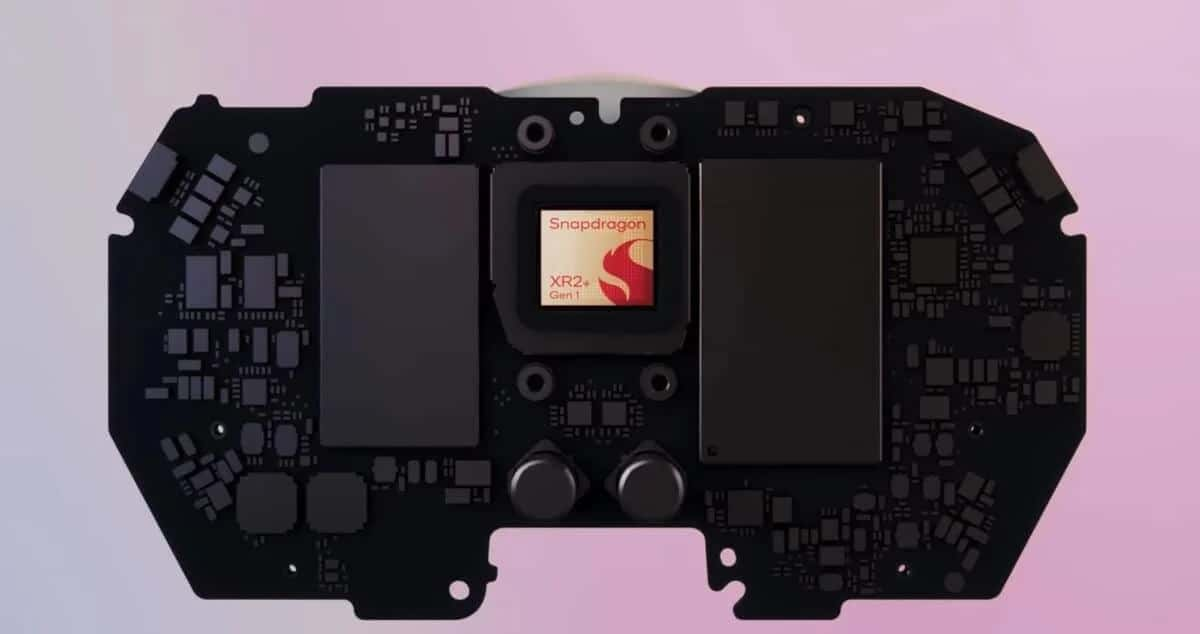
To challenge Apple's upcoming Vision Pro, Qualcomm, the leading manufacturer of mobile phone processors, has revealed the Snapdragon XR2+ chip, designed specifically for virtual and mixed reality headsets.
The Snapdragon XR2+ chip boasts the capability to power 12 or more high-definition cameras, making it an attractive choice for industry giants Samsung and Google. Both companies have committed to utilising this cutting-edge component in their upcoming product developments.
The XR2+ chip enhances user experience with a 20% improvement in processors and graphics components, projecting 4K-resolution images onto each lens. Said Bakadir, Qualcomm's Senior Director of Product Management, highlights that this advancement aims to mitigate eye fatigue, reduce the risk of motion sickness, and enable device makers to implement new features.
Bakadir emphasised, "A lot of people want more juice to do more things. People want to push the platform even higher."
Qualcomm's strategic collaborations extend beyond Google and Samsung, with additional partners expected to make announcements during the upcoming CES show. Products incorporating the XR2+ chip could be available as early as this year, according to Bakadir.
Qualcomm's chips have been integral to various companies' attempts to captivate consumers in the mixed-reality category, which, despite numerous efforts, has yet to experience widespread adoption.
Distinguishing between AR and VR, Qualcomm’s new chip aims to bridge the gap. Apple's Vision Pro and Meta’s Quest 3 headset are notable examples that seamlessly integrate both technologies.
Furthermore, the increased capacity of the chip to handle more cameras is anticipated to enhance depth perception and facilitate eye tracking, crucial for orienting users in the real world and recognising objects.
- Oracle Partners With OpenAI to Bring ChatGPT and Codex to Enterprise Workflows
- Oracle Expands AI Compute Options With NVIDIA, Google TPUs and Cerebras
- Chai Point Cuts Monthly AWS Bill by 58%
- Bengaluru AI Startup Simplismart Raises $14 Mn in NVIDIA-Backed Round
- Maya Research Releases Open-Weight Speech Model Supporting 12 Languages
- Anthropic Sued Over Alleged Use of Elvis Presley Songs to Train Claude, Denies Claim