
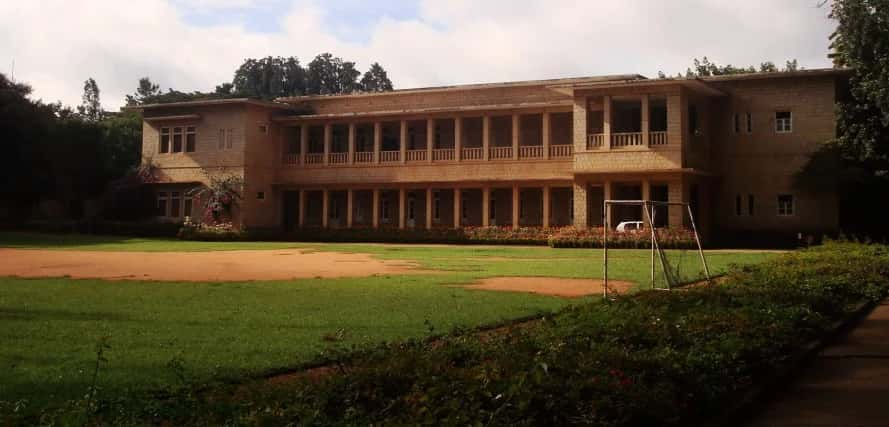
A team of researchers from the Raman Research Institute (RRI), Bangalore, demonstrated the transfer of a quantum distribution key between two buildings using an atmospheric channel. This is the first instance where the underlying technique-- entanglement-based quantum-key distribution--has been demonstrated between ground stations (buildings) separated by 50m.
The team said this breakthrough has the potential to revolutionise cybersecurity in critical sectors such as banking and defence.
Prof Urbasi Sinha, who also heads RRI’s Quantum Information and Computing (QuIC) lab, led the experiment. Prof Sinha said, “This is the country’s first free-space quantum key distribution experiment. This experiment can be done and demonstrated only during the night.” She said the atmospheric channel based experiment would further the Indian government’s endeavour to connect different nodes in the country through free space and fibre-based channels and build a secure quantum-based communication network.
The team said leveraging this capability can help detect unauthorised break-in immediately and protect encrypted information from threats that might arise from future computational advances.
The experiment was conducted at the Quantum Experiments Using Satellite Technology (QuEST), a lab set up under RRI and ISRO.
- Amazon Warns Engineers Against AI Productivity Traps in Latest Memo
- Gnani AI Launches Prisma v3.0 Speech Recognition Model for 10 Languages
- Venttup Raises $3 Million To Expand Precision Manufacturing
- Articul8 Launches Bivia To Help Enterprise AI Agents Make Decisions
- NVIDIA Launches Open-Weight Transcription Model for 40 Languages
- Sarvam AI Rolls Out Indus Cowork to 2,500 Maharashtra Govt Officials