

Alibaba has introduced Qwen3.8-Max, its latest flagship AI model, positioning it as the company’s most capable model to date.
The model scales to 2.4 trillion parameters with 95 billion active parameters and will become the first Max-class Qwen model to have its weights released publicly, with the open-weight version scheduled for next week.
The company described Qwen3.8-Max as capable of taking “complex, open-ended goals from start to finish with minimal human involvement and produce dependable deliverables”.
The release also marks a shift in Alibaba’s strategy, as Qwen3.7-Max was launched earlier this year as a proprietary, API-only model.
Qwen3.8-Max delivers broad improvements across coding, workplace productivity, research and multimodal agents.
According to Alibaba, Qwen3.8-Max outperformed GPT-5.6 Sol on several public benchmarks, including PaperBench, while exceeding Claude Opus 4.8 on evaluations such as WideSearch and HealthBench.
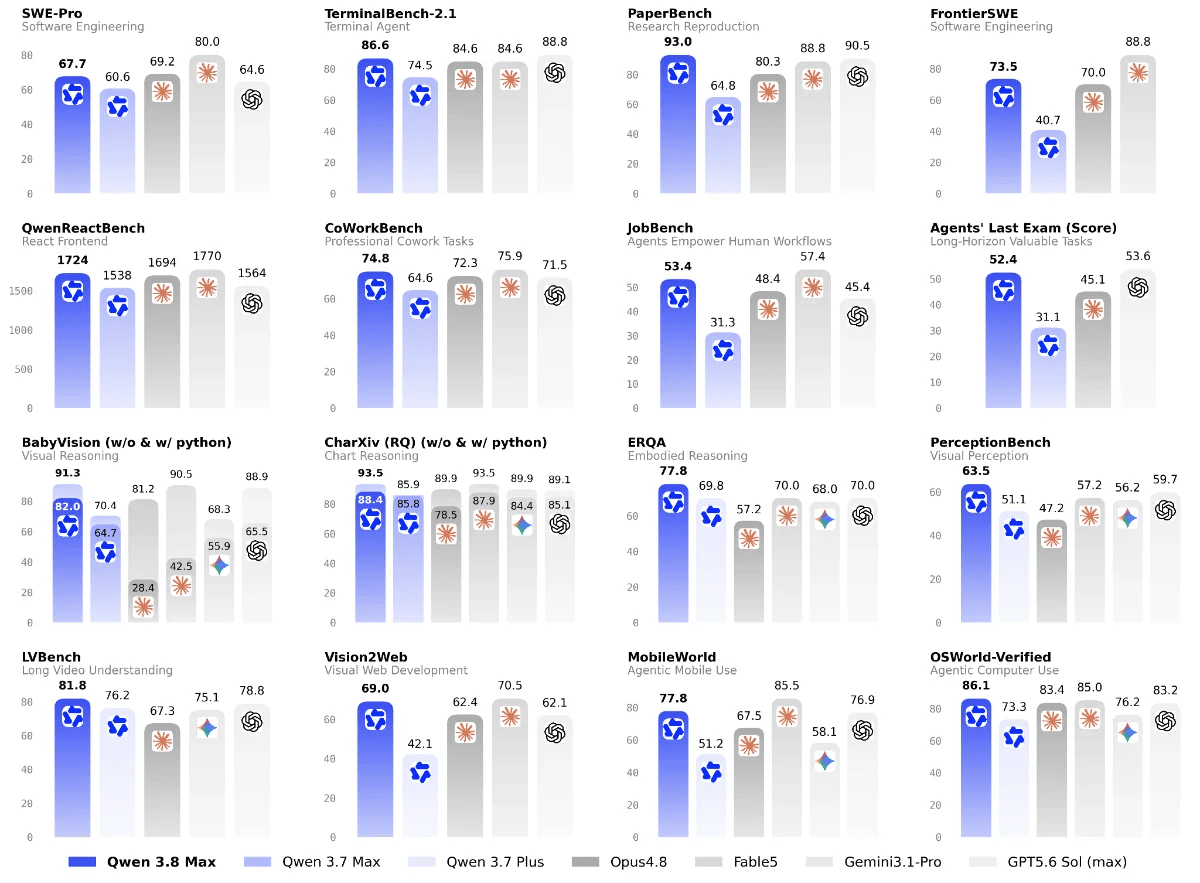
The company also reported competitive performance against Claude Fable 5 and other frontier models across coding and enterprise agent benchmarks.
The release focuses heavily on practical software development workflows rather than isolated coding tasks.
As a demonstration of its long-horizon coding capabilities, Alibaba said Qwen3.8-Max autonomously built the oh-my-cli (an open-source command-line productivity tool) project from scratch over more than 10 days.
It created a self-evolving software engineering pipeline that continuously translated requirements into GitHub issues, generated code, validated changes through automated testing and iterated using user and community feedback.
After around 16 days of operation, the project had produced 265 commits, 127 pull requests and 151 issues without human intervention, according to the company.
In its technical blog, Alibaba also showcased the model reproducing and improving AI research, competing in software and multimodal challenges, autonomously optimising chip designs, and carrying out quantitative research and long-term business simulations.
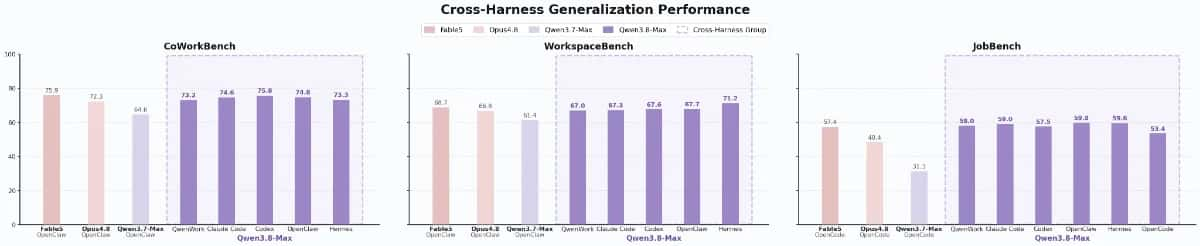
Qwen3.8-Max is available immediately through QwenCloud APIs with adjustable reasoning levels for different cost and latency requirements. The model is compatible with agent frameworks including Claude Code, Codex, OpenClaw and Qwen Code.
The launch builds on Alibaba’s AI roadmap outlined during its Q4 2026 earnings call in March.
At the time, CEO Eddie Wu said the company’s “full-stack AI investments have progressed from incubation to commercialisation at scale.”
The company said Cloud Intelligence’s external revenue grew 40% year over year, driven by AI products, which accounted for 30% of this revenue.
Wu has also set an ambitious target to reach over $100 billion in combined external revenue from Alibaba’s AI and cloud divisions over the next five years.
However, for that quarter, the company reported its first operating loss in five years, totalling 848 million yuan ($125 million), driven by a drastic increase in spending to train and deploy its Qwen AI models.
Last February, Alibaba committed over 380 billion yuan (~$53–$55 billion) over a three-year period to build out data centres, secure semiconductors, and train the Qwen models.
To hook global developers and starve out domestic and international rivals, Alibaba slashed API prices for its flagship Qwen models by up to 50–80%.
- Maya Research Releases Open-Weight Speech Model Supporting 12 Languages
- Anthropic Sued Over Alleged Use of Elvis Presley Songs to Train Claude, Denies Claim
- CoRover Lists Three BharatGPT Models On Government-Backed AIKosh Platform
- Cent Raises $15 Million to Expand AI-Powered Preventive Healthcare
- Cohere Says Alibaba’s Qwen Model Tried to Upload Test File to Beijing Server
- Tech Mahindra and Mastercard Partner to Integrate B2B Payments Into ERP Platforms