
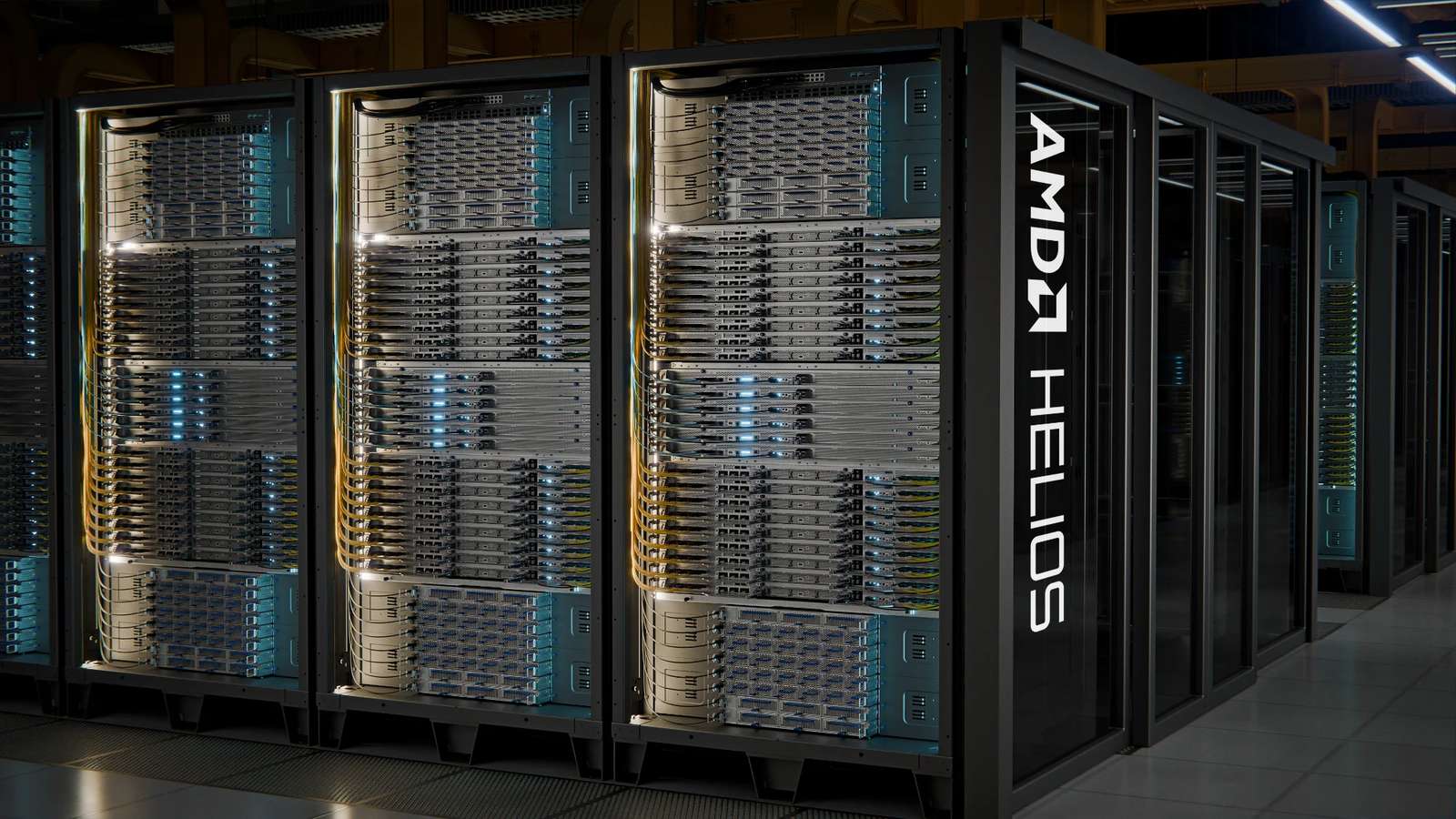
AMD announced the Instinct MI400 GPU family, the Helios rack-scale AI platform, the 6th Gen EPYC 9006 processors, at its Advancing AI 2026 event.
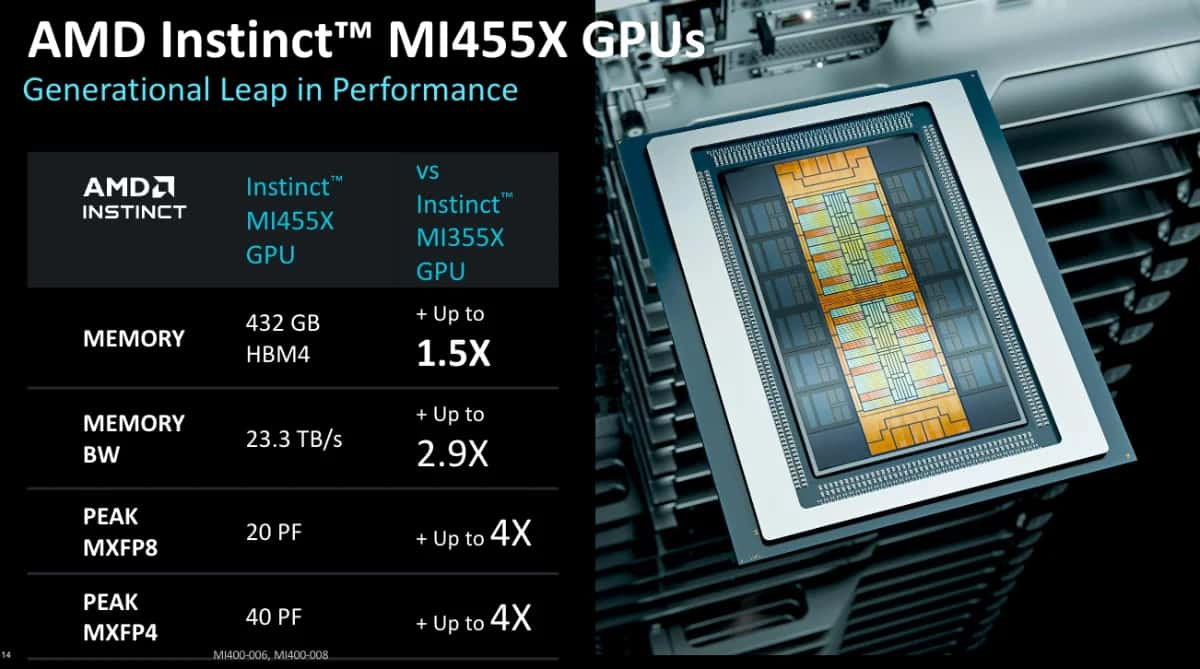
The Instinct MI400 series includes the MI455X for frontier AI workloads and the MI430X for sovereign AI and high-performance computing. The GPUs feature HBM4 memory and are designed for large-scale training and inference, offering a substantial performance improvement over their predecessors.
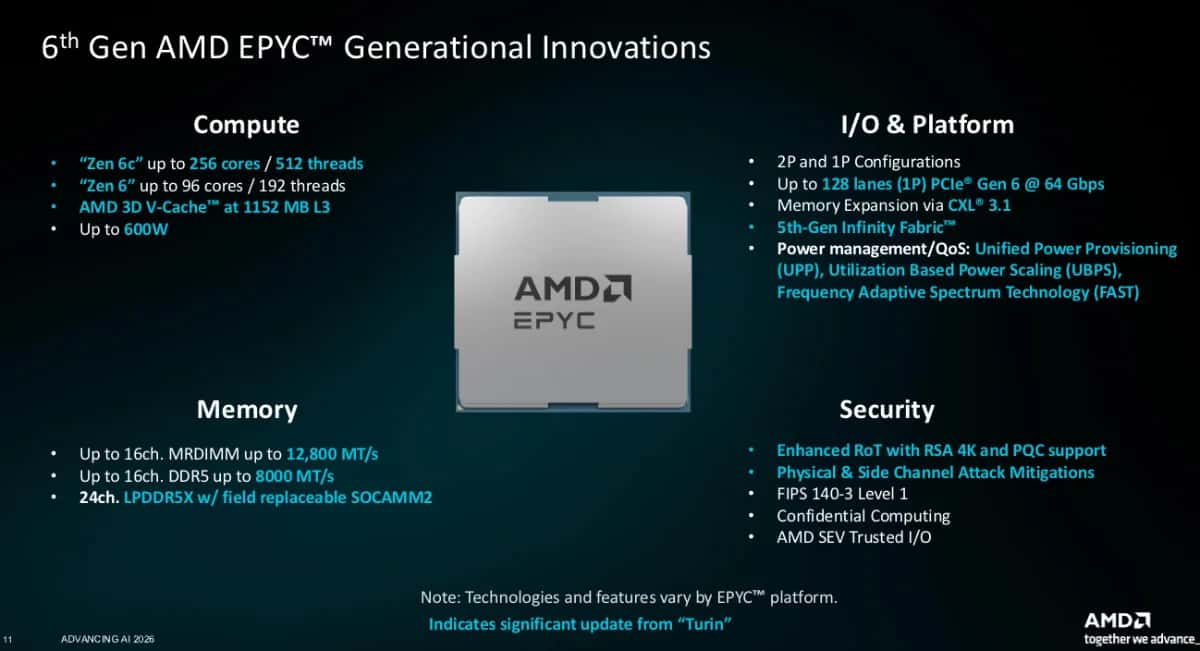
The company also introduced the 6th Gen “Venice” EPYC 9006 processor family, positioning it as CPUs designed for the emerging era of agentic AI. AMD claims the processors offer better performance than competing CPU offerings from NVIDIA, Intel and Arm.
AMD now expects the global server CPU market to grow by more than 50% to over $200 billion by 2030, up from roughly $25 billion today.
Su also confirmed that these server processors have entered full production, describing customer demand as the strongest AMD has ever seen for an EPYC launch.
She added that all major server OEMs and leading cloud providers are expected to begin deploying Venice-based systems in the fourth quarter.
AMD has designed the sixth-generation EPYC Venice family for three distinct classes of workloads rather than a single universal configuration.
The portfolio spans general-purpose CPU servers for enterprise and cloud computing, GPU host-node servers that orchestrate large-scale AI clusters, and CPU servers optimised for AI agent sandbox environments.
According to AMD, EPYC is the only server CPU portfolio purpose-built to address all three workload categories.
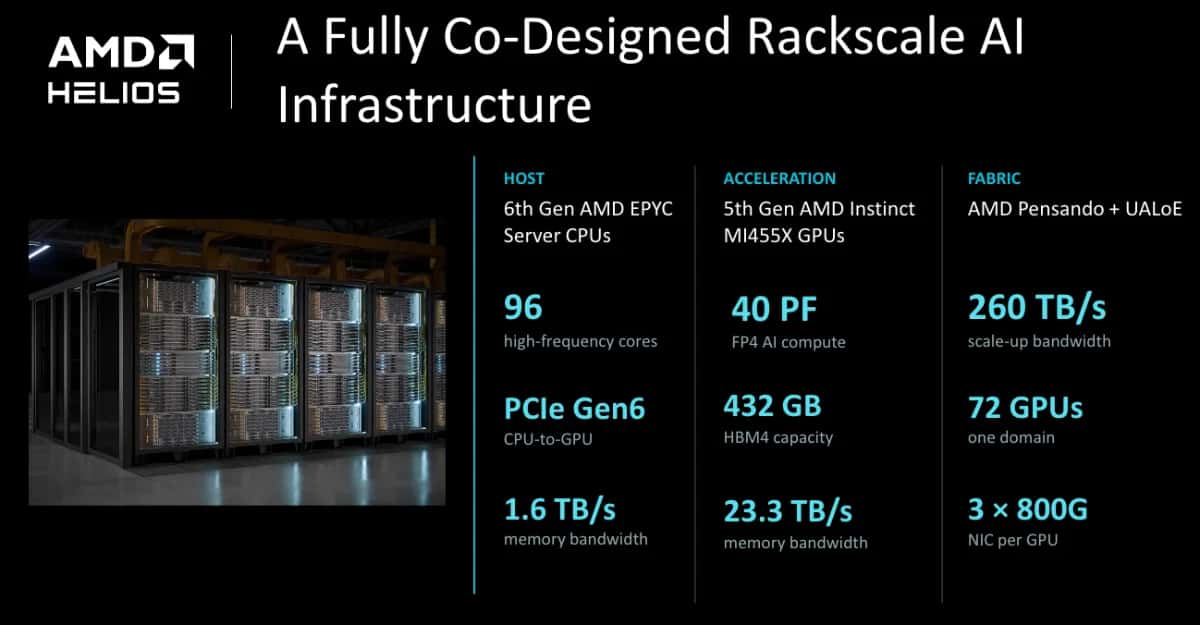
AMD officially introduced Helios, its rack-scale AI platform that combines Instinct MI455X GPUs, 6th Gen EPYC processors, Pensando networking and ROCm software into a unified system designed to scale from individual racks to gigawatt-scale AI clusters.
Helios has entered production, and the company states it offers 15% more compute and 50% more memory than NVIDIA’s Vera Rubin NVL72 rack-scale solution.
Several of the announcements build on products AMD had previously outlined. The company first disclosed its MI400 roadmap and previewed the Helios architecture during Advancing AI 2025.
AMD said its Helios rack-scale AI platform has been adopted by several leading AI labs and cloud providers, including OpenAI, Anthropic, Meta, Microsoft, Oracle, HUMAIN, TensorWave, Vultr and Cirrascale.
The company added that Helios systems will be available through OEMs such as Bull, HPE, Lenovo and Supermicro, alongside manufacturing partners Sanmina and Wiwynn.
AMD also announced a partnership with Cerebras to combine the latter's Wafer-Scale Engine with Helios rack-scale infrastructure, aiming to improve the performance and economics of low-latency AI inference deployments.
Recently, Anthropic announced it will deploy up to 2 gigawatts of AMD’s Instinct MI450 Series GPUs through Helios rack-scale systems. AMD has committed to make an equity investment of up to $5 billion in Anthropic.
The first gigawatt of deployments is scheduled to begin in the first half of 2027. The announcement expands Anthropic’s use of AMD hardware, building on its existing deployment of AMD Instinct MI355X GPUs.
Anthropic said it will deploy AMD Helios systems powered by Instinct MI455X GPUs, EPYC Venice CPUs, Pensando networking and ROCm software to support training and inference for its Claude family of models.
AMD Extends CPU, GPU and Rack-Scale Roadmap Through 2030
AMD also extended its product roadmap through the end of the decade, outlining plans for annual updates across its EPYC server CPUs, Instinct GPUs, networking portfolio and rack-scale AI systems.
On the CPU side, the company said its “Zen 7”-based EPYC processors, codenamed “Florence,” “Ferrara” and “Fidenza,” are scheduled to arrive in 2028, followed by the “Zen 8”-based “Ravenna” family in 2030. AMD said the upcoming chips will continue to focus on improving server density, performance, performance per dollar and energy efficiency.
For AI accelerators, AMD confirmed that the Instinct MI500 Series will launch in 2027, followed by the MI600 Series in 2028, both featuring next-generation compute, memory and interconnect technologies.
Together, the roadmap signals AMD's intent to maintain an annual release cadence across its AI and data centre portfolio through 2030.
- Amazon Warns Engineers Against AI Productivity Traps in Latest Memo
- Gnani AI Launches Prisma v3.0 Speech Recognition Model for 10 Languages
- Venttup Raises $3 Million To Expand Precision Manufacturing
- Articul8 Launches Bivia To Help Enterprise AI Agents Make Decisions
- NVIDIA Launches Open-Weight Transcription Model for 40 Languages
- Sarvam AI Rolls Out Indus Cowork to 2,500 Maharashtra Govt Officials